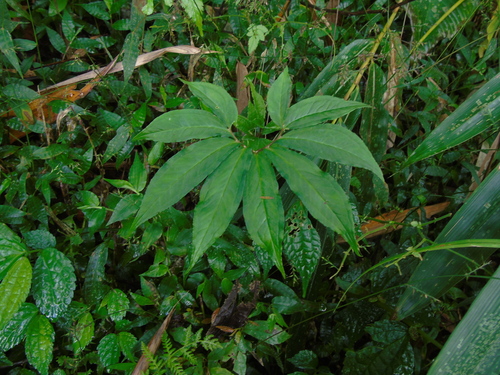
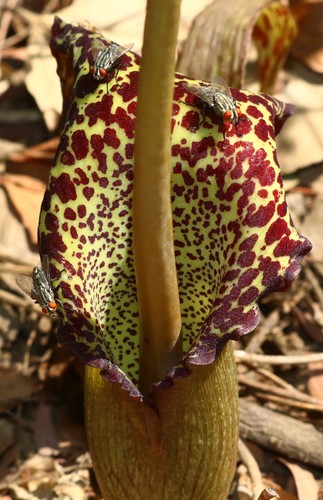
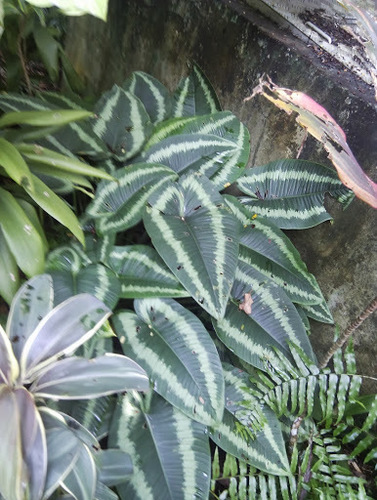
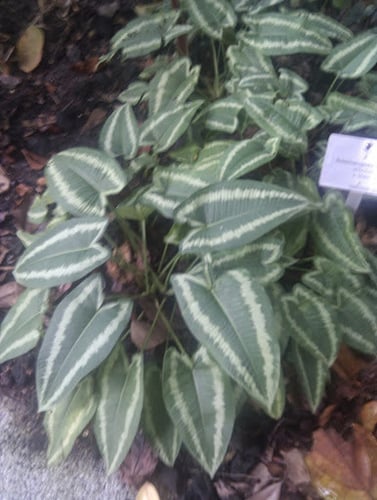
Arisarum vulgare
O. Targ.-Tozz.
Common Arisarum, Friar's cowl
iNaturalist· cc-by-nc
(c) Vik Dunis, some rights reserved (CC BY-NC), uploaded by Vik Dunis
iNaturalist· cc-by-nc
(c) Ewa, some rights reserved (CC BY-NC), uploaded by Ewa
iNaturalist· cc-by-nc
(c) Alenka Mihoric, some rights reserved (CC BY-NC), uploaded by Alenka Mihoric
Summary
Source: WikipediaArisarum vulgare, common name the friar's cowl or larus, is an herbaceous, perennial, rhizomatous plant in the genus Arisarum belonging to the family Araceae.
Description
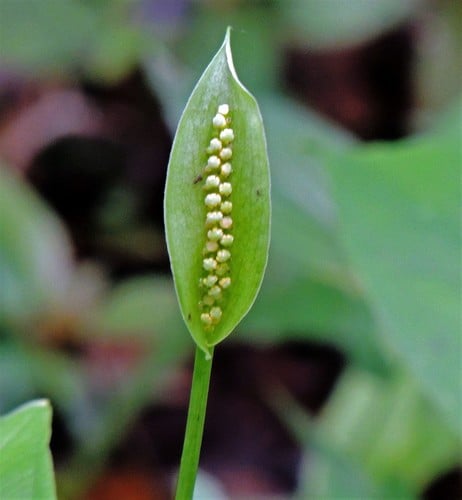
A tuber plant. It keeps growing from year to year. It can form colonies. There is one leaf which is yellow green. The blade is spearhead shaped. It is 5-13 cm long. The leaf stalk is mottled. It is 30 cm long. The flower appears with or above the leaves. The bract around the flower is hooded and green. It is 2.5-5 cm long and can be striped. The fruit stalk is fleshy and green. It is slightly curved and shows above the bract. The fruit are green berries.
Edible Uses
Edible Parts: Leaves Root Edible Uses: Root - cooked. The acrid juice should first be removed by thorough and repeated washing leaving behind a nutritious and innoxious residue. Thorough drying or cooking will also destroy any harmful elements of this root. The root is frequently used as an emergency food in times of scarcity, it is about the size of a walnut. One report suggests that the leaves might be edible. If they are they must be well cooked first.
Traditional Uses
The leaves are eaten as a green vegetable. The starch of the root is used for adding to bread flour after removing the acrid element.
This uses section is brief — help expand it
Medicinal Uses
None known
Known Hazards
The plant contains calcium oxylate crystals. These cause an extremely unpleasant sensation similar to needles being stuck into the mouth and tongue if they are eaten but they are easily neutralized by thoroughly drying or cooking the plant or by steeping it in water.
Distribution
It occurs in the Egyptian Mediterranean coast in non salty depressions. It is often in partly shaded locations. It can grow in arid places. It suits hardiness zones 7-10.
Where It Grows
Africa, Albania, Australia, Balkans, Canary Island, Egypt, Europe, France, Greece, Israel, Italy, Mediterranean, Middle East, Morocco, North Africa, Portugal, Spain, Tasmania, Tunisia,
Cultivation
Prefers a woodland soil or a sandy loam with leafmould. Grows well in shady rather moist places. A Mediterranean plant, it commences growth in the autumn and, since the leaves are not very hardy, the plant is best grown under protection. It should succeed outdoors at least in the milder parts of the country, if grown in a sheltered woodland. The plant is hardy to about -10°c for short periods but should be given a good mulch in the winter. The plant becomes dormant in spring/summer.
Propagation
Seed - we have no details for this species but suggest sowing the seed in a shady part of the greenhouse as soon as it is ripe in the spring if this is possible. Sow stored seed in early spring. When large enough to handle, prick the seedlings out into individual pots and grow them on for at least the first winter in a greenhouse and plant out when dormant in the summer once the tuber has reached a reasonable size. Division in spring after the plant dies down.
Other Uses
A good ground-cover plant for a shady place. Special Uses Ground cover
Other Information
It is a famine food.
Notes
There are 3 Arisarum species. Inorganic composition in parts per million: N = 9,700. P = 1390. Na = 1,380. K = 12,300. Ca = 3.380. Mg = 1,750. Z = Ø. Cu = 5.2. Fe = 79.6. Mn = 7.1. B = 7.9. Al = 19.8. Si = 179.0. Ti = 1.7. Sr = 179.0. Ba = 6.1. Sn = 4.7. Pb = 16.8.
Nutrition
| Part | Moisture | kJ | kcal | Protein | Vit A | Vit C | Iron | Zinc |
|---|---|---|---|---|---|---|---|---|
| Corm | — | — | — | — | — | 0.79 | — | — |
| Leaves | — | — | — | — | — | — | — | — |
Synonyms
Also Known As
Imi, Irni, Larus, Yerni
References (20)
- Ann. Mus. Imp. Fis. Firenze 2(2):67. 1810
- Blamey, M and Grey-Wilson, C., 2005, Wild flowers of the Mediterranean. A & C Black London. p 505
- BOUQUET;
- Brown, D., 2000, Aroids. Plants of the Arum family. Timber Press. (Second edition) p 270, 317
- Brickell, C. (Ed.), 1999, The Royal Horticultural Society A-Z Encyclopedia of Garden Plants. Convent Garden Books. p 137
Show all 20 references Hide references
- Cundall, P., (ed.), 2004, Gardening Australia: flora: the gardener's bible. ABC Books. p 185
- EL - GHONEMY
- Ghanimi, R., et al, 2022, Ethnobotanical study on wild edible plants traditionally used by Messiwa people, Morocco. Journal of Ethnobiology and Ethnomedicine. 18:16
- Hedrick, U.P., 1919, (Ed.), Sturtevant's edible plants of the world. p 72
- Hibbert, M., 2002, The Aussie Plant Finder 2002, Florilegium. p 32
- Jardin, C., 1970, List of Foods Used In Africa, FAO Nutrition Information Document Series No 2.p 11
- Lazarides, M. & Hince, B., 1993, Handbook of Economic Plants of Australia, CSIRO. p 24
- Lim, T. K., 2015, Edible Medicinal and Non Medicinal Plants. Volume 9, Modified Stems, Roots, Bulbs. Springer p 12
- PARMENTIER (As Arum incurvatum)
- Plants for a Future database, The Field, Penpol, Lostwithiel, Cornwall, PL22 0NG, UK. http://www.scs.leeds.ac.uk/pfaf/
- Royal Botanic Gardens, Kew (1999). Survey of Economic Plants for Arid and Semi-Arid Lands (SEPASAL) database. Published on the Internet; http://www.rbgkew.org.uk/ceb/sepasal/internet [Accessed 28th March 2011]
- Ryan, S., 2008, Dicksonia. Rare Plants Manual. Hyland House. p 95
- Tanji, A and Nassif, F., 1995, Edible Weeds in Morocco. Weed Technology. Vol. 9, No. 3, pp. 617-620
- Tbatou, M, et al, 2016, Wild Edible Plants traditionally used in the countryside of El Jadida, Coastal Area in the Center of Morocco. Life Sciences Leaflets 75:28-48
- World Checklist of Useful Plant Species 2020. Royal Botanic Gardens, Kew