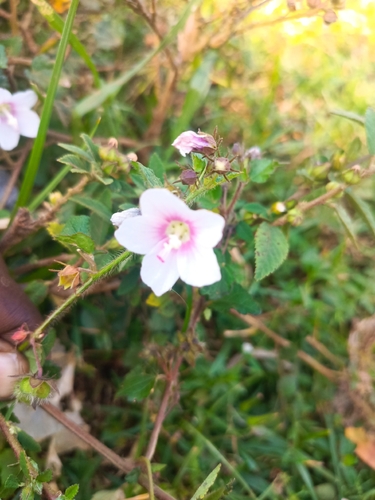
Sterculia tragacantha
Lindl.
African tragacanth, Gum tragacanth
iNaturalist· cc-by-nc
(c) International Institute of Tropical Agriculture, some rights reserved (CC BY-NC)
iNaturalist· cc-by-nc
(c) Scamperdale, some rights reserved (CC BY-NC)
iNaturalist· cc-by-nc
(c) Babajide Agboola, some rights reserved (CC BY-NC), uploaded by Babajide Agboola
Description
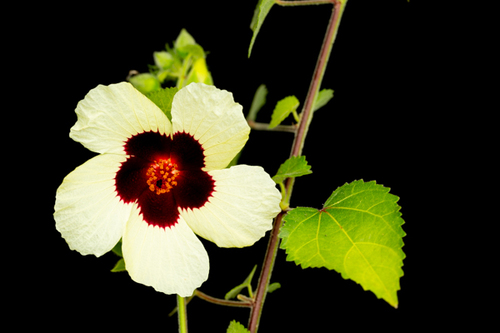
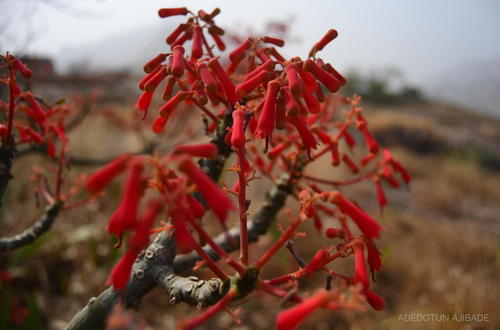
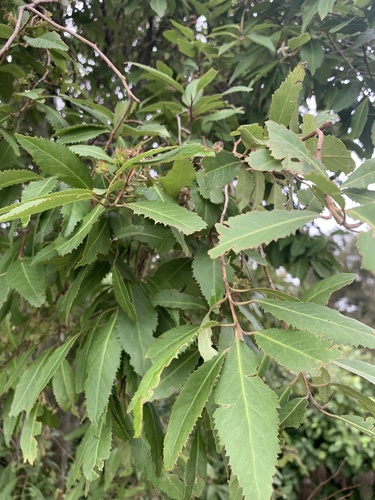
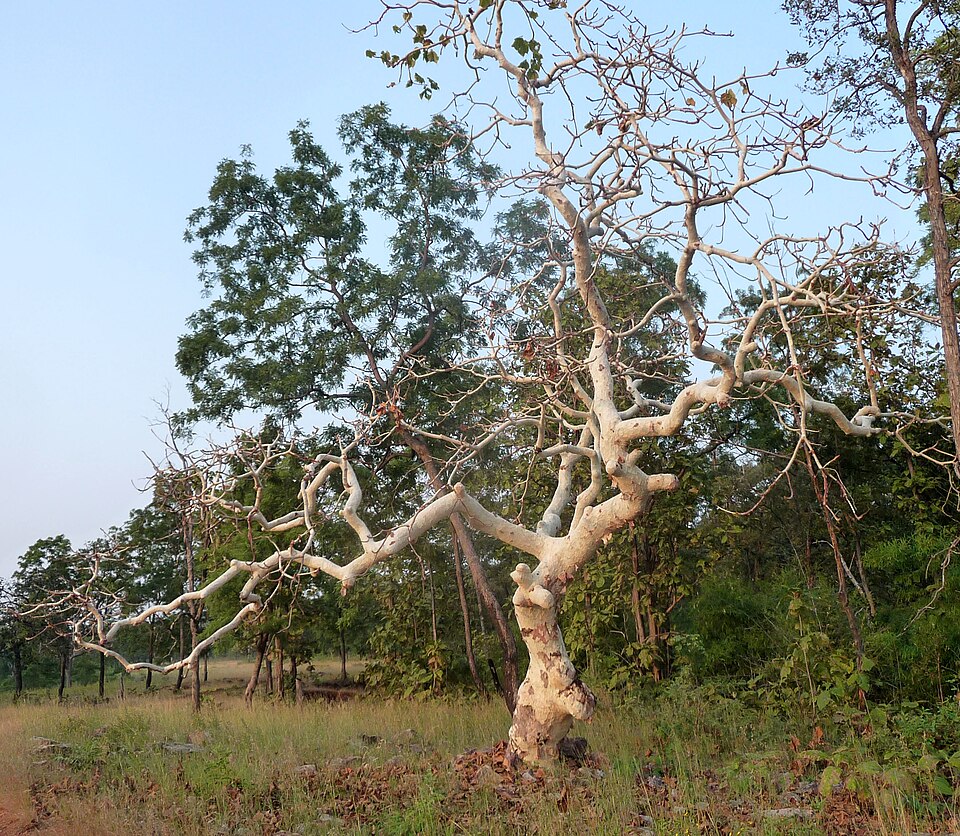
A tree. It grows to 26 m high. The trunk can be 1.5 m around. It can have buttresses. The bark is grey-brown with cracks along it. The small branches have a dense covering of hairs. The leaves are 10-30 cm long by 5-15 cm wide. They are oval or sword shaped. They are rounded or slightly heart shaped at the base. The leaf stalk is 1.5-7.5 cm long. The flowers are reddish-pink. They occur in stalked clusters. These have dense brown hairs. The fruit are made up of 4-5 boat shaped cells. Each one is 5-7 cm long. They are bright red but turn brown when ripe. They split along the top to expose 8 seeds. The seeds are 18 mm long. They do not have a seed covering (aril).
Edible Uses
The stem produces a gum used in ice cream and confectionery. Young leaves are cooked as a potherb, producing a slimy sauce. Seeds are roasted and eaten whole, or pounded and cooked with vegetables.
Traditional Uses
The stem produces a gum. The gum is used in ice cream and confectionary. The young leaves are cooked and eaten as a potherb. They make a slimy sauce. The seeds are roasted and eaten. They are also pounded and cooked with vegetables.
Medicinal Uses
Cultivated as a medicine.
Distribution
A tropical plant. It is native to tropical W and C Africa. It grows in woodland and savannah. It can be along rivers and in palm groves. It grows in open and drier parts of the lowland rainforest. It suits humid locations. It needs a well-drained soil. It suits hardiness zones 10-12.
Where It Grows
Africa, Angola, Benin, Burkina Faso, Cameroon, Central Africa, Central African Republic, CAR, Congo DR, Côte d'Ivoire, East Africa, Gabon, Gambia, Ghana, Guinea, Guinée, Guinea-Bissau, Ivory Coast, Liberia, Nigeria, Sao Tome and Principe, Senegal, Sierra Leone, Sudan, Tanzania, Togo, West Africa, Zambia,
Cultivation
Plants can be grown from seeds. It can also be grown from large cuttings. Trees re-grow after being cut down.
Propagation
A physical dormancy caused by the hard seed coat of the mature seeds of many species in this genus can be overcome by scarifying the seed. This is carried out by cutting away or abrading some of the seed coat to allow the ingress of water, though great care must be taken not to damage the embryo. The aril surrounding the seed should also be removed - this is easiest when it has been softened through soaking in water. The seeds germinate optimally at temperatures between 20 - 30°c. They can be sown in a nursery seedbed or in containers. A germination rate of about 95%, occurring within about 2 weeks can be expected if the seed has been properly treated.
Other Uses
A gum is obtained from wounds made in the trunk. It closely resembles gum tragacanth (obtained from Astragalus gummifer), and is used to adulterate gum arabic (obtained from Acacia sp.). The gum is used in its own right as a form of gum tragacanth in the textiles, cosmetic and ice cream industries. A fibre is obtained from the bark. The wood is white and somewhat soft, planes easily and works up to a neat finish. It is used for posts, boards and construction work.
Production
The seeds are collected during the dry season.
Notes
Also put in the family Sterculiaceae.
Synonyms
Also Known As
Alawefun, Atakssule, Awuloko, Bamba, Bame, Barquelei, Bue, D'jubitabo, Dacud, Dredreboue, Efok afum, Ereito, Ezelfou, Fembe, Freito, Ibulbbecana, Kakubabolo, Kobei, Kombolokia, Kukukin rafi, Lufufia, Mangebore, Mboli, Mgboto, Milenda, Mkubukubu, N'bama, Nassina, Nkombolokia, Nkondo mfinda, Ntutu, Oloko, Pau-corda, Po-de-cabaco, Popoko, Pore-pore, Sakop, Sofo, Taba, Tabae, Tabo, Tchapelegue, Ucud, Umbana, Umbufure
References (30)
- Abbiw, D.K., 1990, Useful Plants of Ghana. West African uses of wild and cultivated plants. Intermediate Technology Publications and the Royal Botanic Gardens, Kew. p 42
- Achigan-Dako, E, et al (Eds), 2009, Catalogue of Traditional Vegetables in Benin. International Foundation for Science.
- Aniama, S. O., et al, 2016, Ethnobotanical documentaton of some plants among Igala people of Kogi State (Nigeria). The International Journal Of Engineering And Science (IJES). 5(4) pp 33-42
- Avouhou, H. T., et al, 2012, Ethnobotanical Factors Influencing the Use and Management of Wild Edible Plants in Agricultural Environments in Benin. Ethnobotany Research & Applications Vol 10:571-592
- Batawila, K., et al, 2007, Diversite et gestion des legumes de cueillete au Togo. African Journal of Food, Agriculture, Nutrition and Development 7( 3& 4): 68
Show all 30 references Hide references
- Burkill, H. M., 1985, The useful plants of west tropical Africa, Vol. 5. Kew.
- Catarino, L. et al, 2019, Edible Leafy Vegetables from West Africa (Guinea-Bissau): Consumption, Trade and Food Potential. Foods 2019, 8, 493
- Chapman, J. D. & Chapman, H. M., 2001, The Forest Flora of Taraba and Andamawa States, Nigeria. WWF & University of Canterbury. p 205
- Dalziel, J. M., 1937, The Useful plants of west tropical Africa. Crown Agents for the Colonies London.
- Dansi, A., et al, 2008, Traditional leafy vegetables and their use in the Benin Republic. Genet Resour Crop Evol (2008) 55:1239–1256
- Diop, A. l., et al, 2021, Cultural importance of wild edible plants in three sympatric communities: Agni, Akyé and Gwa in the Department of Alépé (Southeast of Côte d’Ivoire). Ethnobotany Research and Applications 22:35. p 7
- Edward's Bot. Reg. 16: t. 1353. 1830
- Facciola, S., 1998, Cornucopia 2: a Source Book of Edible Plants. Kampong Publications, p 239
- Fowler, D. G., 2007, Zambian Plants: Their Vernacular Names and Uses. Kew. p 46
- Grubben, G. J. H. and Denton, O. A. (eds), 2004, Plant Resources of Tropical Africa 2. Vegetables. PROTA, Wageningen, Netherlands. p 565
- Hwang, L. C., et al, 2020, Traditional Botanical Uses of Non-Timber Forest Products (NTFP) in Seven Counties in Liberia. ACS Symposium Series; American Chemical Society: Washington, DC, 2020.
- Jardin, C., 1970, List of Foods Used In Africa, FAO Nutrition Information Document Series No 2.p 105
- Keay, R.W.J., 1989, Trees of Nigeria. Clarendon Press, Oxford. p 129
- Latham, P., 2004, Useful Plants of Bas-Congo province. Salvation Army & DFID p 265
- Llamas, K.A., 2003, Tropical Flowering Plants. Timber Press. p 269
- Malaisse, F., 1997, Se nourrir en floret claire africaine. Approche ecologique et nutritionnelle. CTA., p 91.
- Martin, F.W. & Ruberte, R.M., 1979, Edible Leaves of the Tropics. Antillian College Press, Mayaguez, Puerto Rico. p 221
- Peters, C. R., O'Brien, E. M., and Drummond, R.B., 1992, Edible Wild plants of Sub-saharan Africa. Kew. p 189
- Ruffo, C. K., Birnie, A. & Tengnas, B., 2002, Edible Wild Plants of Tanzania. RELMA p 628
- Savill, P. S. & Fox, J. E. D., Trees of Sierra Leone. p 252
- Ubom, R. M., 2010, Ethnobotany and Diversity Conservatioon in the Niger Delta, Nigeria. International Journal of Botany. 6(3): 310-322
- Uphof,
- Vivien, J. & Faure, J.J., 1985, Abres des forets dense d'Afrique Centrale. Agence de Cooperation Culturelle et Technique. Paris. p 464
- World Checklist of Useful Plant Species 2020. Royal Botanic Gardens, Kew
- Zon, A.P.M. van der, Grubben, G.J.H., 1976, Les legumes-feuilles spontanes et cultives du Sud-Dahomey, Communication 65, Royal Tropical Institute, Amsterdam, p 95