Stephanandra incisa
(Thunb.) Zabel
Cutleafed Stephanandra, Lace shrub
iNaturalist· cc-by-nc
(c) ingester, some rights reserved (CC BY-NC)
iNaturalist· cc-by-nc
(c) Uri Sarig, some rights reserved (CC BY-NC)
iNaturalist· cc-by-nc
(c) Uri Sarig, some rights reserved (CC BY-NC)
Summary
Stephanandra incisa is a deciduous shrub reaching 2 meters tall by 3 meters wide at a medium growth rate. Hardy to UK zone 5, it flowers in June with seeds ripening August to September. The plant thrives in light sandy, medium loamy, or heavy clay soils with good drainage and tolerates mildly acid to mildly alkaline pH. It grows in semi-shade or full sun and prefers consistently moist soil. Insect-pollinated hermaphroditic flowers appear on this spreading shrub.
Description
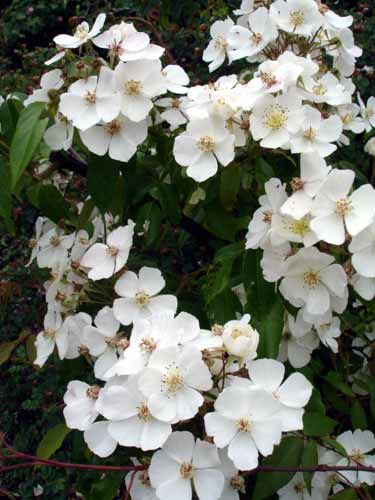
A dense shrub. It grows 1.8 m high and spreads 3 m wide. The stems are thin and angular. The leaves are egg shaped and have lobes. They have deep teeth along the edge. The leaves fade to yellow-green in autumn. The flowers are pale green. They are in densely packed panicles.
Edible Uses
Young leaves are edible, though no further details are given.
Medicinal Uses
None known
Distribution
It is a temperate plant. A frost hardy plant. It grows on mountain slopes often near streams between 500-1,000 m above sea level. It suits hardiness zones 4-10.
Where It Grows
Asia, Australia, China, Japan, Korea, Taiwan,
Propagation
Seed likely requires a period of cold stratification; sow in a cold frame as soon as ripe, or sow stored seed in a cold frame as soon as received. Once seedlings are large enough to handle, prick out into individual pots and grow on in a greenhouse for at least the first winter, then plant out in late spring or early summer after the last expected frosts. Division in early spring is a very effective method of increase. Root cuttings can be taken in March in a warm greenhouse. Half-ripe wood cuttings, 10–12cm long, can be taken in July in a frame with a high success rate.
Other Uses
The cultivars 'Crispa' (syn. 'Prostrata') and 'Dart's Horizon' form dense arching groundcover and should be spaced about 1.2 metres apart each way. Plants are sometimes grown as an informal hedge.
Notes
There are 4 Stephanandra species.
References (6)
- Cundall, P., (ed.), 2004, Gardening Australia: flora: the gardener's bible. ABC Books. p 1371
- Flora of China @ efloras.org Volume 9
- Gart.-Zeitung (Berlin) 4:511. 1885
- Hibbert, M., 2002, The Aussie Plant Finder 2002, Florilegium. p 294
- Plants for a Future database, The Field, Penpol, Lostwithiel, Cornwall, PL22 0NG, UK. http://www.scs.leeds.ac.uk/pfaf/
Show all 6 references Hide references
- Ryan, S., 2008, Dicksonia. Rare Plants Manual. Hyland House. p 56