Rosa henryi
Boulenger
Wikipedia· cc-by-sa
Wikimedia Commons - Henryi1a.UME.jpg
iNaturalist· cc-by-nc
(c) Stargazer, some rights reserved (CC BY-NC)
iNaturalist· cc-by-nc
(c) Cheongweei Gan, some rights reserved (CC BY-NC)
Summary
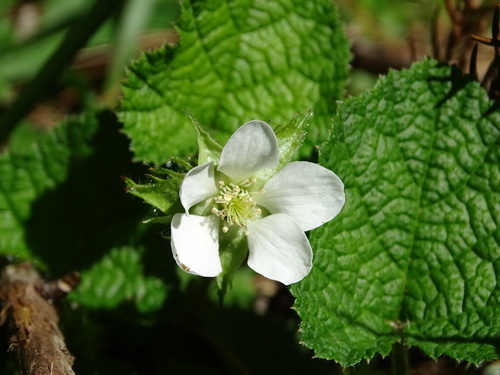
Source: WikipediaRosa henryi is a rose species native to China. It is commonly known as Henry's rose. The species is a climbing shrub, 3–8 m, with long repent branches. Prickles are absent or scattered, curved. Leaves are glabrous or sparsely glandular-pubescent with commonly 5 leaflets. The flowers appear in mid to late summer, 5–15 in an umbel-like corymb, each flower 3–4 cm in diameter, white, and fragrant. The hips are brownish red. It grows in forest margins, thickets or scrub, valleys or farmland at 1,700–2,000 metres (5,600–6,600 feet).
Description
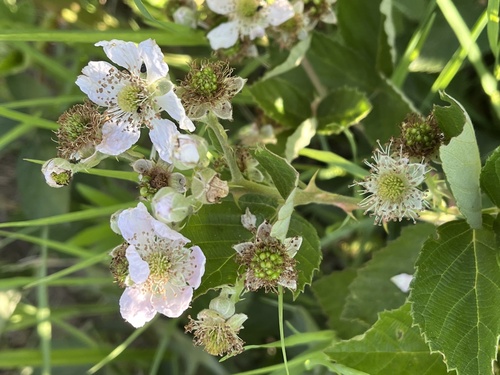
A climbing shrub. It grows 3-8 m long. It has scattered curve prickles 3 mm long. The leaves are 9-14 cm long. There are 5 leaflets and these are oval and 4-9 cm long by 2-5 cm wide. There are 5-15 flowers in a group and they are 3-4 cm across. The petals and white. The fruit or hips are red-brown and 8-10 mm across.
Edible Uses
The red-brown fruit hips are edible.
Distribution
It is a warm temperate plant. In southern China it grows in thickets and on the edges of forests between 1,700-2,000 m above sea level. In Sichuan and Yunnan.
Where It Grows
Asia, Australia, China*,
Notes
There are about 150 Rosa species and many cultivated varieties.
References (3)
- Altschul, S.V.R., 1973, Drugs and Foods from Little-known Plants. Notes in Harvard University Herbaria. Harvard Univ. Press. Massachusetts. no. 1450
- Ann. Soc. Sci. Bruxelles, Ser. B 53:143; Bull. Jard. Bot. Etat 9:231. 1933
- Flora of China @ efloras.org Volume 9