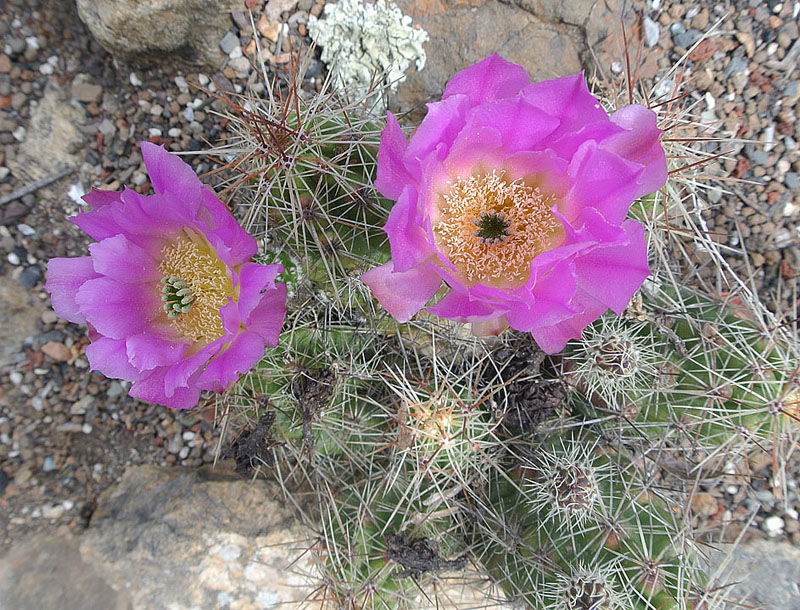
Stenocereus griseus
(Haworth) Buxbaum
Pitaya, Grey stenocereus, Candle cactus
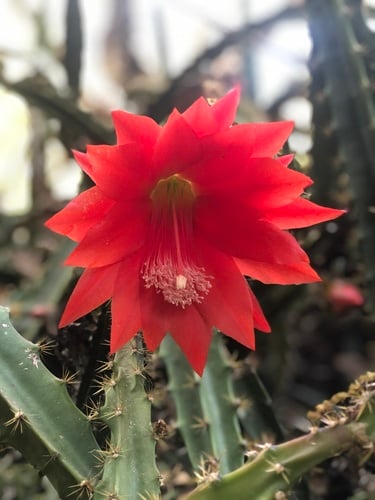
iNaturalist· cc-by-nc
(c) Samuel Brinker, some rights reserved (CC BY-NC)
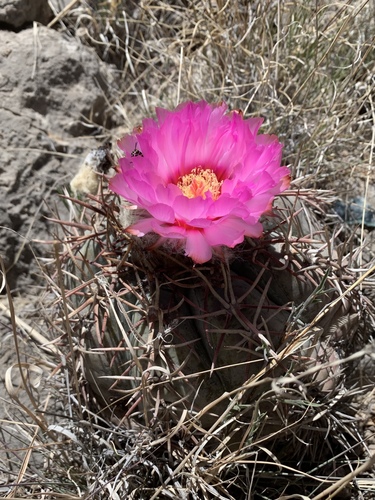
iNaturalist· cc-by-nc
(c) Samuel Brinker, some rights reserved (CC BY-NC)
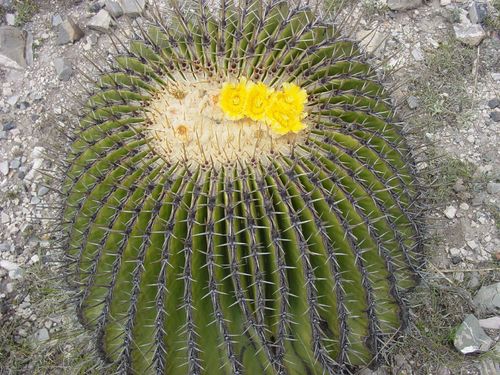
iNaturalist· cc-by
(c) Zac Peterson, some rights reserved (CC BY)
Summary
Source: WikipediaStenocereus griseus, also known as the Mexican organ pipe, dagger cactus, pitaya, and pitayo de mayo, is a species of cactus.
Description
A cactus. It is a treelike plant. It has a clear trunk and branches above. It can be 6-9 m high. The stems are green and erect. They are 9-12 cm across. There are 6-10 ribs. They bulge below each spine bud. There are 1-3 central spines and 6-11 around them. The flowers open at night. They are funnel shaped and white. They are 10 cm long. The fruit are oblong. The fruit are 5 cm across.
Edible Uses
The fruits are edible with a delicious flavour and reach around 5cm in diameter. Immature fruits carry spines, which are shed as the fruit ripens. The pulp has potential for use in producing wine and marmalade.
Medicinal Uses
None known
Distribution
A tropical plant. It grows in coastal regions in Venezuela.
Where It Grows
Andes, Aruba, Caribbean, Central America*, Colombia, Curacao, Guatemala, Mexico, Netherlands Antilles, North America, South America, Trinidad-Tobago, Venezuela,
Cultivation
A plant of drier areas in the tropics and subtropics. Plants can only tolerate the lightest of frosts. Requires a sunny position and a well-drained soil. Prefers a pH in the range 6 - 7.5. Established plants are very drought tolerant. The plant is subspontaneous and spontaneous after abandoned cultivation. The flowers open at night, remaining open until around midday the folowing day.
Propagation
Propagate by seed or cuttings.
Other Uses
The wood is rich in potassium and is used as a fertilizer. The plant can be used for fencing. The fruits play an ecological role, being consumed by invertebrates, reptiles, birds, bats, and flightless mammals.
Other Information
It is cultivated.
Synonyms
Also Known As
Cardon, Cardushi, Dato, Datu, Iguaraya, Penca, Pitayo de mayo, Yaguarey
References (17)
- Anderson, E.F., 2001, The Cactus Family, Timber Press. p 55, 645
- Bot. Stud. 12:100. 1961
- Fouqué, A. 1972. Espèces fruitières d'Amérique tropicale. Institut français de recherches fruitierès outre-mer (As Lemaireocereus griseus)
- Grandtner, M. M. & Chevrette, J., 2013, Dictionary of Trees, Volume 2: South America: Nomenclature, Taxonomy and Ecology. Academic Press p 623
- John, L., & Stevenson, V., 1979, The Complete Book of Fruit. Angus & Robertson p 290 (As Lemaireocereus griseus)
Show all 17 references Hide references
- Kermath, B. M., et al, 2014, Food Plants in the Americas: A survey of the domesticated, cultivated and wild plants used for Human food in North, Central and South America and the Caribbean. On line draft. p 477 (As Lemaireocereus griseus)
- Kew Plants of the World On line
- Lopez-Diago, D. & Garcia, N., 2021, Wild edible fruits of Colombia. Biota ColomBiana 22 (2) p 34
- Martin, F. W., et al, 1987, Perennial Edible Fruits of the Tropics. USDA Handbook 642 p 87 (As Lemaireocereus deficiens and Lemaireocereus griseus)
- Piedra-Malagón, E. M. et al, 2022, Edible native plants of the Gulf of Mexico Province. Biodiversity Data Journal 10: e80565 p 16
- Pimienta-Barrios, E., and Nobel, P. S., 1994, Piyaya (Stenocereus spp., Cactaceae): An Ancient and Modern Fruit Crop of Mexico. Economic Botany, 48(1):76-83
- Roa, J. A. G. & Boada, D. S. G., 2018, Fundación para el Fortalecimiento de la Fruticultura y Plantas Alimenticias no Convencionales en Colombia.
- Segura, S. et al, 2018, The edible fruit species in Mexico. Genet Resour Crop Evol (2018) 65:1767–1793
- USDA, ARS, National Genetic Resources Program. Germplasm Resources Information Network - (GRIN). [Online Database] National Germplasm Resources Laboratory, Beltsville, Maryland. Available: www.ars-grin.gov/cgi-bin/npgs/html/econ.pl (10 April 2000)
- Wiersema, J. H. & Leon, B., 2013, World Economic Plants. A Standard Reference CRC Press. 2nd Ed. p 660
- World Checklist of Useful Plant Species 2020. Royal Botanic Gardens, Kew
- www.desert-tropicals.com