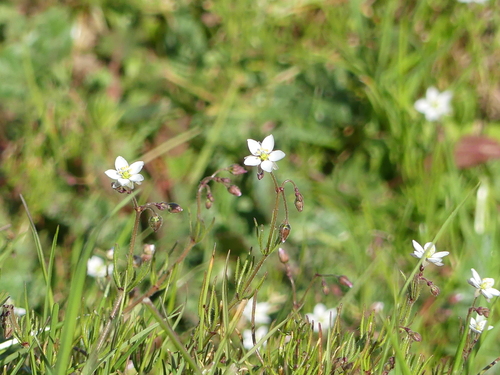
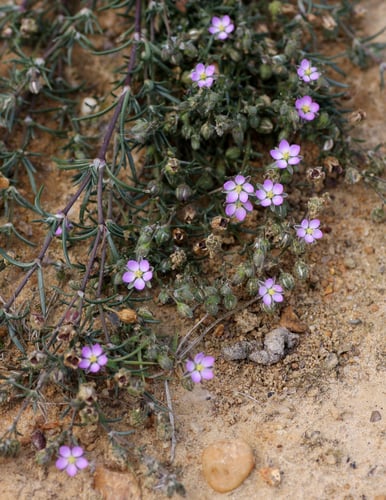
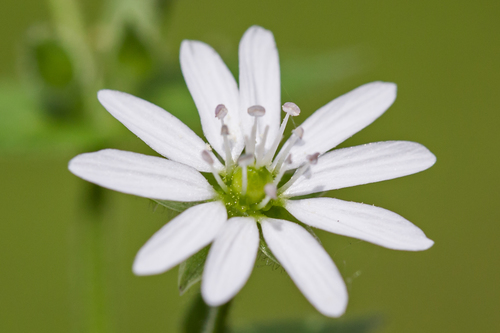
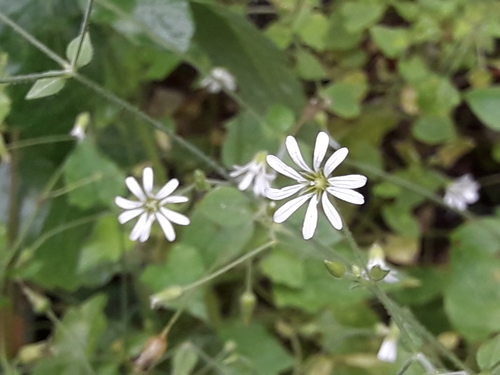
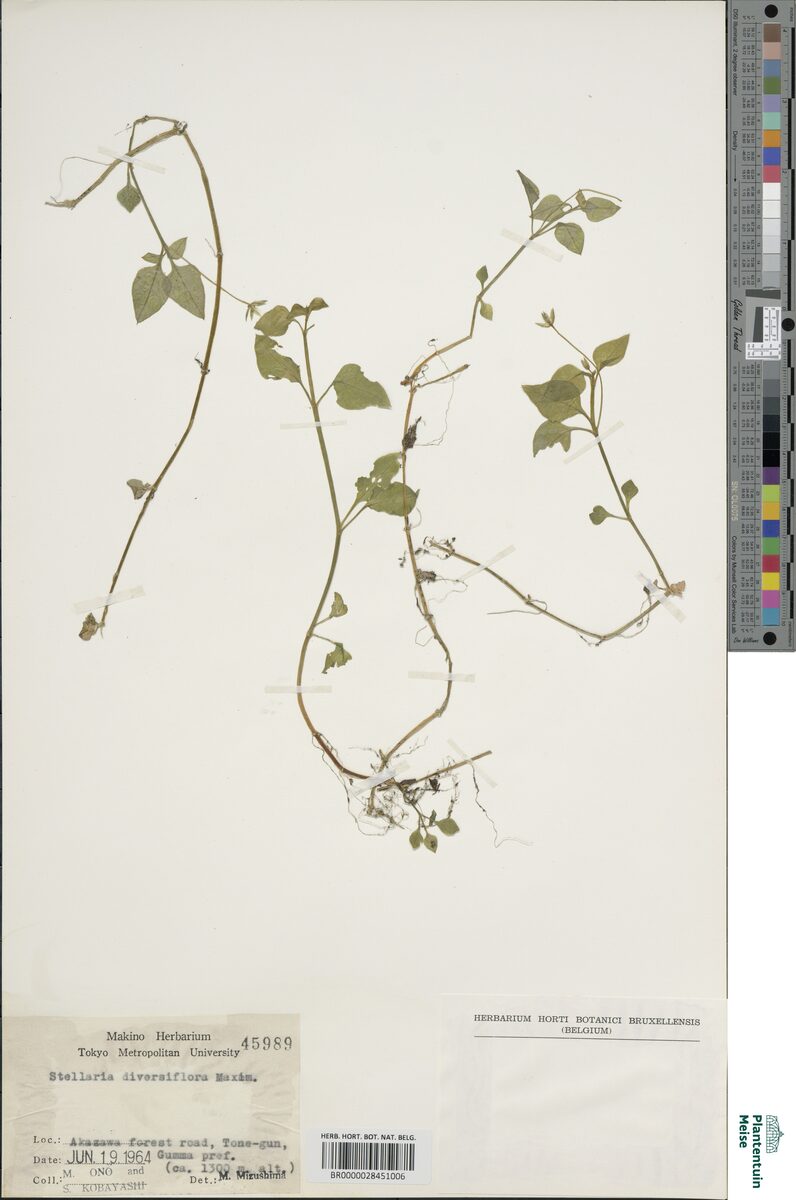
Stellaria radians
L.
Sui ban fan lu
iNaturalist· cc-by-nc
(c) Ольга Курякова, some rights reserved (CC BY-NC), uploaded by Ольга Курякова
iNaturalist· cc-by-nc
(c) Герасименко Евгений Владимирович, some rights reserved (CC BY-NC)
iNaturalist· cc-by-nc
(c) Герасименко Евгений Владимирович, some rights reserved (CC BY-NC)
Summary
Perennial with hermaphrodite, insect-pollinated flowers. Grows in light sandy, medium loamy, and heavy clay soils with mildly acidic to basic pH. Tolerates semi-shade or full sun and prefers moist conditions.
Description
A herb. It keeps growing from year to year. It is woolly. The stems are erect and 4 sided. It grows 40-60 cm tall. The leaves are a long sword shape. They are 3-12 cm long by 2-3 cm wide.
Edible Uses
Young leaves can be eaten cooked.
Medicinal Uses
None known
Known Hazards
Although no mention has been seen for this species, the leaves of some members of this genus contain saponins. Although toxic, these substances are very poorly absorbed by the body and so tend to pass through without causing harm. They are also broken down by thorough cooking. Saponins are found in many plants, including several that are often used for food, such as certain beans. It is advisable not to eat large quantities of food that contain saponins. Saponins are much more toxic to some creatures, such as fish, and hunting tribes have traditionally put large quantities of them in streams, lakes etc in order to stupefy or kill the fish.
Distribution
It is a temperate plant. It grows in hill scrublands, forest margins between 300–500 m altitude in China.
Where It Grows
Asia, Japan, Korea, Mongolia, Russia, Siberia,
Cultivation
We have very little information on this species and do not know if it will be hardy outdoors in Britain, though judging by its native range it should succeed outdoors at least in the milder parts of the country. See the plants native habitat for ideas on its cultivation needs.
Propagation
Sow seed in spring in a cold frame. Once seedlings are large enough to handle, prick them out into individual pots and plant out during summer.
Other Uses
None known
Notes
There are about 130 Stellaria species. They are mostly in temperate regions.
Synonyms
References (2)
- Lu Dequan, Wu Zhengyi, Zhou Lihua, Chen Shilong; Michael G. Gilbert, Magnus Lidén, John McNeill, John K. Morton, Bengt Oxelman, Richard K. Rabeler, Mats Thulin, Nicholas J. Turland, Warren L. Wagner, CARYOPHYLLACEAE, Flora of China.
- Plants for a Future database, The Field, Penpol, Lostwithiel, Cornwall, PL22 0NG, UK. http://www.scs.leeds.ac.uk/pfaf/