Spondias purpurea
L.
Purple mombin
iNaturalist· cc-by-nc
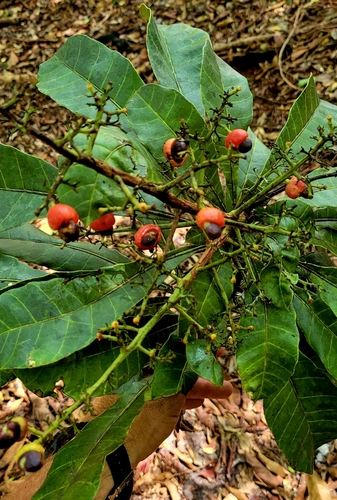
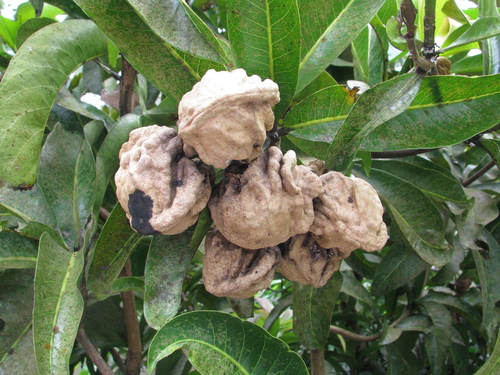
(c) Aurelio Molina Hernández., some rights reserved (CC BY-NC), uploaded by Aurelio Molina Hernández.
iNaturalist· cc-by-nc
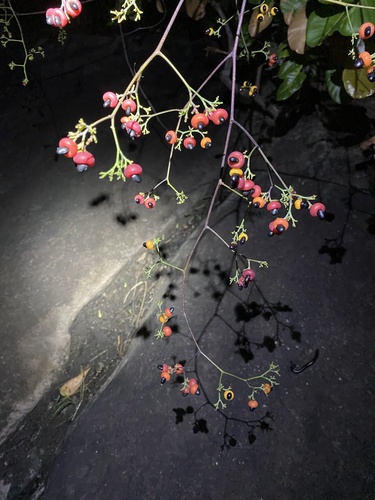
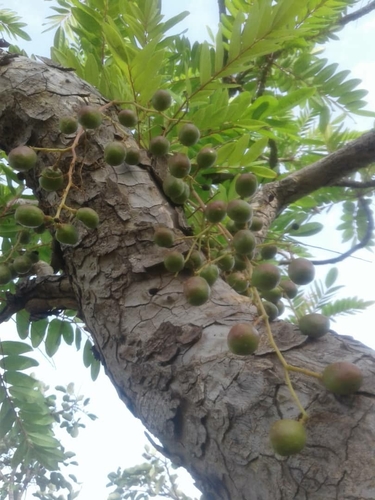
(c) Unidad Educativa Fiscal Portoviejo, some rights reserved (CC BY-NC)
iNaturalist· cc-by-nc
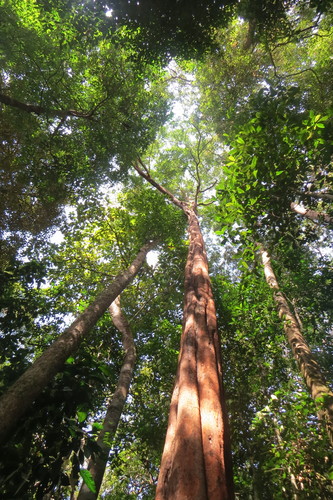
(c) Unidad Educativa Fiscal Portoviejo, some rights reserved (CC BY-NC)
Summary
Source: WikipediaSpondias purpurea is a species of flowering plant in the cashew family, Anacardiaceae, that is native to tropical regions of the Americas, from Mexico to northern Colombia and the southwest Caribbean Islands. It has also been introduced to and naturalized to other parts of the American tropics, Southeast Asia, and West Africa. It is commonly known as jocote, which derives from the Nahuatl word xocotl, meaning any kind of sour or acidic fruit. Other common names include red mombin, Spanish plum, purple mombin, Jamaica plum, and hog plum.
Description
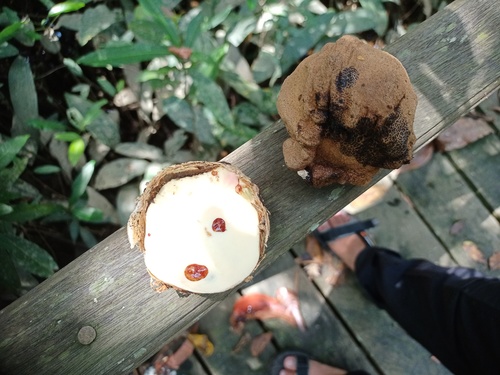
A medium sized tree. It grows 4-10 m high. It has an irregular trunk and broad crown. Often it is low and sprawling. It loses its leaves during the year. The leaves are made up of 5-12 pairs of leaflets. The leaflets are 2-4 cm long and they fall before flowering. The flowers are red and in groups 3-5 cm long. They are on the small branches. The fruit are small and red and sub-acid. They are round or oval and 2.5-5 cm long. They often grow in clusters of three. The fruit is edible. The fruit has a woody kernel which contains the seed. The flesh is creamy-yellow.
Edible Uses
The fruit can be eaten raw or cooked with sugar. The juicy yellow pulp is spicy and subacid, said to resemble a plum in flavour. Usually eaten ripe and raw, though the sour green fruits are also eaten by children and adults. It is used for jams and ice cream, and unripe fruits are pickled or made into a tart green sauce. The yellow or purplish-red cylindrical fruits are 25–30mm long. Young shoots and leaves, which are often conspicuously red and purple, have an agreeable acid flavour and are eaten raw or cooked. The leaves contain 5.5% protein. The seeds are also edible.
Traditional Uses
The fruit are eaten fresh or cooked or for jelly. It is used for drinks. The stone or kernel can be roasted and eaten. The leaves are cooked and eaten.
Medicinal Uses
The leaves exhibit antibacterial properties. Leaf juice is taken orally to treat swollen glands and trauma. Crushed leaves are applied as a poultice for headaches. In large amounts the fruit is laxative and is used to treat constipation. The plant is also used to treat dysentery and diarrhoea, and parts of the plant are used in a herbal remedy for sore throat.
Known Hazards
The seed is toxic.
Distribution
It is a tropical plant. It suits the hot tropical lowlands. It grows naturally in tropical America. It is resistant to drought. It will produce on poor soils. They grow from sea level to 1,200 m altitude in Mexico.
Where It Grows
Africa, Amazon, Anguilla, Antigua and Barbuda, Asia, Aruba, Australia, Bahamas, Bangladesh, Barbados, Belize, Bolivia*, Brazil, Central America*, Colombia, Costa Rica, Cuba, Dominican Republic, Ecuador, El Salvador, Grenada, Guadeloupe, Guam, Guatemala, Guiana, Guinea-Bissau, Guyana, Haiti, Honduras, Jamaica, Lesser Antilles, Martinique, Mexico*, Nicaragua, North America, Pacific, Panama, Peru, Philippines, Puerto Rico, SE Asia, Sierra Leone, South America, St. Lucia, St. Vincent and Grenadines, USA, Venezuela, West Africa, West Indies,
Cultivation
Seeds do not normally grow. Plants are grown by cuttings and stem sprouts. Straight cuttings 6 cm thick and 1.5 m long are used. The cuttings are made at the start of leaf production. The cuttings are kept in the shade for a couple of weeks. They are then planted 8 m apart and at a depth of 30 cm. Flowers bud on the current year's growth so pruning can be done yearly. Pruning increases the size and weight of fruit.
Propagation
Fairly easy to grow from quite large cuttings.
Other Uses
Trees are frequently planted as living fence posts and are considered among the best for this purpose in tierra caliente regions. Even large limbs cut and set in the ground root quickly, and they are often planted thickly to form immediate barriers. Wood ashes are used in soap-making in some regions, and parts of the tree are used in cosmetic and hygienic products such as soap. The seeds have a thick gum coating used in chilli stews; this gum is highly water-soluble and on hydrolysis yields polysaccharides, with aspartic acid and valine as its major amino acid constituents. The whitish wood is soft, light, and brittle, and has been used for paper pulp in Brazil. The easily cut branches serve as firewood.
Production
The fruit matures in about 120 days.
Other Information
It is a cultivated food plant. Fruit are sold in markets.
Nutrition
| Part | Moisture | kJ | kcal | Protein | Vit A | Vit C | Iron | Zinc |
|---|---|---|---|---|---|---|---|---|
| Fruit | 76.2 | 347 | 83 | 0.16 | 30 | 45 | 1.1 | — |
| Leaves | 88.6 | 146 | 35 | 4.3 | — | — | 2.8 | — |
Synonyms
Also Known As
Abal-ac, Ateyaxocotl, Beelati amra, Caja, Ciriguela, Ciruela, Ciruela colorado, Ciruelo, Hog-plum, Jamaican plum, Jocote, Jogo tain, Obito, Ovo, Pahara, Red mombin, Rum, Seriguela, Siniguelas, Spanish-plum, Walak
References (69)
- Altschul, S.V.R., 1973, Drugs and Foods from Little-known Plants. Notes in Harvard University Herbaria. Harvard Univ. Press. Massachusetts. no. 2493
- Arellanes, Y., et al, 2013, Influence of traditional markets on plant management in the Tehuacan Valley. Journal of Ethnobiology and Ethnomedicine 9:38
- Barfod, A. S. & Kvist, L. P., 1996, Comparative Ethnobotanical Studies of the Amerindian Groups in Coastal Ecuador. The Danish Academy of Sciences and Letters. p 76
- Barwick, M., 2004, Tropical and Subtropical Trees. A Worldwide Encyclopedic Guide. Thames and Hudson p 380
- Burkill, H. M., 1985, The useful plants of west tropical Africa, Vol. 1. Kew.
Show all 69 references Hide references
- Casas, A., 2016, Evolutionary Ethnobotanical Studies of Incipient Domestication of Plants in Mesoamerica. In Lira, R., et al, (eds.) Ethnobotany of Mexico, Ethnobiology. Springer p 258
- Chizmar Fernandez, C., et al, 2009, Plantas comestibles de Centroamerica. Instituto de Biodiversidad, Costa Rica. p 29
- Coe, F. G., and Anderson, G. J., 1996, Ethnobotany of the Garifuna of Eastern Nicaragua. Economic Botany 50(1) pp 71-107
- Coe, F. G. & Anderson, G. J., 1997, Ethnobotany of the Miskitu of Eastern Nicaragua. Journal of Ethnobiology 17(2): 171-214
- Coe, F. G. and Anderson, G. J., 1999, Ethnobotany of the Sumu (Ulwa) of Southeastern Nicaragua and Comparisons with Miskitu Plant Lore. Economic Botany Vol. 53. No. 4. pp. 363-386
- Coronel, R.E., 1982, Fruit Collections in the Philippines. IBPGR Newsletter p 8
- Cruz, I. M., et al, 2015, Edible fruits and seeds in the State of Mexico. Revista Mexicana de Ciencias Agricolas. Vol. 6. Num. 2 pp 331-346
- D'Ambrosio, U., & Puri, R. K., 2016, Foodways in transition: food plants, diet and local perceptions of change in a Costa Rican Ngäbe community. Journal of Ethnobiology and Ethnomedicine (2016) 12:3 p 22
- Darley, J.J., 1993, Know and Enjoy Tropical Fruit. P & S Publishers. p 121
- Ding Hou, 1978, Anacardiaceae, in Flora Malesiana Ser 1 Vol 8(3) p 479-486. p 485
- Facciola, S., 1998, Cornucopia 2: a Source Book of Edible Plants. Kampong Publications, p 11
- FAO, 1993, Valor Nutritivo Y Usis en Alimantacion humana de Algunis Cultivos Autoctonos Subexplotados de Mesoamerica. FAO, Santiago, Chile. p 22
- Flowerdew, B., 2000, Complete Fruit Book. Kyle Cathie Ltd., London. p 163
- Food Composition Tables for use in East Asia FAO http://www.fao.org/infoods/directory No. 917
- Grandtner, M. M., 2008, World Dictionary of Trees. Wood and Forest Science Department. Laval University, Quebec, Qc Canada. (Internet database http://www.wdt.qc.ca)
- Hedrick, U.P., 1919, (Ed.), Sturtevant's edible plants of the world. p 632
- Hermandez Bermejo, J.E., and Leon, J. (Eds.), 1994, Neglected Crops. 1492 from a different perspective. FAO Plant Production and Protection Series No 26. FAO, Rome. p14, 111
- Hibbert, M., 2002, The Aussie Plant Finder 2002, Florilegium. p 293
- Janick, J. & Paul, R. E. (Eds.), 2008, The Encyclopedia of Fruit & Nuts. CABI p 34
- Jardin, C., 1970, List of Foods Used In Africa, FAO Nutrition Information Document Series No 2.p 163
- John, L., & Stevenson, V., 1979, The Complete Book of Fruit. Angus & Robertson p 154
- JSTOR Global Plants edible
- Kermath, B. M., et al, 2014, Food Plants in the Americas: A survey of the domesticated, cultivated and wild plants used for Human food in North, Central and South America and the Caribbean. On line draft. p 834
- Kiple, K.F. & Ornelas, K.C., (eds), 2000, The Cambridge World History of Food. CUP p 1785, 1856
- Leal, M. L. et al, 2018, Knowledge, use, and disuse of unconventional food plants. Journal of Ethnobiology and Ethnomedicine (2018) 14:6
- Piedra-Malagón, E. M. et al, 2022, Edible native plants of the Gulf of Mexico Province. Biodiversity Data Journal 10: e80565 p 9
- Llamas, K.A., 2003, Tropical Flowering Plants. Timber Press. p 60
- Lopez-Diago, D. & Garcia, N., 2021, Wild edible fruits of Colombia. Biota ColomBiana 22 (2) p 28
- Lorenzi, H., Bacher, L., Lacerda, M. & Sartori, S., 2006, Brazilian Fruits & Cultivated Exotics. Sao Paulo, Instituto Plantarum de Estuados da Flora Ltda. p 357
- Mapes, C. & Basurto, F., 2016, Biodiversity and Edible Plants of Mexico. Chapter 5 in R. Lira, et al. (eds.), Ethnobotany of Mexico, Ethnobiology, Springer. p 96
- Martin, F.W. & Ruberte, R.M., 1979, Edible Leaves of the Tropics. Antillian College Press, Mayaguez, Puerto Rico. p 55, 175
- Martin, F. W., et al, 1987, Perennial Edible Fruits of the Tropics. USDA Handbook 642 p 15
- Morton, J. F., 1987, Fruits of Warm Climates. Wipf & Stock Publishers p 242
- NYBG Herbarium "edible"
- Omawale, 1973, Guyana's edible plants. Guyana University, Georgetown p 49
- Pascual-Mendoza, S. et al, 2021, Traditional knowledge of edible plants in an indigenous community in the Sierra Norte of Oaxaca, Mexico. Plant Biosystems - An International Journal Dealing with all Aspects of Plant Biology
- Pasha, M. K. & Uddin, S. B., 2019, Minor Edible Fruits of Bangladesh. Bangladesh J. Plant Taxon. 26(2): 299–313
- Penafield Anchundia, D. D., 2017, Traditional food consumption and its nutritional contribution in Guasaganda, Central Ecuador. PhD Ghent University p 71
- Piedra-Malagón, E. M. et al, 2022, Edible native plants of the Gulf of Mexico Province. Biodiversity Data Journal 10: e80565 p 9
- Plants of Haiti Smithsonian Institute http://botany.si.edu
- Popenoe, W., 1920,
- Purseglove, J.W., 1968, Tropical Crops Dicotyledons, Longmans. p 18
- Recher, P, 2001, Fruit Spirit Botanical Gardens Plant Index. www.nrg.com.au/~recher/ seedlist.html p 3
- Rivero, J. A., y Brunner, B. R., 2007, Arborels frutales exoticas y poco conocidos en Puerto Rico. Universidad de Puerto Rico. p 12
- Roa, J. A. G. & Boada, D. S. G., 2018, Fundación para el Fortalecimiento de la Fruticultura y Plantas Alimenticias no Convencionales en Colombia.
- Segura, S. et al, 2018, The edible fruit species in Mexico. Genet Resour Crop Evol (2018) 65:1767–1793
- Sp. pl. ed. 2, 1:613. 1762
- Steggerda, M., Some Ethnological Data Concerning One Hundred Yucatan Plants. Smithsonian Institution Anthropological Papers, No. 29
- Tankard, G., 1990, Tropical fruit. An Australian Guide to Growing and using exotic fruit. Viking p 114
- Terra, G.J.A., 1973, Tropical Vegetables. Communication 54e Royal Tropical Institute, Amsterdam, p 76
- Timyan, J., 1996, Bwa Yo: Important Trees of Haiti. SE Consortium for International Development. Washington. p 220
- Torre, de la L., et al, 2008, Enciclopedia de las Plantas Útiles del Ecuador. Herbario QCA. Pontificia Universidad Católica del Ecuador. p 162
- Turreira-Garcia, N., et al, 2015, Wild edible plant knowledge, distribution and transmission: a case study of the Achi Mayans of Guatemala. Journal of Ethnobiology and Ethnomedicine. 11:52
- Ulian, T., et al, 2020, Unlocking plant resources to support food security and promote sustainable agriculture. Plants, People, Planet. 2020;2:421–445.
- USDA, ARS, National Genetic Resources Program. Germplasm Resources Information Network - (GRIN). [Online Database] National Germplasm Resources Laboratory, Beltsville, Maryland. Available: www.ars-grin.gov/cgi-bin/npgs/html/econ.pl (10 April 2000)
- Vael, L., 2015, Ethnobotanical study of the plant use in the natural landscape of two mestizo communities in the Ucayali region of the Peruvian Amazon. Universiteit Gent.
- van Wyk, B., 2005, Food Plants of the World. An illustrated guide. Timber press. p 355
- Walter, A. & Sam C., 2002, Fruits of Oceania. ACIAR Monograph No. 85. Canberra. p 245
- Wiersema, J. H. & Leon, B., 2013, World Economic Plants. A Standard Reference CRC Press. 2nd Ed. p 657
- Wilson, M. R., Ethnobotanical List. PhD thesis: A Highland Maya People and Their Habitat. quantamike.ca
- Woodson, R. E. et al, 1967, Flora of Panama. Part 6. Family 101. Anacardiaceae. Annals of the Missouri Botanical Gardens, Vol. 54, No. 3 p 361
- World Checklist of Useful Plant Species 2020. Royal Botanic Gardens, Kew
- www.worldagroforestrycentre.org/treedb/
- Zuchowski W., 2007, Tropical Plants of Costa Rica. A Zona Tropical Publication, Comstock Publishing. p 213