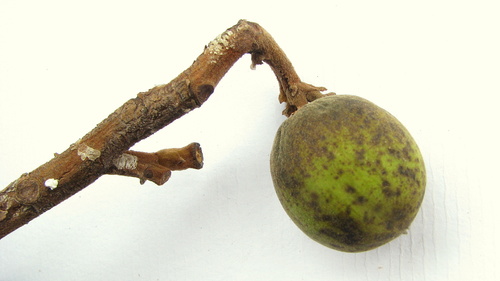
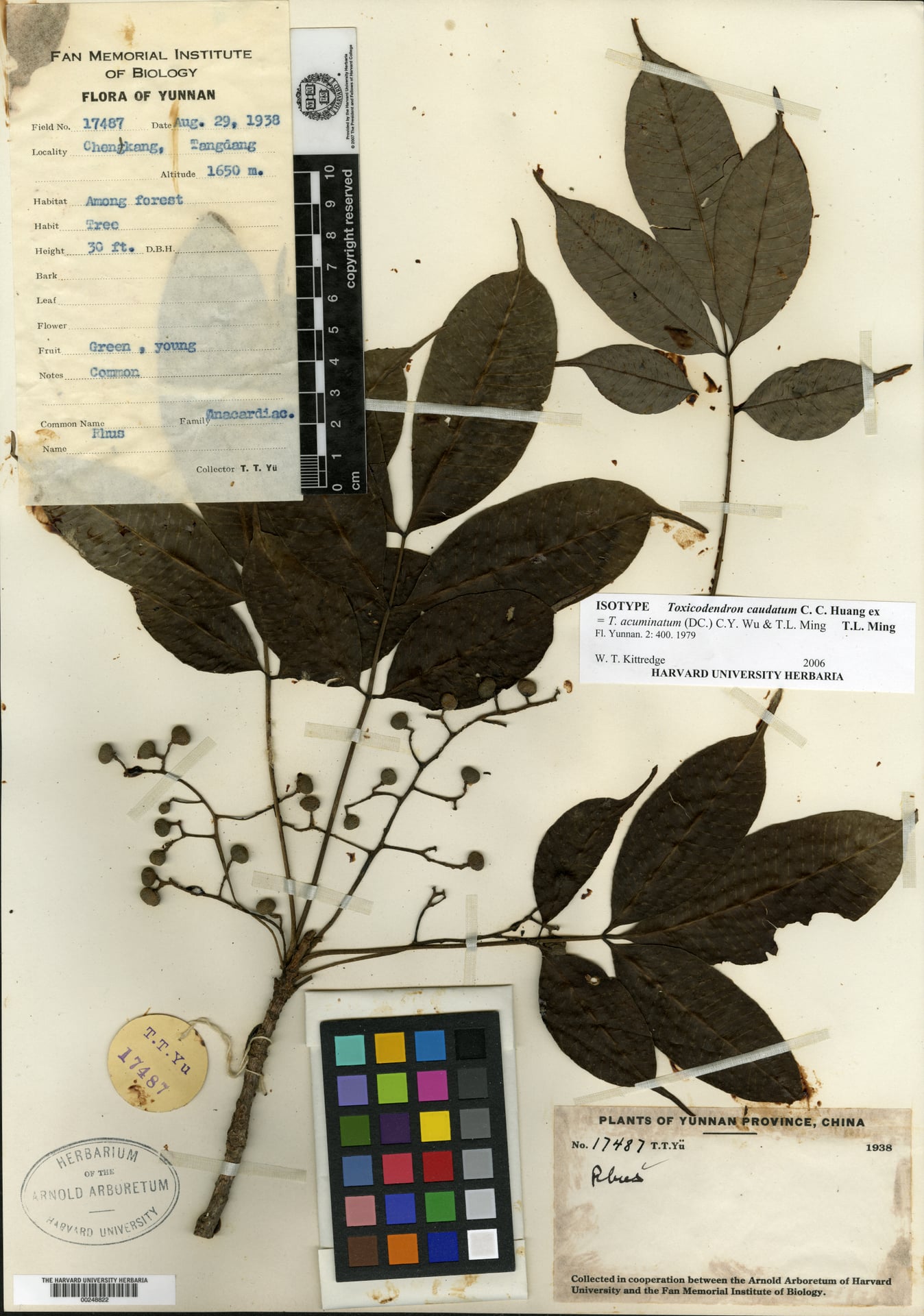
Spondias pinnata
(J. Koenig ex L. f.) Kurz
Malayan mombin
iNaturalist· cc-by-nc-sa
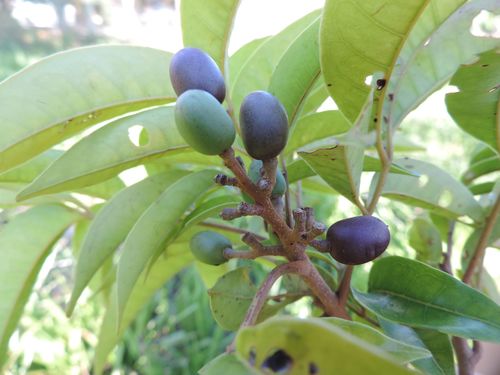
(c) Dinesh Valke, some rights reserved (CC BY-NC-SA)
iNaturalist· cc-by-nc
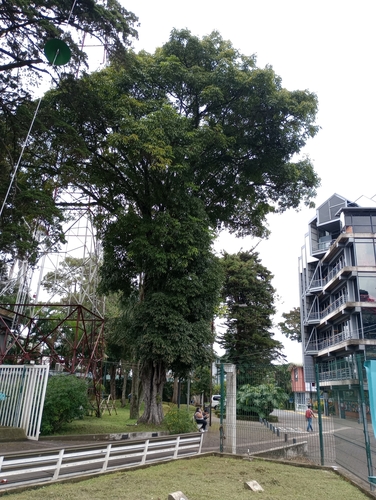
(c) Radha Veach, some rights reserved (CC BY-NC)
iNaturalist· cc-by-nc
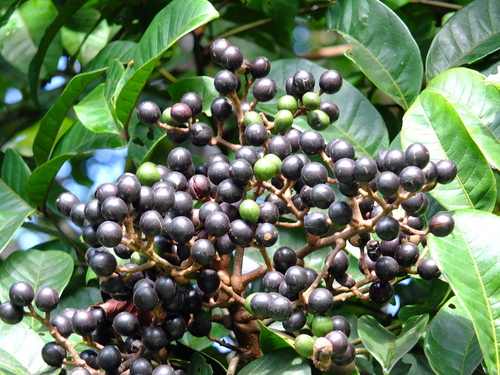
(c) Radha Veach, some rights reserved (CC BY-NC)
Summary
Source: WikipediaSpondias pinnata, sometimes also known as hog plum, is a species of tree with edible sour fruits. It is native to the Philippines and Indonesia, but has been widely naturalized in South Asia, Mainland Southeast Asia, Southern China, and the Solomon Islands. It belongs to the family Anacardiaceae. This species, among several others, has sometimes been called the "wild (or forest) mango" in other languages and was once placed in the genus Mangifera. It is found in lowlands and hill forests up to 1,200 m (3,900 ft).
Description
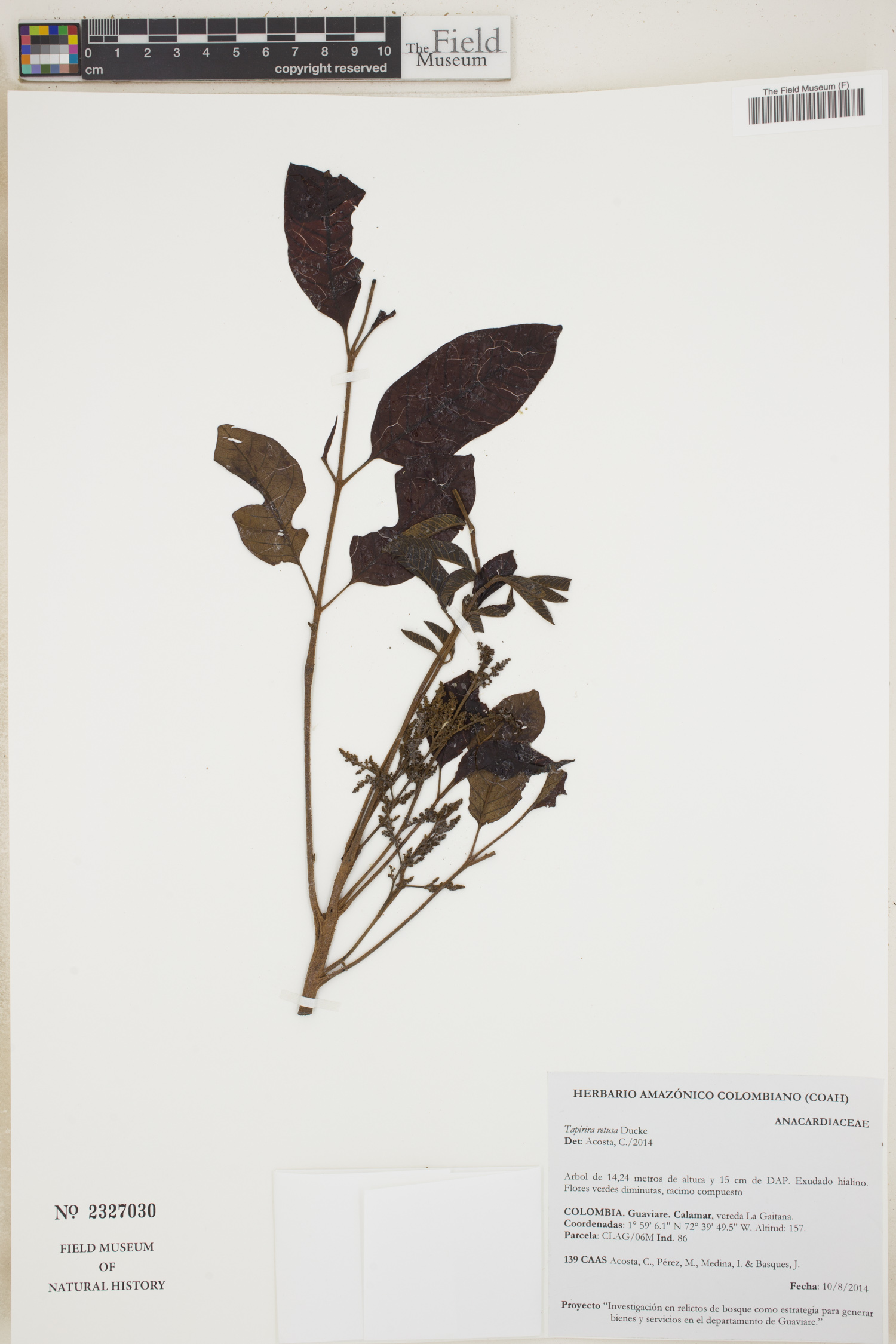
A medium sized tree. It grows 15-40 m high. The trunk can be 60-100 cm across. The leaves are 20-60 cm long and made up of several leaflets. The leaves and leaflets are carried alternately. The leaflets are pointed at the tip and rounded at the base. The leaflets are 7 to 14 cm long by 2.5-6 cm wide. There are 5-11 leaflets with a leaflet at the end. The flowers are in a long panicle at the ends of branches. The flowers are greenish-white. The fruit are rounded and yellow with an edible pulp around a fibrous stone. The fruit can be 4-7 cm long.
Edible Uses
The fruits have a sour taste and can be eaten raw or made into jams, jellies, or juices. They can also be used as feed for pigs (hence the common name "hog plum"). In the Philippines, libas leaves and fruits are used as a souring agent in various native dishes like sinigang, sinanglay, or laing. In India, ambda pickle is made using quartered ambda fruits preserved in mustard oil, salt, and spices. Along with mango and chili pepper pickle, it is the most common type of pickle found in households in many parts of India.
Traditional Uses
The fleshy portion of the ripe fruit is eaten raw. It is sour-sweet. They are also pickled. Seeds are also eaten. The fruit are eaten as a vegetable when green. The young leaves are cooked and eaten. They are used for flavouring. The flowers are sour and eaten raw or used in curries or used as a flavouring. The unripe fruit are used in chutneys, stews, pickles, and jams.
Medicinal Uses
The fruit is used as an astringent and antiscorbutic. It is used in the treatment of bilious dyspepsia. The juice of the fruit is applied against earache. The bark is recommended in the treatment of stomach aches and dysentery. A paste of the bark is applied topically in the treatment of rheumatism and swollen joints. The root is considered to be useful in regulating menstruation.
Distribution
A tropical plant. It grows in tropical Asia. It grows in secondary semi deciduous forest. In Vietnam it is below 1,000 m altitude. It needs sunlight. It can tolerate drought and grow on poor soils. They are found in forests at low altitude from Luzon to Mindanao in the Philippines. In Nepal it grows between 300-1400 m altitude. It grows in areas with a maximum temperature between 38°-45°C. In XTBG Yunnan.
Where It Grows
Andamans, Asia, Australia, Bangladesh, Bhutan, Brazil, Cambodia, China, Colombia, Cuba, Hawaii, Himalayas, India, Indochina, Indonesia, Laos, Malaysia, Micronesia, Myanmar, Nepal, Northeastern India, Pacific, Pakistan, Palau, Philippines, Pohnpei, SE Asia, Singapore, South America, Sikkim, Sri Lanka, Thailand, USA, Vietnam, West Indies, West Timor,
Cultivation
Plants are grown from seed. Seedlings need to be transplanted very carefully. They can also be grown by cuttings.
Propagation
Seed - Cuttings
Other Uses
The wood is soft and deteriorates quickly in the open. It can be used for lower value items such as packing cases, floats, matches and non-ornamental plywood, and is traditionally used for making canoes. The wood is used for mouldings, interior finishing, drawers, pulp, matchboxes, boxes, crates, carvings. It is fairly good for unbleached wood pulp. The wood makes a poor quality fuel.
Production
Plants start to fruit after 4-5 years. In NE India fruit are available May to November.
Other Information
The leaves and fruit are sold in local markets. It is a cultivated food plant.
Nutrition
| Part | Moisture | kJ | kcal | Protein | Vit A | Vit C | Iron | Zinc |
|---|---|---|---|---|---|---|---|---|
| Fruit | 86.7 | 213 | 51 | 1.1 | — | 77 | 2.8 | 0.2 |
Synonyms
Also Known As
Adavimaamidi, Amara, Amaratoko, Amaro, Amaru, Amatekaye, Amato, Amb, Ambada, Ambalam, Ambaletong, Ambara, Ambaru, Ambattemara, Ambazham, Ambhazham, Ambiram, Ambra, Ambula, Amda, Amna, Amodo, Amora, Amora, Ampallai, Amra jouru, Amra, Amratenga, Amta, Anara, Anbada, Arbaru, Bahamb, Bak kawek, Bashok, Bilati amra, Bile tree, Bon amrah, Buah amra, Buah larah, Bwe-baung, Ciruela cochinera, Coc chua, Coc rung, Chiming, Daun kedondong, Deshi-amra, Dieng-soh-pair-kynthai, Ding-kok, Dorge, Dorgu dorge, Eginam, Emberella, Emungthi, Ga li le biu, Galinu, Go, Gooddamate, Gue, Guo, Gwe, Heining, Hpunnam-makawk, Ibangam, Ivurumaamidi, Jangli am, Jongmot, Kaadamate, Kataambolam, Katamara, Kathimagirangai, Kattuma, Kawk, Khatakumba, Khatambni, Kok khao, Ko:k ku:k, Kok kuk, Kok-mong, Kondamaanidi, Kotamara, Kraa-phai, Kuk, Kushi, Libas, Ma-kok, Mai-kawk, Maimuguo, Makawk, Mak kok, Makok pa, Malai, Mamedi, Manpuli, Manpulichi, Marahunsie, Mari-man-chedi, Mezi, Mirrey manga, Mkark prey, Mokak, Mo-kak prey, Njing-chi, Pailuo, Pei nuo, Peilou, Phai, Pi luo si, Pohon kedongdong pinata, Poondi, Puliman, Pullipullama, Pwe-baung, Ranamba, Ranchi ling, Rumkung, Seming, Shilashi, Siming, Sli soh repid, Sudam, Taisuri, Taitaw, Tawi-taw, Thaisudi, Thaisuri, Theikhong-chom, Touramaamidi, Traveller's delight, Tuaiteng, Vrykshamla, Wild mango
References (130)
- Aiguo, C. & Zhiling, D., 2001, Managing Agricultural Resources for Biodiversity Conservation. Case Study Yunnan, Southwest China. Environment Liaison Center International. p 40
- Ajesh, T. P., et al, 2012, Ethnobotanical Documentation of Wild Edible Fruits used by Muthuvan Tribes of Idukki, Kerala-India. International Journal of Pharma and Bio Sciences 3(3): 479-487
- Altschul, S.V.R., 1973, Drugs and Foods from Little-known Plants. Notes in Harvard University Herbaria. Harvard Univ. Press. Massachusetts. no. 2495
- Ambasta, S.P. (Ed.), 2000, The Useful Plants of India. CSIR India. p 595
- Anderson, E. F., 1993, Plants and people of the Golden Triangle. Dioscorides Press. p 222
Show all 130 references Hide references
- A Rapid Participatory Biodiversity Assessment. 2007, Southern Lao PDR. IUCN p 42
- Arora, K., Indigenous Forest Management in the Andaman and Nicobar Islands, India. (Also as Spondias mangifera)
- Arora, R. K., 2014, Diversity in Underutilized Plant Species - An Asia-Pacific Perspective. Bioversity International. p 87
- Baishya, S. Kr., et al, 2013, Survey of Wild Edible Fruits of Dhubri District, Assam, India. Plant Archives Vol 13 (1): 155-158
- BARC, 2016, State of Biodiversity for Food and Agriculture in Bangladesh. Bangladesh Agricultural Research Council.
- Bohra, N., et al, 2017, Ethnobotany of wild edible plants traditionally used by the local people in the Ramnagar regions from Nainital District, Uttarakhand, India. Biolife 5(1): 12-19
- Brahma, S., et al, 2013, Wild edible fruits of Kokrajhar district of Assam, North-East India, Asian Journal of Plant Science and Research 3(6):95-100
- Brown, W.H., 1920, Wild Food Plants of the Philippines. Bureau of Forestry Bulletin No. 21 Manila. p 100
- Burkill, I.H., 1966, A Dictionary of the Economic Products of the Malay Peninsula. Ministry of Agriculture and Cooperatives, Kuala Lumpur, Malaysia. Vol 2 (I-Z) p 2104
- Cao, Y., et al, 2020, Ethnobotanical study on wild edible plants used by three trans-boundary ethnic groups in Jiangcheng County, Pu’er, Southwest China. Journal of Ethnobiology and Ethnomedicine (2020) 16:66
- Chandrashekara, U. M., 2009, Tree species yielding edible fruit in the coffee-based homegardens of Kerala, India: their diversity, uses and management. Food Sec. 1:361-370
- Chase, P. & Singh, O. P., 2016, Bioresources of Nagaland: A Case of Wild 4 Edible Fruits in Khonoma Village Forest. in J. Purkayastha (ed.), Bioprospecting of Indigenous Bioresources of North-East India. p 51
- Chauhan, S. H., et al, 2018, Consumption patterns of wild edibles by the Vasavas: a case study from Gujarat, India. Journal of Ethnobiology and Ethnomedicine (2018) 14:5 (As Spondias acuminata)
- Chowdery, T., et al, 2014, Wild edible plants of Uttar Dinajpur District, West Bengal. Life Science Leaflets. 47:pp 20-36 http://lifesciencesleaflets.ning.com
- Chowdhury, M. & Mukherjee, R., 2012, Wild Edible Plants Consumed by Local Communities of Maldah of West Bengal, India. Indian J.Sci.Res.3(2) : 163-170
- Coronel, R.E., 1982, Fruit Collections in the Philippines. IBPGR Newsletter p 8
- Cruz-Garcia, G. S., & Price, L. L., 2011, Ethnobotanical investigation of 'wild' food plants used by rice farmers in Kalasin, Northeast Thailand. Journal of Ethnobiology and Ethnomedicine 7:33
- Das, S. and De, B., 2013, Evaluation of Angiotension I-Converting Enzyme (ACE) inhibitory potential of some underutilized indigenous fruits of West Bengal using an in vitro model. Fruits, Vol. 68:499-506
- Das, T. & Das, A. K., 2005, Inventorying plant biodiversity in homegardens: A case study in Barak Valley, Assam, North East India. CURRENT SCIENCE, VOL. 89, NO. 1, 10 JULY 2005
- Datar, M. N. & Upadhye, A. S., 2015, Forest foods of Northern Western Ghats: Mode of Consumption, Nutrition, and Availability. Asian Agri-History Vol. 19, No. 4, 2015 (293–316)
- Devi, O.S., P. Komor & D. Das, 2010, A checklist of traditional edible bio-resources from Ima markets of Imphal Valley, Manipur, India. Journal of Threatened Taxa 2(11): 1291-1296 (As Spondias mangifera)
- Ding Hou, 1978, Anacardiaceae, in Flora Malesiana Ser 1 Vol 8(3) p 479-486. p 483
- Dobriyal, M. J. R. & Dobriyal, R., 2014, Non Wood Forest Produce an Option for Ethnic Food and Nutritional Security in India. Int. J. of Usuf. Mngt. 15(1):17-37
- Dutta, U., 2012, Wild Vegetables collected by the local communities from the Churang reserve of BTD, Assam. International Journal of Science and Advanced Technology. Vol. 2(4) p 124
- Eiadthong, W., et al, 2010, Management of the Emerald Triangle Protected Forests Complex. Botanical Consultant Technical Report. p 23
- Ethnobotany of Karbis. Chapter 4 in p 101, 105
- Facciola, S., 1998, Cornucopia 2: a Source Book of Edible Plants. Kampong Publications, p 11 (As Spondias mangifera)
- Forest Inventory and Planning Institute, 1996, Vietnam Forest Trees. Agriculture Publishing House p 41
- Fu, Yongneng, et al, 2003, Relocating Plants from Swidden Fallows to Gardens in Southwestern China. Economic Botany, 57(3): 389-402
- Gardner, S., et al, 2000, A Field Guide to Forest Trees of Northern Thailand, Kobfai Publishing Project. p 151
- Gautam, R. S., et al, 2020, Wild Edible Fruits of Nepal. Int. J. Appl. Sci. Biotechnol. Vol 8(3): 289-304
- Gautam, R. S., et al, 2022, Ethnobotanical Review of Wild Edible Plants of Nepal. Journal of Natural History Museum Volume 32, 2021-22 p 103
- Ghimeray, A. K., Lamsal, K., et al, 2010, Wild edible angiospermic plants of the Illam Hills (Eastern Nepal) and their mode of use by local community. Korean J. Pl. Taxon. 40(1) (As Spondias mangifera)
- Ghorbani, A., et al, 2012, A comparison of the wild food plant use knowledge of ethnic minorities in Naban River Watershed Nature Reserve, Yunnan, SW China. Journal of Ethnobiology and Ethnomedicine; 8:17
- Guite, C., 2016, Study of wild edible plants associated with the Paite Tribe of Manipur, India. International Journal of Current Research. Vol. 8, Issue 11, pp. 40927-40932
- Hazarika, B. et al. (2020). An overview of the unexplored underutilized fruit crops of Assam, India. Journal of Applied and Natural Science, 12(3): 442 - 453
- Hedrick, U.P., 1919, (Ed.), Sturtevant's edible plants of the world. p 631 (As Spondias mangifera)
- Hibbert, M., 2002, The Aussie Plant Finder 2002, Florilegium. p 293
- Irawan, D., et al, 2006, Ethnobotanical study and nutrient potency of local traditional vegetables in Central Kalimantan. Tropics Vol. 15(4)
- Hu, Shiu-ying, 2005, Food Plants of China. The Chinese University Press. p 519
- Jacquat, C., 1990, Plants from the Markets of Thailand. D.K. Book House p 82
- Jadhav, R., et al, 2015, Forest Foods of Northern Western Ghats: Mode of Consumption, Nutrition and Availability. Asian Agri-History Vol. 19, No. 4: 293-317
- Jin, Chen et al, 1999, Ethnobotanical studies on Wild Edible Fruits in Southern Yunnan: Folk Names: Nutritional Value and Uses. Economic Botany 53(1) pp 2-14
- Jiwajinda, S., et al, 2002, Suppressive Effects of Edible Thai Plants on Superoxide and Nitric Oxide Generation. Asian Pacific Journal of Cancer Prevention, Vol 3, 2002
- John, L., & Stevenson, V., 1979, The Complete Book of Fruit. Angus & Robertson p 154
- Jose, D. T. & Sasidharan, N., 2016, Checklist of wild edible plants of Aralam Wildlife sanctuary, Kerala, India. South Indian Journal Of Biological Sciences 2016; 2(1); 141‐144
- Kachenchart, B., et al, 2008, Phenology of Edible Plants at Sakaerat Forest. In Proceedings of the FORTROP II: Tropical Forestry Change in a Changing World. Bangkok, Thailand.
- Kanehira, R., 1931, An enumaration of the woody plants collected in Micronesia, Japanese Mandate (in 1929 and 1930). The Botany Magazine. Vol. XLV, No. 53 p 292
- Kar, A., & Borthakur, S. K., 2008, Wild vegetables of Karbi - Anglong district, Assam, Natural Product Radiance, Vol. 7(5), pp 448-460
- Kar, A., et al, 2013, Wild Edible Plant Resources used by the Mizos of Mizoram, India. Kathmandu University Journal of Science, Engineering and Technology. Vol. 9, No. 1, July, 2013, 106-126
- Khumgratok, S., Edible Plants in Cultural Forests of Northeastern Thailand. Mahasarakham University Thailand.
- Kiple, K.F. & Ornelas, K.C., (eds), 2000, The Cambridge World History of Food. CUP p 1785
- Krishen P., 2006, Trees of Delhi, A Field Guide. DK Books. p 254
- Kumar, A., et al, 2012, Ethnobotanical Edible Plant Biodiversity of Lepcha Tribes. Indian Forester, 138 (9):798-803 (As Spondias mangifera)
- Kumar, S. A., Manus, D. & Mallika, M., 2018, Impact of non-timber forest products on Forest and in Livelihood Economy of the People of Adjoining Areas of Jalpaiguri Forest Division, West Bengal, India. Int. J. of Life Sciences, 2018; 6 (2):365-385
- Kumar, Y J. et al, 1987, Further Contribution to the Ethnobotany of Meghalaya: Plants used by "War jaintia" of Jaintia Hill District. Econ. Tax. Bot. Vol 11 No. 1 pp 65-
- Lalfakzuala, R., 2007, Ethnobotanical usages of plants in western Mizoram. Indian Journal of Traditional Knowledge. Vol 6(3) pp 480-493
- Lorenzi, H., Bacher, L., Lacerda, M. & Sartori, S., 2006, Brazilian Fruits & Cultivated Exotics. Sao Paulo, Instituto Plantarum de Estuados da Flora Ltda. p 356
- Luczaj, L., et al, 2021, Wild food plants and fungi sold in the markets of Luang Prabang, Lao PDR. Journal of Ethnobiology and Ethnomedicine (2021) 17:6
- Lungphi, P., Wangpan, T. & Tangjang, S., 2018, Wild edible plants and their additional uses by the Tangsa community living in the Changlang district of Arunachal Pradesh, India. Pleione 12(2): 151 - 164. 2018.
- Macmillan, H.F. (Revised Barlow, H.S., et al) 1991, Tropical Planting and Gardening. Sixth edition. Malayan Nature Society. Kuala Lumpur. p 308
- Maisuthisakul, P., 2012, Phenolic Constituents and Antioxidant Properties of some Thai Plants. Chp. 9 in Book Phytochemicals - A Global Perspective of Their Role in Nutrition and Health
- Majumdar, K and Datta, N., 2009, Traditional wild edible fruits for the forest dwellers of Tripura, India. Pleione 3(2) 167-178
- Manandhar, N.P., 2002, Plants and People of Nepal. Timber Press. Portland, Oregon. p 439
- Martin, F.W. & Ruberte, R.M., 1979, Edible Leaves of the Tropics. Antillian College Press, Mayaguez, Puerto Rico. p 175
- Martin, F. W., et al, 1987, Perennial Edible Fruits of the Tropics. USDA Handbook 642 p 15
- Medhi, P. & Borthakur, S. K., 2012, Phytoresources from North Cachur Hills of Assam -3: Edible plants sold at Hflong market. Indian Journal of Natural Products and Resources. 3(1) pp 84-109
- Medhi, P., Sarma, A and Borthakur, S. K., 2014, Wild edible plants from the Dima Hasao district of Assam, India. Pleione 8(1): 133-148
- Miguel, E., et al, 1989, A checklist of the cultivated plants of Cuba. Kulturpflanze 37. 1989, 211-357
- Misra S. & Misra M., 2016, Ethnobotanical and Nutritional Evaluation of Some Edible Fruit Plants of Southern Odisha, India. International Journal of Advances in Agricultural Science and Technology, Vol.3 Issue.1, March- 2016, pg. 1-30
- Miya, M. S. & Gautum, D., 2021, Checklist of floral species at the Institute of Forestry, Pokhara Campus, Pokhara, Nepal. Journal of Institute of Forestry, Nepal 18 (2021) 133-177
- Monsalud, M.R., Tongacan, A.L., Lopez, F.R., & Lagrimas, M.Q., 1966, Edible Wild Plants in Philippine Forests. Philippine Journal of Science. p 440
- Morton, J. F., 1987, Fruits of Warm Climates. Wipf & Stock Publishers p 242
- Mozhui, R., et al, 2011, Wild edible fruits used by the tribals of Dimapur district of Nagaland, India. Pleione 5(1): 56 - 64 (As Spondias mangifera)
- Mukhia, P.K., et al, 2013, Wild plants as Non Wood Forest Products used by the rural community of Dagana, a southern foothill district of Bhutan, SAARC Journal, 27 pages
- Murtem, G. & Chaudhrey, P., 2016, An ethnobotanical note on wild edible plants of Upper Eastern Himalaya, India. Brazilian Journal of Biological Sciences, 2016, v. 3, no. 5, p. 63-81.
- Natuhara, Y., et al, 2011, Uses of trees in paddy fields in Champasak Province, Southern Lao PDR. Landscape and Ecological Engineering. p 6
- Nayaham, M. C., et al, 1993, Less Known Edible Fruit - Yielding plants of Nilgiris. Ancient Science of Life. Vol. X11 Nos. 3 & 4, pp 363-376
- Nurfadilah, S., et al, 2017, Species richness, conservation status, and potential uses of plants in Segara Anakan Area of Sempu Island, East Java, Indonesia. BIODIVERSITAS. Volume 18, Number 4
- Partha, P., 2014, Ethnobotany of the Laleng (Patra) Community in Bangladesh. Journal of Pharmacognosy and Phytochemistry. 2(6):173-184
- Patiri, B. & Borah, A., 2007, Wild Edible Plants of Assam. Geethaki Publishers. p 35
- Paul, A., 2013, Minor and uncultivated fruits of Eastern India, 2nd International Symposium on Minor Fruits and Medicinal Plants
- Pegu, R., et al, 2013, Ethnobotanical study of Wild Edible Plants in Poba Reserved Forest, Assam, India. Research Journal of Agriculture and Forestry Sciences 1(3):1-10
- Pfoze, N. L., et al, 2012, Assessment of Local Dependency on Selected Wild Edible Plants and fruits from Senapati district, Manipur, Northeast India. Ethnobotany Research & Applications 10:357-367
- Phangchopi, U., et al, 2015, Diversity of wild edible plants in Marat Longri Wildlife Sanctuary, Assam. Indian Journal of Natural Products and Resources Vol. 6(4), December 2015 pp. 305-313
- PROSEA handbook Volume 13 Spices. p 264
- Rahman, S. A., et al, 2013, Cultivated Plants in the Diversified Homegardens of Local Communities in Ganges Valley, Bangladesh. Science Journal of Agricultural Research and Management. Vol. 2013
- Rajapaksha, U., 1998, Traditional Food Plants in Sri Lanka. HARTI, Sri Lanka. p 53
- Ramakrishna, N. & Singh, DSR, R., 2020, Ethno-Botanical Studies of Edible Plants Used by Tribal Women in Nirmal District. IJSRSET p 308
- Ravikrishna, S., 2011, Ethno-medico-botanical survey on Wild Edible fruits of Udupi Taluq, Udupi p 95
- Rashid, H. E., 1977, Geography of Bangladesh. Westview. p 347 (As Spondias mangifera)
- Recher, P, 2001, Fruit Spirit Botanical Gardens Plant Index. www.nrg.com.au/~recher/ seedlist.html p 3 (As Spondias mangiferum)
- Reis, S. V. and Lipp, F. L., 1982, New Plant Sources for Drugs and Foods from the New York Botanical Garden herbarium. Harvard. p 165
- Roa, J. A. G. & Boada, D. S. G., 2018, Fundación para el Fortalecimiento de la Fruticultura y Plantas Alimenticias no Convencionales en Colombia.
- Saikia, M., 2015, Wild edible vegetables consumed by Assamese people of Dhemaji District of Assam, NE India and their medicinal values. Archives of Applied Science Research, 2015, 7 (5):102-109
- Sang, D. T., & Mizoue, K. O. N., 2012, Use of Edible Forest Plants among Indigenous Ethnic Minorities in Cat Tien Biosphere Reserve, Vietnam. Asian Journal of Biodiversity Vol. 3 (1), p 23-49
- Sangma, A. j. T., 2018, Non-timber forest products (NTFPs) used by Garo tribe of Rongram block in West Garo Hills, Meghalaya. Indian Journal of Traditional Knowledge Vol 18 (1), pp 151-161
- Sarma, H., et al, 2010, Updated Estimates of Wild Edible and Threatened Plants of Assam: A Meta-analysis. International Journal of Botany 6(4): 414-423
- Savita, et al, 2006, Studies on wild edible plants of ethnic people in east Sikkim. Asian J. of Bio Sci. (2006) Vol. 1 No. 2 : 117-125
- Sawian, J. T., et al, 2007, Wild edible plants of Meghalaya, North-east India. Natural Product Radiance Vol. 6(5): p 422 (As Spondias mangifera)
- Sharma, G., et al, 2016, Agrobiodiversity in the Sikkim Himalaya. International Centre for Integrated Mountain Development, ICIMOD Working Paper 2016/5 p 20
- Shin, T., et al, 2018, Traditional knowledge of wild edible plants with special emphasis on medicinal uses in Southern Shan State, Myanmar. Journal of Ethnobiology and Ethnomedicine (2018) 14:48
- SHORTT (As Spondias mangifera)
- Singh, H.B., Arora R.K.,1978, Wild edible Plants of India. Indian Council of Agricultural Research, New Delhi. p 72
- Singh, V. B., et al, (Ed.) Horticulture for Sustainable Income and Environmental Protection. Vol. 1 p 220
- Srichaiwong, P., et al, 2014, A Study of the Biodiversity of Natural Food Production to Support Community Upstream of Chi Basin, Thailand. Asian Social Science 10 (2): (As bipinnata)
- Staples, G.W. and Herbst, D.R., 2005, A tropical Garden Flora. Bishop Museum Press, Honolulu, Hawaii. p 107
- Sukarya, D. G., (Ed.) 2013, 3,500 Plant Species of the Botanic Gardens of Indonesia. LIPI p 518
- Swaminathan, M.S., and Kochnar, S.L., 2007, An Atlas of Major Flowering Trees in India. Macmillan. p 98
- Tanaka, Y. & Van Ke, N., 2007, Edible Wild Plants of Vietnam: The bountiful garden. Orchid books. p 27
- Taram, M., et al, 2018, Wild Food Plant Resources of Komkar Adi Tribe of Upper Siang District in Arunachal Pradesh, India. Bulletin of Arunachal Forest Research, Vol. 33(2), 27-35
- Teron, R. & Borthakur, S. K., 2016, Edible Medicines: An Exploration of Medicinal Plants in Dietary Practices of Karbi Tribal Population of Assam, Northeast India. In Mondal, N. & Sen, J.(Ed.) Nutrition and Health among tribal populations of India. p 148
- Terra, G.J.A., 1973, Tropical Vegetables. Communication 54e Royal Tropical Institute, Amsterdam, p 76
- Thitiprasert, W., et al, 2007, Country report on the State of Plant Genetic Resources for Food and Agriculture in Thailand (1997-2004). FAO p 95
- Tomar, A., Kumar, A., & Dubey, K., 2002, Underutilized Wild Edible fruits of Nutritional and Medicinal Value. J. Res. Educ. Indian Med., Vol XX1 (As Spondias mangifera)
- Turreira Garcia, N., et al, 2017, Ethnobotanical knowledgeof the Kuy and Khmer people in Prey Lang, Cambodia. Cambodian Journal of Natural History 2017 (1): 76-101
- Upreti, K., et al, 2010, Diversity and Distribution of Wild Edible Fruit Plants of Uttarakhand. Bioversity Potentials of the Himalaya. p 188
- Uprety, Y., et al, 2011, Plant biodiversity and ethnobotany inside the projected impact area of the Upper Seti Hydropower Project, Western Nepal. Environ. Dev. Sustain. (2011) 13:463-492
- Uprety, Y., et al, 2012, Diversity of use and local knowledge of wild edible plant resources in Nepal. Journal of Ethnobotany and Ethnomedicine 8:16
- Walter, A. & Sam C., 2002, Fruits of Oceania. ACIAR Monograph No. 85. Canberra. p 245
- WATT (As Spondias mangifera)
- World Checklist of Useful Plant Species 2020. Royal Botanic Gardens, Kew
- www.mekonginfo.org/assets/midocs/0001714-environment-forests-and-trees-of-the-central-highlands-of-xieng-khouang-lao
- Xu, You-Kai, et al, 2004, Wild Vegetable Resources and Market Survey in Xishuangbanna, Southwest China. Economic Botany. 58(4): 647-667.
- Zeven, A. C. & de West, J. M. J., 1982, Dictionary of cultivated plants and their regions of diversity. Wageningen. p 49