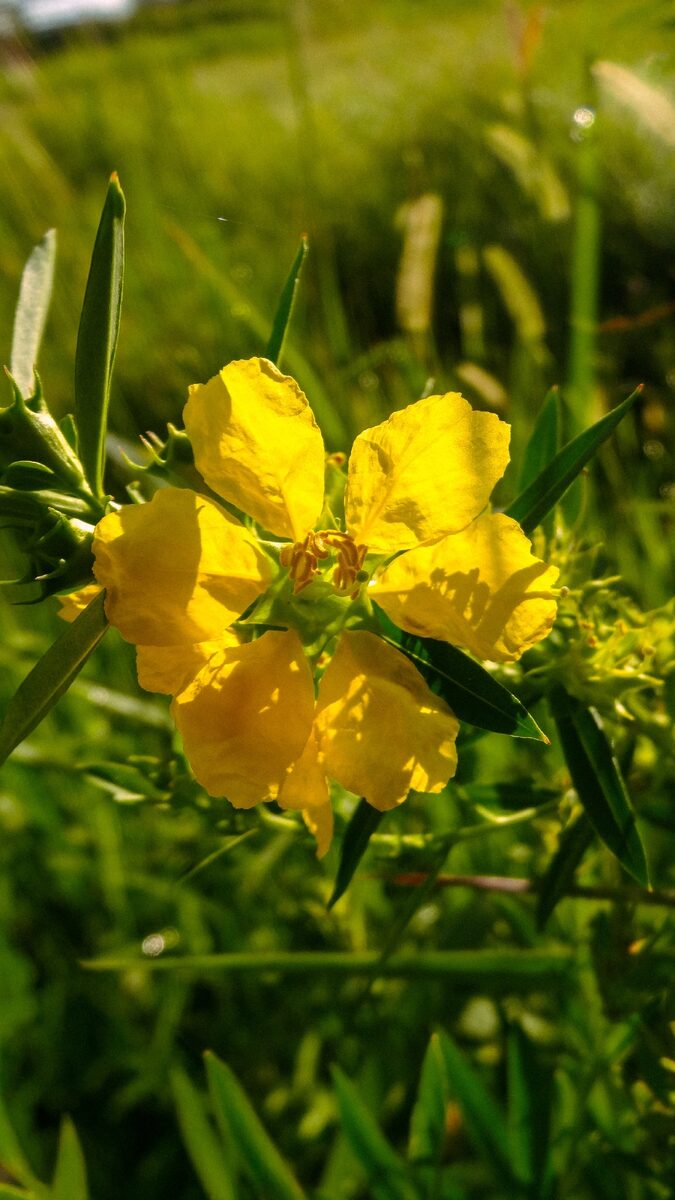
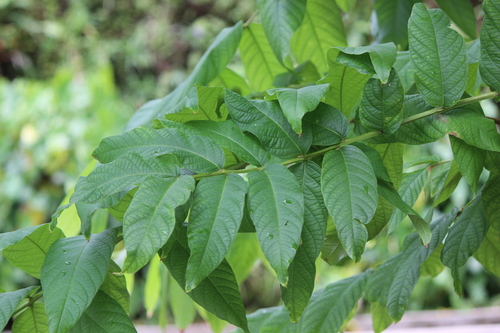
Sonneratia alba
J. Sm.
White mangrove
iNaturalist· cc-by-nc
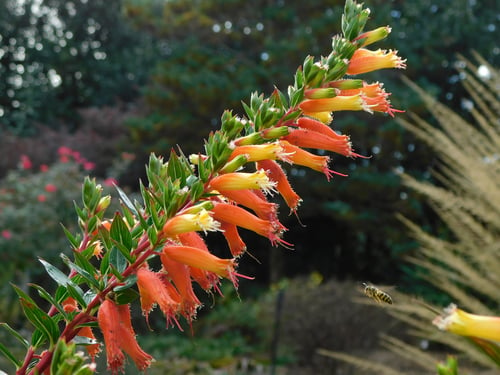
(c) Hamadi Mwamlavya, some rights reserved (CC BY-NC), uploaded by Hamadi Mwamlavya
iNaturalist· cc-by-nc
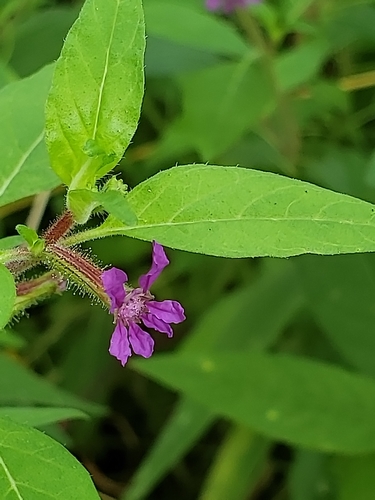
(c) Amaury Durbano, some rights reserved (CC BY-NC)
iNaturalist· cc-by-sa
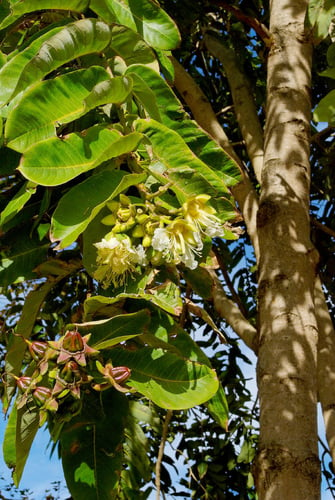
(c) Greg Tasney, some rights reserved (CC BY-SA), uploaded by Greg Tasney
Summary
Source: WikipediaSonneratia alba is a mangrove tree in the family Lythraceae. The specific epithet alba is from the Latin meaning 'white', referring to the flowers.
Description
A large tree. It grows 26-40 m high. The trunk can be 70-175 cm across. The bark is dark grey. The trunk is swollen at the base and with aerial roots. The leaves are thick and leathery, rounded at the tip and 6 to 12 cm long by 3-9 cm wide. They are nearly as wide as long. The outer ring of sepals is green and leathery. The petals are white and narrow and fall off early. The fruit are hard, rounded and pushed down at the tip. They are 3 to 4 cm across and contain many seeds.
Edible Uses
In Borneo, S. alba is used as firewood. In Sulawesi, the wood is used in the construction of houses and ships. In Malaysia and Indonesia, the sour fruits are used to flavor fish, and are sometimes eaten raw. The leaves are also eaten raw or cooked.
Traditional Uses
The ripe fruit are eaten raw or cooked. They are also used to flavour fish. The leaves are eaten raw or cooked. The nectar of the flowers is eaten.
Medicinal Uses
The plant is used in traditional medicine to treat cuts and bruises. The fruit is used to treat intestinal parasites and coughs.
Distribution
A tropical plant. They are found along the outer part of the swamp and often occur even on exposed reefs throughout the Philippines. They grow on seashores and tidal creeks.
Where It Grows
Africa, Andamans, Asia, Australia, China, Chuuk, East Africa, East Timor, India, Indochina, Indonesia, Kenya, Kiribati, New Caledonia, Madagascar, Malaysia, Marshall Islands, Micronesia, Mozambique, Myanmar, Pacific, Palau, Papua New Guinea, PNG, Philippines, SE Asia, Seychelles, Solomon Islands, Southern Africa, Sri Lanka, Thailand, Timor-Leste, Vanuatu, Vietnam, West Timor, Yap, Zimbabwe,
Cultivation
A plant of moist coastal areas in the tropics. It succeeds in areas with no dry season as well as those with a dry season. Prefers a sunny position. Prefers soils of consolidated mud and sand. Prefers a heavy soil, but tolerates most soil types. Grows in areas that are inundated by salt water at high tides. Prefers a pH in the range 6.7 - 7.3, but tolerates 6.5 - 7.5. Plants are tolerant of strong, salt-laden winds. The tree responds well to coppicing. The flowers are nocturnal, opening in the evening and falling off in the morning.
Propagation
Seed - it has a low viability of less than three months. Air layering.
Other Uses
The pneumatophores (vertical roots rising above ground) are sometimes used for the manufacture of the wooden soles of shoes and are made into floats. The bark contains 9 - 12% tannin, but is not often used as other species richer in tannin are more readily available. A brownish dye is obtained from the bark. The heartwood is brown to reddish brown; it is distinctly demarcated from the paler sapwood. The tree rarely, if ever, forms heartwood. The wood is moderately heavy, hard and durable. It contains small amounts of salts, making it resistant to wood borers. These salts in the wood corrode metal, and therefore special nails and screws are needed. The heavy timber is resistant to shipworm and pests and is used for building boats, canoes, piling and posts for bridges and houses, carpentry, paddles, masts, floats, and window and door frames. The tree is cut only with mixed inferior fire woods. Although it produces a lot of heat, it also produces a lot of ash and salt. The wood is also used for making chacoal. A very important tree in the coastal swamp community, helping to protect the soil from erosion and providing an important habitat for wildlife. It may act as a pioneer, colonizing newly formed sandy mud flats in sheltered situations. It is less suited for replanting on sites where sedimentation is high as the sediment will cover the pneumatophores and hence kill the plants.
Notes
There are 9 Sonneratia species. Sometimes these are still put in the Sonnerataceae family.
Also Known As
Berembang, Betah, Bidada, Bogem, Bulabol, Djolor, Gedalu, Jolorr, Konpat, Lam pen, M'kuate, Mangrove apple, Maniralbanco, Maripwanga, Metunundi, Mlilana, Mpia, Mpira, Pagatpat, Parapa, Perepat, Pornupan, Prapat, Te nikabubuti, Tindir, Urava, Urur, White flowered Pornupan mangrove
References (35)
- Argent, G et al, nd, Manual of the Larger and More important non Dipterocarp Trees of Central Kalimantan Indonesia. Volume 2 Forest Research Institute, Samarinda, Indonesia. p 602
- Ambasta, S.P. (Ed.), 2000, The Useful Plants of India. CSIR India. p 584
- Brock, J., 1993, Native Plants of Northern Australia, Reed. p 300
- Brown, W.H., 1920, Wild Food Plants of the Philippines. Bureau of Forestry Bulletin No. 21 Manila. p 130
- Burkill, I.H., 1966, A Dictionary of the Economic Products of the Malay Peninsula. Ministry of Agriculture and Cooperatives, Kuala Lumpur, Malaysia. Vol 2 (I-Z) p 2088
Show all 35 references Hide references
- Cherikoff V. & Isaacs, J., The Bush Food Handbook. How to gather, grow, process and cook Australian Wild Foods. Ti Tree Press, Australia p 201
- Cooper, W. and Cooper, W., 2004, Fruits of the Australian Tropical Rainforest. Nokomis Editions, Victoria, Australia. p 523
- Dharani, N., 2002, Field Guide to common Trees & Shrubs of East Africa. Struik. p 305
- Dunlop, C.R., Leach, G.J. & Cowie, I.D., 1995, Flora of the Darwin Region. Vol 2. Northern Territory Botanical Bulletin No 20. p 131
- Floyd, A.G., 1977, Ecology of the Tidal Forests in the Kikori-Romilly Sound Area Gulf of Papua. Ecology Report No 4 Division of Botany, Lae, Papua New Guinea. p 45
- Frodin, D.G. & Leach, G.L., 1982, Mangroves of the Port Moresby Region. Biology Department Occasional Paper No 3 Revised edition. Papua New Guinea, p 63
- Jackes, B. R., 2010, Plants of Magnetic Island. 3rd Edition. James Cook University, Australia. p 21
- Kenneally, K.E., Edinger, D. C., and Willing T., 1996, Broome and Beyond, Plants and People of the Dampier Peninsula, Kimberley, Western Australia. Department of Conservation and Land Management. p 188
- Kitalong, A. H., DeMeo, R. A., & Holm, T., 2013, A Field Guide to the Native Trees of Palau. 2nd edition. USDA p156
- Lazarides, M. & Hince, B., 1993, Handbook of Economic Plants of Australia, CSIRO. p 224
- Lovelock, C., & Clarke, S., 1999, Field Guide to the Mangroves of Queensland. Australian Institute of Marine Science. p 52
- Martin, F.W. & Ruberte, R.M., 1979, Edible Leaves of the Tropics. Antillian College Press, Mayaguez, Puerto Rico. p 220
- Milow, P., et al, 2013, Malaysian species of plants with edible fruits or seeds and their evaluation. International Journal of Fruit Science. 14:1, 1-27
- Monsalud, M.R., Tongacan, A.L., Lopez, F.R., & Lagrimas, M.Q., 1966, Edible Wild Plants in Philippine Forests. Philippine Journal of Science. p 547
- Morley, B.D., & Toelken, H.R., (Eds), 1983, Flowering Plants in Australia. Rigby. p 171
- Mutie, F. M., et al, 2023, Important Medicinal and Food Taxa (Orders and Families) in Kenya, Based on Three Quantitative Approaches. Plants 2023, 12, 1145
- Paczkowska, G . & Chapman, A.R., 2000, The Western Australian Flora. A Descriptive Calatogue. Western Australian Herbarium. p 538
- Palgrave, K.C., 1996, Trees of Southern Africa. Struik Publishers. p 651
- Peekel, P.G., 1984, (Translation E.E.Henty), Flora of the Bismarck Archipelago for Naturalists, Division of Botany, Lae, PNG. p 395, 394
- A. Rees, Cycl. 33: Sonneratia no. 2. 1816
- Reis, S. V. and Lipp, F. L., 1982, New Plant Sources for Drugs and Foods from the New York Botanical Garden herbarium. Harvard. p 204
- Scarth-Johnson, V., 2000, National Treasures. Flowering Plants of Cooktown and Northern Australia. Vera Scarth-Johnson Gallery Association. Cooktown, Australia. p 29
- Slik, F., www.asianplant.net
- Smith, M & Kalotas, A. C., 1985, Bardi Plants: An Annotated List of Plants and Their Use by the Bardi Aborigines of Dampierland, in North-western Australia. Rec. West Aust. Mus. 1985, 12(3): 317-359
- Soepadmo, E. and Wong, K. M., 1995, Tree Flora of Sabah and Sarawak. Forestry Malaysia. Volume One. p 449
- Thaman, R. R., 1987, Plants of Kiribati: A listing and analysis of vernacular names. Atoll Research Bulletin No. 296
- Tiwi Plants and Animals. 2001, Aboriginal flora and fauna knowledge from Bathurst and Melville Islands, northern Australia. Northern Territory Botanical Bulletin; No. 24 p 79
- Wheeler, J.R.(ed.), 1992, Flora of the Kimberley Region. CALM, Western Australian Herbarium, p 488
- Williams, K.A.W., 1999, Native Plants of Queensland Volume 4. Keith A.W. Williams North Ipswich, Australia. p 358
- World Checklist of Useful Plant Species 2020. Royal Botanic Gardens, Kew