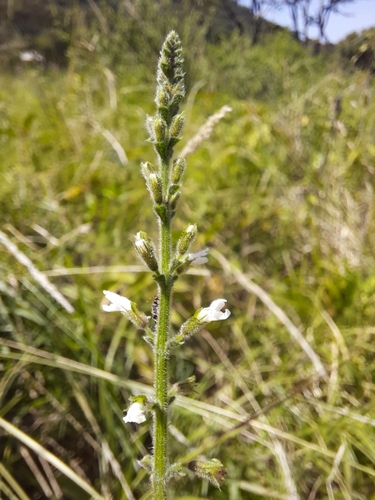
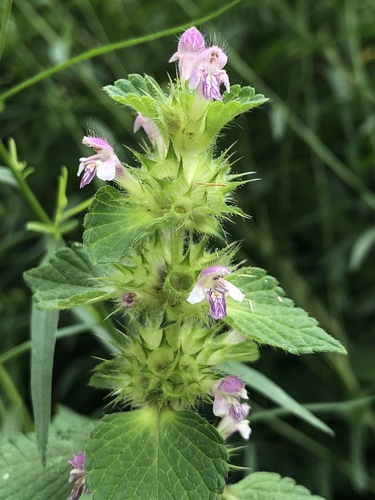
Plectranthus rotundifolius
(Poir.) Spreng.
Hausa potato, Sudan potato, African potato
wikimedia· cc-by-sa
Wikimedia Commons - Jeevan Jose, Kerala, India
wikimedia· cc-by-sa
Wikimedia Commons - Manojk
Summary
A perennial reaching 0.6 m tall by 0.4 m wide, growing at a fast rate. Hardy to UK zone 10. Insect-pollinated with hermaphrodite flowers. Tolerates light sandy, medium loamy, and heavy clay soils across mildly acidic to basic pH ranges. Grows in semi-shade or full sun and prefers moist soil.
Description
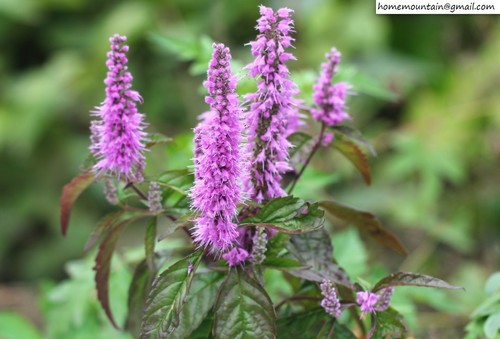
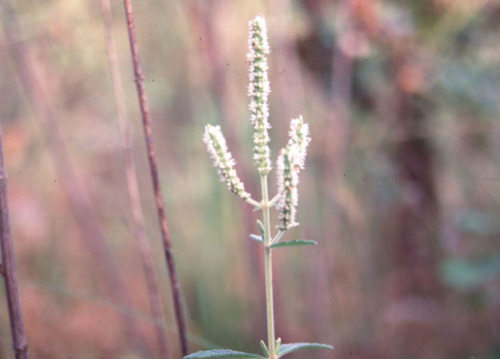
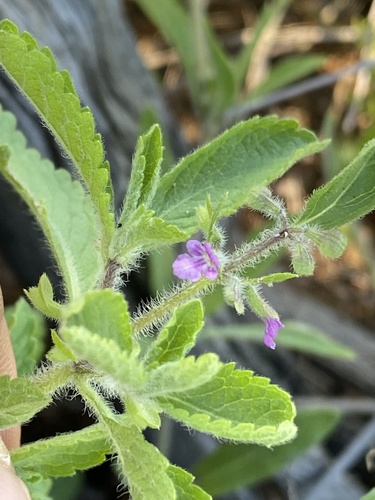
A small annual herb. It grows 15-30 cm high. It can lie along the ground or curve upwards. The stem is succulent. The leaves are thick and have a smell like mint. The flowers are small and pale violet. There are small, dark brown tubers in clusters at the base of the stem. They can be 20 cm long by 2 cm wide.
Edible Uses
The tubers of the Hausa potato can be eaten raw or cooked, though they are best consumed in small quantities as they are somewhat indigestible. They are often eaten as a relish alongside starchy staple foods, but can also serve as the staple itself. Common preparations include boiling with spices, combining with beans and cooked vegetables, steaming as a vegetable, or mixing with savory ingredients. Adult tubers are used as a potato substitute for preparing minced meatballs. Like potatoes, they can be boiled, roasted, baked, or fried. Their flavor is bland but sweeter than Coleus esculentus. Flour milling from the tubers has been reported in Burkina Faso. The tubers are white, starchy, and slightly aromatic, darkening with age; they typically measure 2–4cm long, occasionally up to 8cm, and grow in clusters of 3–7. Leaves are also cooked and used as a vegetable.
Traditional Uses
The tubers are boiled and eaten. They can be added to curries, baked, or fried into chips. They are boiled and eaten with coconut milk. They can be eaten raw or baked, steamed, added to soups or stews or mashed and fried. The leaves are eaten. The leaves can be used as flavouring. Ripe fruit are eaten.
Medicinal Uses
The leaves are used in traditional medicine to treat dysentery. The plant is also used for blood in the urine and eye disorders, and it may possess anti-cancer properties.
Distribution
A tropical plant. It suits high rainfall areas with an evenly distributed rainfall and low night temperatures. It is grown as a monsoonal crop. It needs a well drained, sand loam. It cannot stand water-logging. It is grown on ridges in heavier soils. It cannot stand cold or frost. It cannot tolerate drought. The best pH is 6.5-7.0. In East Africa it grows up to 2,200 m above sea level.
Where It Grows
Africa, Asia, Burkina Faso, Cameroon, Central Africa, Central African Republic, CAR, China, Comoros, Congo, East Africa, Ethiopia, Gambia, Ghana, Guinea, Guinée, Guinea-Bissau, India, Indochina, Indonesia, Kenya, Madagascar, Malawi, Malaysia, Mali, Mauritius, Niger, Nigeria, Pacific, Philippines, SE Asia, Senegal, Sierra Leone, South Africa, Southern Africa, Sri Lanka, Sudan, Tanzania, Thailand, Uganda, West Africa, Zambia,
Cultivation
It is grown from suckers from germinating tubers. The tubers are put in a nursery bed about 4 cm deep and 10 cm apart. Tubers germinate in 10-15 days once watered. These produce a cluster of sprouts which are then transplanted after about 3 months. The earth is heaped up around the plants to encourage tubers. A spacing of 20 cm apart in rows 90 cm apart is used. It can also be grown from cuttings. Sections 10-20 cm long are used.
Propagation
Seed is not normally used for propagation. Stem cuttings of about 10–20cm can be taken, though they can be difficult to root. The plant is also propagated by dividing sprouting tubers, which are planted approximately 5–8cm deep.
Other Uses
Hausa potato is grown as a sole crop or intercropped with bambara groundnut, yam, okra, millet, maize, or sorghum. Its cultivation has been largely displaced by the spread of cassava.
Production
Crops reach maturity in about 5-6 months. This may be longer in colder places. Yields of 8-15 tonnes per hectare are average. Tubers should be harvested as soon as they are mature to avoid decay. In South Africa they are available May to August.
Other Information
It is a commercially cultivated vegetable.
Notes
It possibly has anti-cancer properties.
Nutrition
| Part | Moisture | kJ | kcal | Protein | Vit A | Vit C | Iron | Zinc |
|---|---|---|---|---|---|---|---|---|
| Tubers | 76 | 393 | 94 | 1.3 | — | 1 | 6 | — |
Synonyms
Also Known As
Amadada, Chinese potato, Ciyobo, Fra-fra potato, Gembili, Huwa kentang, Innala, Kare, Kembili, Kemili, Kentang jawa, Ketang, Koorka, Macilu, Mobo, Omime, Piasa, Ratala, Saluga, Tamaka, Tumuku, Ubi kembili, Vatke, Zulu round potato
References (49)
- Abbiw, D.K., 1990, Useful Plants of Ghana. West African uses of wild and cultivated plants. Intermediate Technology Publications and the Royal Botanic Gardens, Kew. p 31 (As Solenostemon rotundifolius var. rubra)
- Akinola, R., et al, 2020, A Review of Indigenous Food Crops in Africa and the Implications for more Sustainable and Healthy Food Systems. Sustainability 2020, 12, 3493; (As Solenostemon rotundifolius)
- Anderson, E. F., 1993, Plants and people of the Golden Triangle. Dioscorides Press. p 218 (As Plectranthus parviflorus)
- Arora, R. K., 2014, Diversity in Underutilized Plant Species - An Asia-Pacific Perspective. Bioversity International. p 24 (As Coleus dysentericus)
- Burkill, H. M., 1985, The useful plants of west tropical Africa, Vol. 3. Kew.
Show all 49 references Hide references
- Burkill, I.H., 1966, A Dictionary of the Economic Products of the Malay Peninsula. Ministry of Agriculture and Cooperatives, Kuala Lumpur, Malaysia. Vol 1 (A-H) p 641 (As Coleus tuberosus)
- Cooper, W. and Cooper, W., 2004, Fruits of the Australian Tropical Rainforest. Nokomis Editions, Victoria, Australia. p 237 (?Plectranthrus parviflorus Willd.)
- Danforth, R.M., & Boren, P.D., 1997, Congo Native fruits. Twenty-five of the best. Privately published. p 45 (As Coleus rotundifolius)
- Facciola, S., 1998, Cornucopia 2: a Source Book of Edible Plants. Kampong Publications, p 125, 136 (Also as Coleus parviflorus)
- Fowler, D. G., 2007, Zambian Plants: Their Vernacular Names and Uses. Kew. p 42 (As Coleus tuberosus)
- Fox, F. W. & Young, M. E. N., 1982, Food from the Veld. Delta Books. p 246 (As Solenostemon rotundifolius)
- Grivetti, L. E., 1980, Agricultural development: present and potential role of edible wild plants. Part 2: Sub-Saharan Africa, Report to the Department of State Agency for International Development. p 24 (As Coleus dysentericus)
- Grubben, G. J. H. and Denton, O. A. (eds), 2004, Plant Resources of Tropical Africa 2. Vegetables. PROTA, Wageningen, Netherlands. p 508
- Hedrick, U.P., 1919, (Ed.), Sturtevant's edible plants of the world. p 507 (As Plectranthus tematus)
- Hibbert, M., 2002, The Aussie Plant Finder 2002, Florilegium. p 236, 292
- Jardin, C., 1970, List of Foods Used In Africa, FAO Nutrition Information Document Series No 2. p 20 (Also as Solenostemon rotundifolius var. rubra)
- J. Linn. Soc., Bot. 58:272. 1962
- Kay, D.E., 1973, Root Crops, Digest 2, Tropical Products Institute, London, p 76 (As Solenostemon rotundifolius var. rubra)
- Kays, S. J., and Dias, J. C. S., 1995, Common Names of Commercially Cultivated Vegetables of the World in 15 languages. Economic Botany, Vol. 49, No. 2, pp. 115-152
- Keng,, , 1978, Labiatae in Flora Malesiana Series 1 Vol 8(2) p 388 (As Plectranthus rotundifolius)
- Kiple, K.F. & Ornelas, K.C., (eds), 2000, The Cambridge World History of Food. CUP p 1859
- Lembaga Biologi Nasional, 1977, Ubi-Ubian, Balai Pustaka, Jakarta. p 46 (As Coleus parviflorus)
- Lim, T. K., 2015, Edible Medicinal and Non Medicinal Plants. Volume 9, Modified Stems, Roots, Bulbs. Springer p 26, 66, 78
- Lukhoba, C. W., et al, 2006, Plectranthus: A review of ethnobotanical uses. Journal of Ethnopharmacology 103 (2006) 1–24
- Macmillan, H.F. (Revised Barlow, H.S., et al) 1991, Tropical Planting and Gardening. Sixth edition. Malayan Nature Society. Kuala Lumpur. p 341
- Martin, F.W. & Ruberte, R.M., 1979, Edible Leaves of the Tropics. Antillian College Press, Mayaguez, Puerto Rico. p 98, 195 (As Coleus tuberosus) (Also as Coleus rotundifolius)
- Molla, A., Ethiopian Plant Names. http://www.ethiopic.com/aplants.htm
- MORTIMORE,
- Murakami, A. et al, 2014, Screening for the In Vitro Anti-tumor-promoting Activities of Edible Plants from Malaysia. Bioscience, Biotechnology, and Biochemistry, 64:1, 9-16.
- Nyadanu, D., et al, 2015, Agro-biodiversity and challenges of on-farm conservation: the case of plant genetic resources of neglected and underutilized crop species in Ghana. Genet. Resourc. Crop Evol. 62(7): (As Solenostemon rotundifolius)
- Ochse, J.J. et al, 1931, Vegetables of the Dutch East Indies. Asher reprint. p 351 (As Coleus tuberosus)
- Okigbo, B.N., Vegetables in Tropical Africa, in Opena, R.T. & Kyomo, M.L., 1990, Vegetable Research and development in SADCC countries. Asian Vegetable Research and development Centre. Taiwan. p 42
- Peduruhewa, P. S., et al, 2021, Potential of Underutilized Wild Edible Plants as the Food for the Future – A Review. Journal of Food Security, Vol. 9, No. 4, 136-147
- Peters, C. R., O'Brien, E. M., and Drummond, R.B., 1992, Edible Wild plants of Sub-saharan Africa. Kew. p 119
- Purseglove, J.W., 1968, Tropical Crops Dicotyledons, Longmans. p 634 (As Coleus parviflorus)
- Rajapaksha, U., 1998, Traditional Food Plants in Sri Lanka. HARTI, Sri Lanka. p 271 (As Solenostemon)
- Ramachandran, V.S. and Nair, V.J., 1981, Ethnobotanical studies in Cannanore District, Kerala State (India). J Econ. Tax. Bot. Vol 2 pp 65-72 (As Plectranthus parviflorus)
- Ruiters-Welcome, A. K., 2019, Food plants of southern Africa. Ph.D. thesis. Univ. of Johannesburg p 71 (As Solenostemon)
- Sharma, B.B., 2005, Growing fruits and vegetables. Publications Division. Ministry of Information and broadcasting. India. p 235
- Tanaka,
- Tindall, H.D., 1983, Vegetables in the Tropics, Macmillan p 240 (As Coleus parviflorus)
- Tindall, H.D., 1983, Vegetables in the Tropics, Macmillan p 243
- USDA, ARS, National Genetic Resources Program. Germplasm Resources Information Network - (GRIN). [Online Database] National Germplasm Resources Laboratory, Beltsville, Maryland. Available: www.ars-grin.gov/cgi-bin/npgs/html/econ.pl (10 April 2000)
- van Wyk, B., 2005, Food Plants of the World. An illustrated guide. Timber press. p 301 (As Plectranthus rotundifolius)
- van Wyk, Be., & Gericke, N., 2007, People's plants. A Guide to Useful Plants of Southern Africa. Briza. p 94
- van Wyk, B-E., 2011, The potential of South African plants in the development of new food and beverage products. South African Journal of Botany 77 (2011) 857–868 (As Plectranthus rotundifolius)
- Welcome, A. K. & Van Wyk, B.-E., 2019, An inventory and analysis of the food plants of southern Africa. South African Journal of Botany 122 (2019) 136–179 (As Solenostemon rotundifolius)
- Wiersema, J. H. & Leon, B., 2013, World Economic Plants. A Standard Reference CRC Press. 2nd Ed. p 541
- World Checklist of Useful Plant Species 2020. Royal Botanic Gardens, Kew