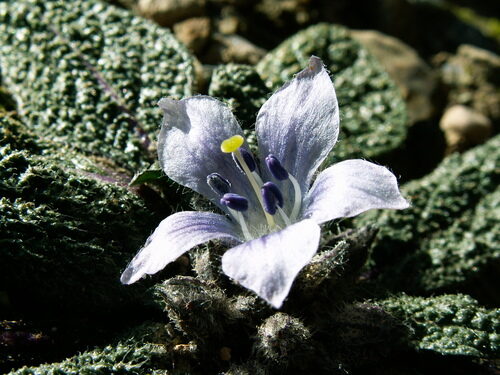
Solanum retroflexum
Dunal
Sunberry, Wonderberry
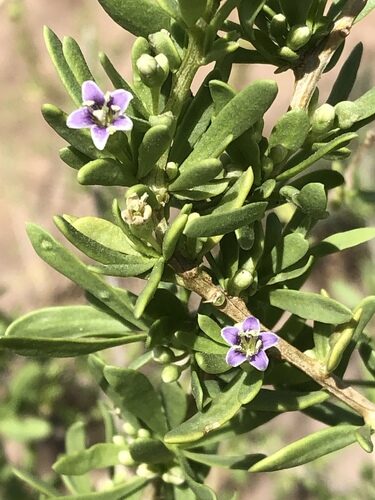
iNaturalist· cc-by-nc
(c) Gigi Laidler, some rights reserved (CC BY-NC), uploaded by Gigi Laidler
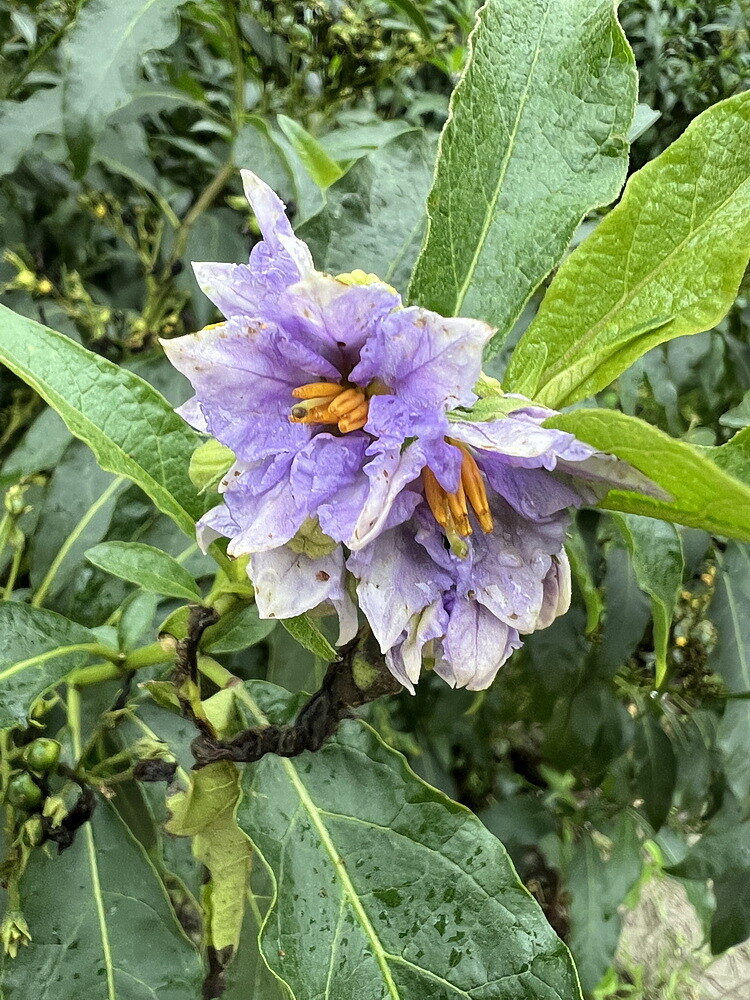
iNaturalist· cc-by-nc
(c) Debbie Wall Smith, some rights reserved (CC BY-NC), uploaded by Debbie Wall Smith
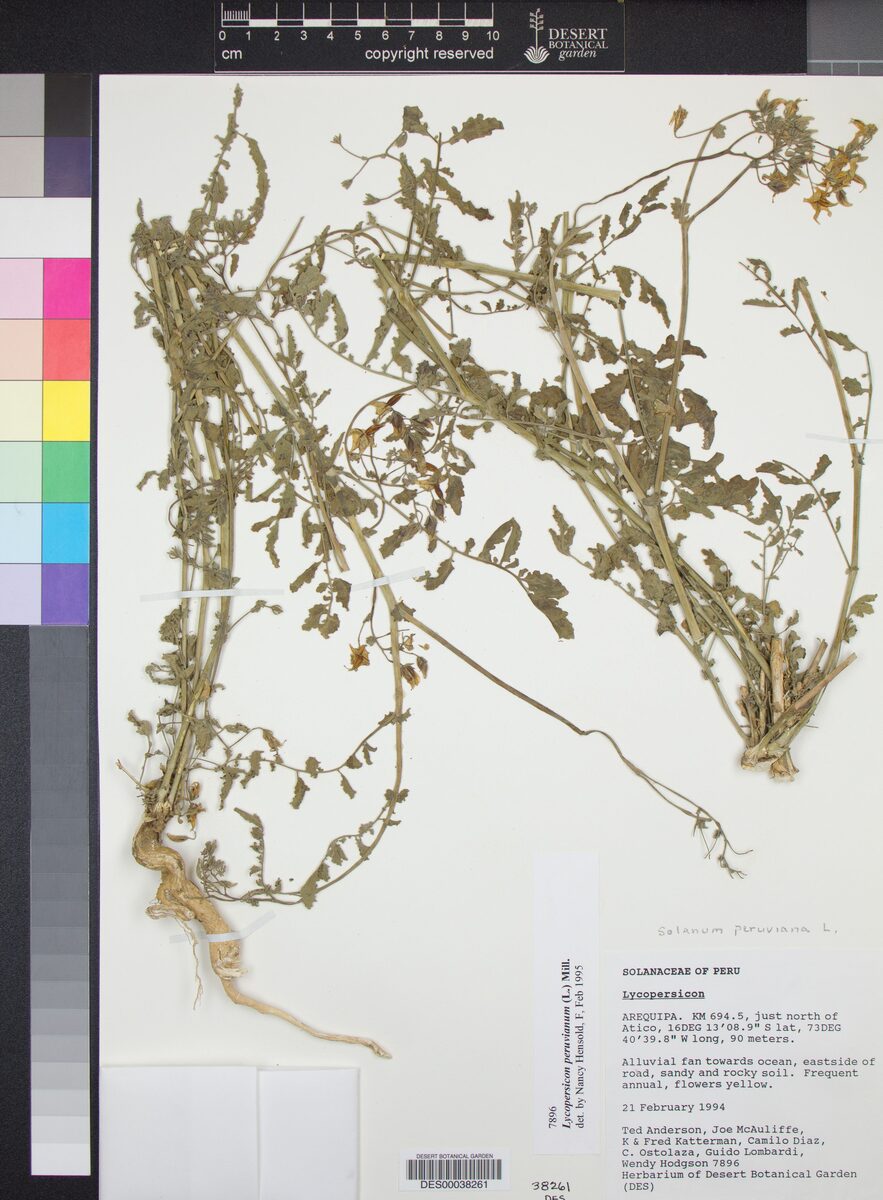
iNaturalist· cc-by-nc
(c) Debbie Wall Smith, some rights reserved (CC BY-NC), uploaded by Debbie Wall Smith
Summary
Source: WikipediaSolanum retroflexum, commonly known as umsobo (isiZulu), wonderberry or sunberry, is a historic heirloom fruiting shrub. Both common names are also used for the European black nightshade (Solanum nigrum) in some places, particularly where the latter species has been introduced, so care must be taken to distinguish them. It is sometimes called garden huckleberry, but that properly refers to the species S. scabrum described by Philip Miller. The plant produces diminutive, dark blue-purple edible fruits that are bland in flavor and often combined with sugar in desserts. Green (unripe) fruits may be poisonous.
Description
A spreading annual herb. It grows 50-100 cm high. The stems are angled and grooved. The leaves simple and alternate and can have lobes or teeth. There are spreading hairs on the stems. The flowers are in small groups and are drooping. They are in the axils of leaves. The flowers are white, star shaped and 16 mm across. The fruit are green but turn black and 8 mm across. There are many seeds.
Edible Uses
The fruit can be eaten raw or cooked, though it is not very appetizing raw and the flavour improves with cooking. It is noticeably sweeter and more pleasant than the similar Solanum nigrum guineense, though still not among the most appealing fruits. The fruit is about 1cm in diameter and is produced in small bunches.
Traditional Uses
The ripe fruit are eaten and used for jam. They taste better cooked. Caution: The fruit are edible when ripe but poisonous when green. The leaves are cooked and eaten as a vegetable.
Medicinal Uses
None known
Known Hazards
Although no specific mention of toxicity has been seen for this species, it belongs to a genus where many if not all the members have poisonous leaves and sometimes also the unripe fruits.
Distribution
A tropical plant. It grows in hot arid places with a marked dry season. It grows between 10-2,730 m above sea level. It can grow in arid places.
Where It Grows
Africa, Angola, Arabia, Australia, Botswana, Central Africa, East Africa, Eswatini, Lesotho, Malawi, Middle East, Mozambique, Namibia, Nigeria, North America, Sierra Leone, Somalia, South Africa, Southern Africa, Sudan, Swaziland, Tanzania, USA, West Africa, Zimbabwe,
Cultivation
Plants can be grown from seeds. Seeds have a low germination. They need light to germinate. Treated seeds with potassium nitrate (salt peter) germinate better.
Propagation
Sow seed in spring in a greenhouse. Prick seedlings out into individual pots when large enough to handle and plant out after the last expected frosts.
Other Uses
None known
Notes
There are about 1400 Solanum species.
Synonyms
Also Known As
Intfumana, Momodi, Msoba, Muxe, Nasgal, Nastergal, Seshoa-bohloko, Sobosobo berry, Umsoba, Umsobo omnyama
References (23)
- 1996, California Rare Fruit Growers, Inc. Pepino dulce Fruit fact (As Solanum burbankii)
- Burkill, H. M., 1985, The useful plants of west tropical Africa, Vol. 5. Kew.
- A. L. P. P. de Candolle, Prodr. 13(1):50. 1852
- De Vynk, J. C., et al, 2016, Indigenous edible plant use by contemporary Khoe-San descendants of South Africa's Cape South Coast. South African Journal of Botany. 102 (2016) 60-69
- Ferns, Useful Tropical Plants
Show all 23 references Hide references
- Fox, F. W. & Young, M. E. N., 1982, Food from the Veld. Delta Books. p 347
- Kepe, T., 2008, Social Dynamics of the Value of Wild Edible Leaves (Imifino) in a South African Rural Area. Ecology of Food and Nutrition, 47:531-558
- Long, C., 2005, Swaziland's Flora - siSwati names and Uses http://www.sntc.org.sz/flora/
- Magwede, K., van Wyk, B.-E., & van Wyk, A. E., 2019, An inventory of Vhavenḓa useful plants. South African Journal of Botany 122 (2019) 57–89
- Ogle & Grivetti, 1985,
- Peters, C. R., O'Brien, E. M., and Drummond, R.B., 1992, Edible Wild plants of Sub-saharan Africa. Kew. p 187
- Plants for a Future database, The Field, Penpol, Lostwithiel, Cornwall, PL22 0NG, UK. http://www.scs.leeds.ac.uk/pfaf/
- Royal Botanic Gardens, Kew (1999). Survey of Economic Plants for Arid and Semi-Arid Lands (SEPASAL) database. Published on the Internet; http://www.rbgkew.org.uk/ceb/sepasal/internet [Accessed 11th June 2011]
- Ruiters-Welcome, A. K., 2019, Food plants of southern Africa. Ph.D. thesis. Univ. of Johannesburg p 104
- Samuels, J., 2015, Biodiversity of Food Species of the Solanaceae Family: A Preliminary Taxonomic Inventory of Subfamily Solanoideae. Resources 2015, 4. 277-322
- Swaziland's Flora Database http://www.sntc.org.sz/flora
- USDA, ARS, National Genetic Resources Program. Germplasm Resources Information Network - (GRIN). [Online Database] National Germplasm Resources Laboratory, Beltsville, Maryland. Available: www.ars-grin.gov/cgi-bin/npgs/html/econ.pl (10 April 2000)
- van Wyk, B., 2005, Food Plants of the World. An illustrated guide. Timber press. p 349
- van Wyk, Be., & Gericke, N., 2007, People's plants. A Guide to Useful Plants of Southern Africa. Briza. p 56
- van Wyk, B-E., 2011, The potential of South African plants in the development of new food and beverage products. South African Journal of Botany 77 (2011) 857–868
- Welcome, A. K. & Van Wyk, B.-E., 2019, An inventory and analysis of the food plants of southern Africa. South African Journal of Botany 122 (2019) 136–179
- Wiersema, J. H. & Leon, B., 2013, World Economic Plants. A Standard Reference CRC Press. 2nd Ed. p 646
- World Checklist of Useful Plant Species 2020. Royal Botanic Gardens, Kew