Solanum involucratum
Bl.
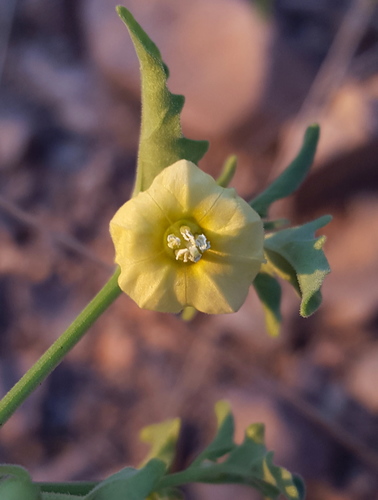
iNaturalist· cc-by-nc
(c) Bramadi Arya, some rights reserved (CC BY-NC), uploaded by Bramadi Arya
iNaturalist· cc-by-nc
(c) Jonathan M, some rights reserved (CC BY-NC), uploaded by Jonathan M
iNaturalist· cc-by-nc
(c) Bramadi Arya, some rights reserved (CC BY-NC), uploaded by Bramadi Arya
Description
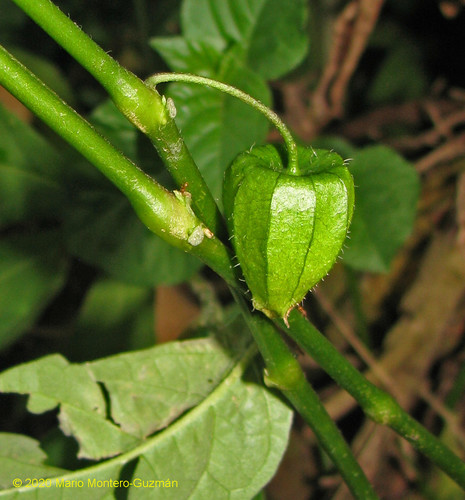
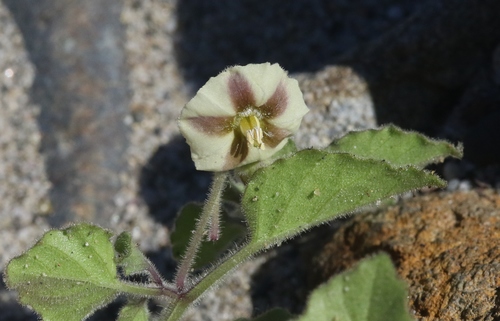
Solanum involucratum is an erect prickly herb in the Solanaceae family that grows approximately 1 m tall and is found in tropical regions.
This description is brief — help expand it
Edible Uses
The fruit are edible.
Medicinal Uses
The following uses were listed under Solanum ferox. Since this species is either a form of Solanum ferox, or a very closely related species, it is assumed that the medicinal uses listed below apply to this species as well. The leaves can be used as poultices on swellings. A decoction of the roots is used to treat syphilis, and to ease body pains and discomfort after meals. The roots are used externally to make baths for treating fevers and as a poultice on itches, cuts, wounds and bruises. The seeds are used to ease toothaches - they are burned and the fumes inhaled. The plant (part not specified) is used in Bangladesh and India to treat coughs, asthma, fever, vomiting, sore throat, gonorrhoea and female sexual disorders.
Known Hazards
Although providing many well-known foods for people, including the potato, tomato, pepper and aubergine, most species in this genus also contain toxic alkaloids. Whilst these alkaloids can make the plant useful in treaing a range of medical conditions, they can also cause problems such as nausea, vomiting, salivation, drowsiness, abdominal pain, diarrhoea, weakness and respiratory depression. Unless there are specific entries with information on edible uses, it would be unwise to ingest any part of this plant.
Distribution
A tropical plant.
Where It Grows
Asia, Indonesia, Malaysia, SE Asia,
Cultivation
A plant of the moist tropics, where it is found at elevations up to 1,500 metres. It grows best in areas where annual daytime temperatures are within the range 24 - 30°c, but can tolerate 10 - 35°c. It prefers a mean annual rainfall in the range 1,200 - 2,000mm, but tolerates 800 - 4,200mm. Succeeds in full sun and in light shade. Can be grown in a wide range of well-drained, fertile soils. Prefers a pH in the range 5.5 - 7, tolerating 4.5 - 7.5.
Propagation
Seed - sow in trays in a nursery. Prick out the seedlings into individual pots when they are large enough to handle and grow them on fast. Plant them out when 10cm or more tall.
Other Uses
The seeds yield a yellow coloured oil, containing palmitic acid, stearic acid, oleic acid and linoleic acid. This report does not specify if the oil has any uses, or even if it is in sufficient quantity to be utilized.
Notes
There are about 1400 Solanum species.
References (1)
- Terra, G.J.A., 1973, Tropical Vegetables. Communication 54e Royal Tropical Institute, Amsterdam, p 76