Solanum esuriale
Lindley
Quena, Tomato bush
iNaturalist· cc-by-nc-sa
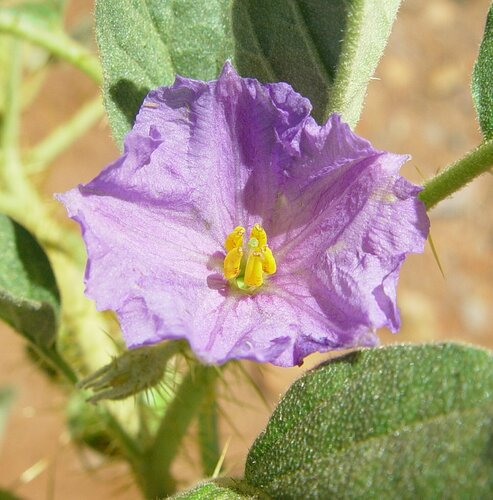
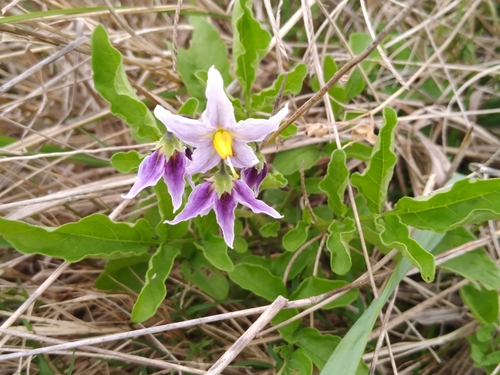
(c) Reiner Richter, some rights reserved (CC BY-NC-SA), uploaded by Reiner Richter
iNaturalist· cc-by-nc
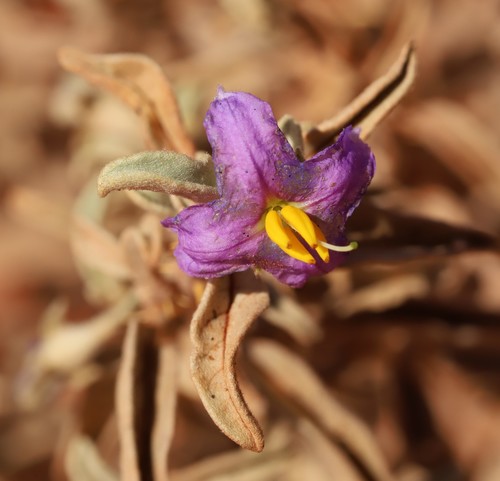
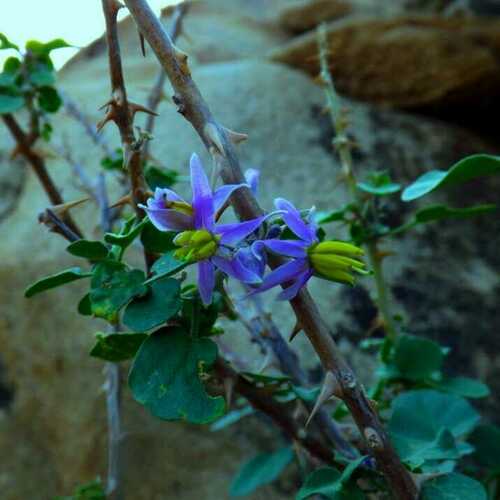
(c) Ken Harris EntSocVic, some rights reserved (CC BY-NC), uploaded by Ken Harris EntSocVic
iNaturalist· cc-by-nc
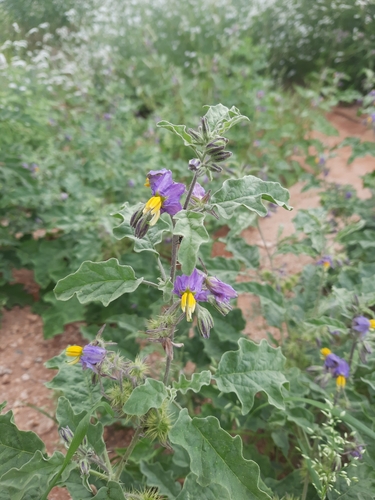
(c) Ken Harris EntSocVic, some rights reserved (CC BY-NC), uploaded by Ken Harris EntSocVic
Summary
Source: WikipediaSolanum esuriale is a species of perennial herbaceous plant native to Australia.
Description
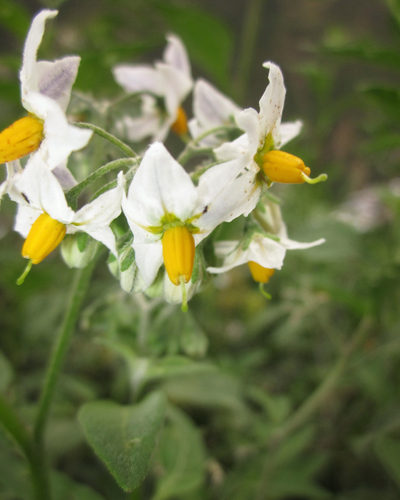
A low sprawling under shrub. It grows 10-45 cm high. The flowers are purple and blue. The fruit is a 2 celled yellow berry. This later becomes covered by a calyx. The fruiting stalks are long and slender.
Edible Uses
As with other bush tomatoes, S. esuriale is traditionally a valuable food source for Indigenous Australians; the term "esu'riale" has been used to describe "appeasing hunger" in specific reference to the fruits of the quena. Preparation for eating is uncertain, but likely to be similar to other Solanum species, with the fruit eaten fresh, dried, or cooked; the seeds may or may not need to be removed prior to eating. The fruit is reportedly sweet.
Distribution
A tropical plant. It can grow in arid places. It grows in central Queensland.
Where It Grows
Asia, Australia*, India,
Notes
There are about 1400 Solanum species.
Also Known As
Puddaddee
References (18)
- Ambasta, S.P. (Ed.), 2000, The Useful Plants of India. CSIR India. p 580
- Cancilla, D., 2018, Ethnobotanical and Ethnozoological Values Desktop Assessment - Eliwana Project. p 45
- Cherikoff V. & Isaacs, J., The Bush Food Handbook. How to gather, grow, process and cook Australian Wild Foods. Ti Tree Press, Australia p 120, 191
- Cribb, A.B. & J.W., 1976, Wild Food in Australia, Fontana. p 75
- Gott, B & Conran, J., 1991, Victorian Koorie Plants. PO Box 666 Hamilton, Victoria 3300, Australia. p 37
Show all 18 references Hide references
- Hunter, J., 2012, Vegetation and Floristics of Gilwarny and Wingadee Nature Reserves. A Report to the New South Wales National Parks and Wildlife Service p 121
- Hunter, J.T., 2017, Is there a relationship between contemporary high Aboriginal plant resource locations and mapped vegetation communities? Cunninghamia 17:27-34. The Royal Botanic Garden Sydney. ISSN 2200 - 405X
- Kenneally, K.E., Edinger, D. C., and Willing T., 1996, Broome and Beyond, Plants and People of the Dampier Peninsula, Kimberley, Western Australia. Department of Conservation and Land Management. p 187
- Lamp, C & Collet F., 1989, Field Guide to Weeds in Australia. Inkata Press. p 275
- Latz, P.K., 1996, Bushfires and Bushtucker: Aboriginal plant use in Central Australia. IAD Press Alice Springs p 278
- Lazarides, M. & Hince, B., 1993, Handbook of Economic Plants of Australia, CSIRO. p 222
- Morley, B.D., & Toelken, H.R., (Eds), 1983, Flowering Plants in Australia. Rigby. p 266
- NYBG Herbarium "edible"
- Paczkowska, G . & Chapman, A.R., 2000, The Western Australian Flora. A Descriptive Calatogue. Western Australian Herbarium. p 537
- Samuels, J., 2015, Biodiversity of Food Species of the Solanaceae Family: A Preliminary Taxonomic Inventory of Subfamily Solanoideae. Resources 2015, 4. 277-322
- Stanley, T. D. & Ross, E. M., 1986, Flora of south-eastern Queensland Volume 2. Queensland Government p 416
- Urban, A., 1990, Wildflowers of Inland Australia. Portside editions. p 169
- Wheeler, J.R.(ed.), 1992, Flora of the Kimberley Region. CALM, Western Australian Herbarium, p 730