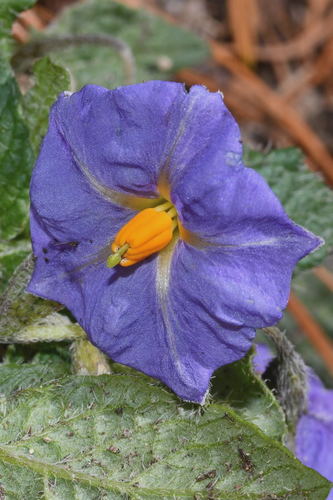
Solanum americanum
Miller
Glossy nightshade
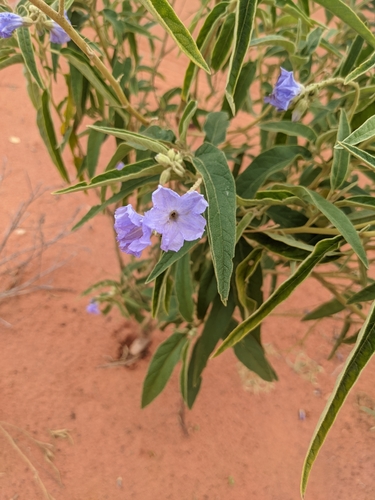
iNaturalist· cc-by-nc
(c) James Bailey, some rights reserved (CC BY-NC), uploaded by James Bailey
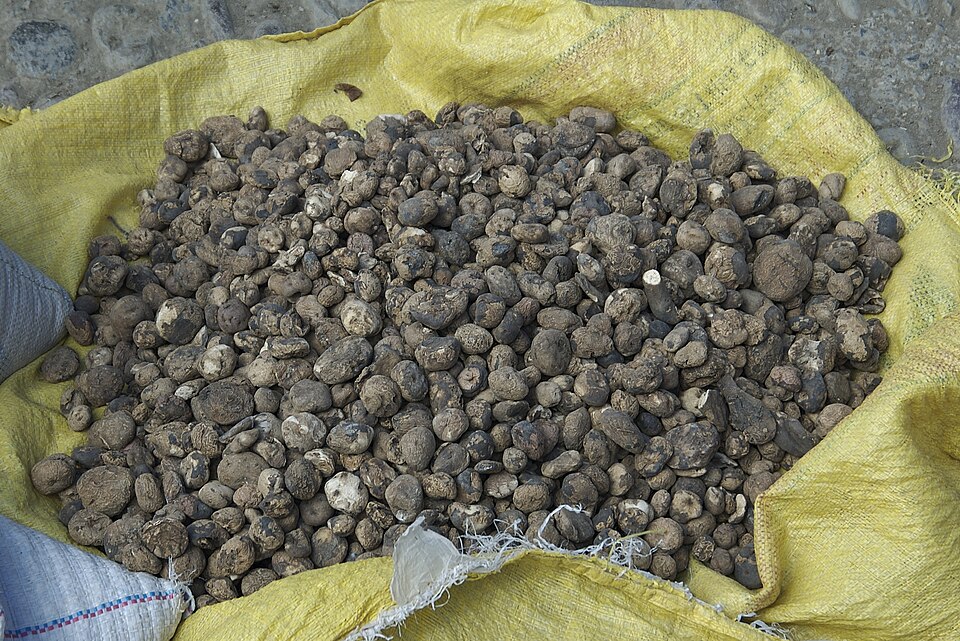
iNaturalist· cc-by-nc-nd
(c) sea-kangaroo, some rights reserved (CC BY-NC-ND), uploaded by sea-kangaroo
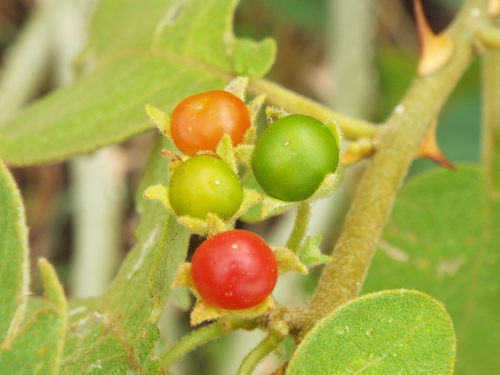
iNaturalist· cc-by
(c) Cricket Raspet, some rights reserved (CC BY), uploaded by Cricket Raspet
Summary
Source: WikipediaSolanum americanum, commonly known as American black nightshade, small-flowered nightshade or glossy nightshade, is a herbaceous flowering plant.
Description
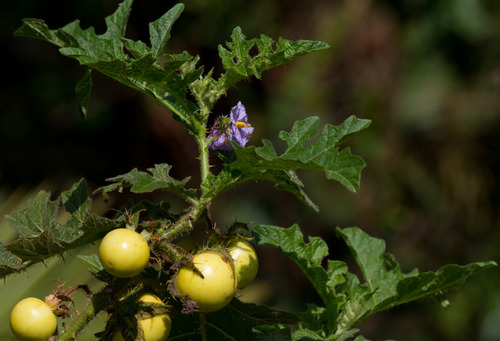
A herb. It grows 30-150 cm high. It is an annual plant. The leaves are oval and 5-10 cm long by 2-2.5 cm wide. The leaves vary is shape in different locations. The flowers are in the axils of leaves. The fruit is soft and round. It is 5-6 mm across. It is black or red. Also often included as the same as Solanum nigrum. or as Solanum nigrum var. americanum.
Edible Uses
Young leaves are eaten cooked and contain around 6990mg of beta carotene per 100g. Caution is advised regarding toxicity. The fruit is eaten cooked and should only be used when fully ripe. Caution is advised regarding toxicity.
Traditional Uses
Caution: The unripe fruit may be poisonous. The fruit and leaves are eaten cooked or in soup. The ripe fruit are eaten. The leaves are eaten as a vegetable.
Medicinal Uses
None known.
Known Hazards
Research indicates the presence of toxic glycoalkaloids, with authorities warning to be careful regarding the use of S. americanum as herbal medicine or food. The green fruit is particularly poisonous and eating unripe berries has caused the death of children. Ripe berries and foliage may also cause poisoning, though the toxicity seems to diminish somewhat with ripening. This is due to high levels of the glycoalkaloids, solanine and solamargine. Other toxins present in the plant include chaconine, solasonine, solanigrine, gitogenin and traces of saponins, as well as the tropane alkaloids scopolamine and hyoscyamine (an isomer of atropine). Significant amounts of solasodine (0.65%) have been found in the green berries. The ripe fruit also contains 0.3–0.45% solasonine, and acetylcholine, and has a cholinesterase-inhibiting effect on human plasma. In Transkei, rural people have a high incidence of esophageal cancer thought to be a result of using S. americanum as a food. Livestock can also be poisoned by high nitrate levels in the leaves. Toxicity varies widely depending on the genetic strain and the location conditions, like soil and rainfall. One field guide of poisonous plants advises, "unless you are certain that the berries are from an edible strain, leave them alone."
Distribution
A tropical plant. In Bolivia it grows up to 2000 m altitude. In Argentina it grows from sea level to 1,200 m above sea level. It can grow in arid places. It is mostly at low altitudes and in humid areas. In Sichuan and Yunnan.
Where It Grows
Africa, American Samoa, Angola, Argentina, Aruba, Asia, Australia, Bangladesh, Benin, Bolivia, Botswana, Brazil*, Cameroon, Central Africa, Central African Republic, CAR, Central America*, Chile, China, Colombia, Comoros, Congo DR, Congo R, Cook Islands, Costa Rica, Côte d'Ivoire, Dominican Republic, East Africa, Ecuador, El Salvador, Ethiopia, Fiji, Gabon, Gambia, Ghana, Guatemala, French Guiana, Guianas, Guinea, Guinée, Guinea-Bissau, Guyana, Haiti, Hawaii, Honduras, India, Indochina, Indonesia, Italy, Ivory Coast, Jamaica, Kenya, Korea, Laos, Liberia, Madagascar, Malawi, Marquesas, Mauritius, Mexico*, Mozambique, Myanmar, Nepal, New Zealand, Nigeria, Norfolk Island, North America*, Northeastern India, Pacific, Pakistan, Papua New Guinea, PNG, Paraguay, Peru, Rotuma, Sao Tome and Principe, SE Asia, Senegal, Sicily, Sierra Leone, Somalia, South Africa, Southern Africa, South America*, South Sudan, St Lucia, Sudan, Suriname, Taiwan, Tanzania, Tasmania, Tibet, Togo, Tonga, Turkey, Türkiye, Uganda, Uruguay, USA, Uzbekistan, Vanuatu, Venezuela, West Africa, West Indies*, West Papua, Zambia, Zimbabwe,
Cultivation
Plants can be grown from seeds. It can be grown from stem cuttings. Seeds can be put in a nursery and transplanted. They can be transplanted when 15 cm high. A spacing of 30 cm is suitable.
Propagation
Seed - sow spring in a greenhouse. Prick the seedlings out into individual pots when large enough to handle and plant out after the last expected frosts.
Other Uses
None known.
Production
Seedlings grow quickly.
Other Information
It is a commercially cultivated vegetable. It is commonly used and is a potentially important vegetable. Leaves are sold in local markets. The fruit are especially eaten by children.
Notes
There are about 1400 Solanum species.
Nutrition
| Part | Moisture | kJ | kcal | Protein | Vit A | Vit C | Iron | Zinc |
|---|---|---|---|---|---|---|---|---|
| Leaves - dry | 3.3 | — | — | 27.9 | — | — | — | — |
Synonyms
Also Known As
Agouma, Amsi, Am-amsit, Balauran, Booro, Chankanchankota, Coconilla, Djagato-foro, Erva-moura, Faysuk, Gai ge liu, Geni, Guapurucillo, Gu-ju-shu, Hierba mora, Ituzumu, Kach machao, Kainch mainch, Kakae dagu, Kahakaha, Karveloon, Katch match, Killi panka, Kitulu, Ku li ba sa, Long kui, Lumbush, Makao, Malgabai, Malkhovji, Mangkhoi, Mansa, Mboka muchungu, Mgalo, Mohkri, Muxe, Mvanu, Ndumbu, Niu zai cao, Nunununia, Oho phira pro, Okomamang, Paban chinpalo, Pa ding, Papie, Parbotaptoi, Pili muyu, Pitzawakilitl, Popolo, Rubooro, Suludjato, Tau-tau-macho, Ticungo, Tit begun, Uo lei, Yerbamora
References (105)
- Abbiw, D.K., 1990, Useful Plants of Ghana. West African uses of wild and cultivated plants. Intermediate Technology Publications and the Royal Botanic Gardens, Kew. p 38
- Achigan-Dako, E, et al (Eds), 2009, Catalogue of Traditional Vegetables in Benin. International Foundation for Science.
- Addis, G., Asfaw, Z & Woldu, Z., 2013, Ethnobotany of Wild and Semi-wild Edible Plants of Konso Ethnic Community, South Ethiopia. Ethnobotany Research and Applications. 11:121-141
- Addis, G., et al, 2013, The Role of Wild and Semi-wild Edible Plants in Household Food Sovereignty in Hamer and Konso Communities, South Ethiopia. Ethnobotany Research & Applications. 11:251-271
- Ahmad, K. & Pieroni, A., 2016, Folk knowledge of wild food plants among the tribal communities of Thakht-e-Sulaiman Hills, North-West Pakistan. Journal of Ethnobiology and Ethnomedicine, 12:17
Show all 105 references Hide references
- Ahmad, K., et al, 2018, Ethnobotanical investigation of wild vegetables used among local communities in northwest Pakistan. Acta Soc Bot Pol. 2019;88(1):3616.
- Altschul, S.V.R., 1973, Drugs and Foods from Little-known Plants. Notes in Harvard University Herbaria. Harvard Univ. Press. Massachusetts. no. 4028 (As Solanum nodiflorum)
- Antonio, M. A., et al, 2011. Survey and Characterization of Indigenous Food Plants in Ilocos Norte, Philippines, SEARCA Agricultural & Development Discussion Papr Series No. 2011-2
- Borrell, O.W., 1989, An Annotated Checklist of the Flora of Kairiru Island, New Guinea. Marcellin College, Victoria Australia. p 137 (As Solanum nodiflorum)
- Brack, P., et al, 2020, Frutas nativas do Rio Grande do Sul, Brasil: riqueza e potencial alimentício. Native fruits of Rio Grande do Sul, Brazil: richness and potential as food. Rodriguésia 71: e03102018
- Burkill, H. M., 1985, The useful plants of west tropical Africa, Vol. 5. Kew.
- Cabalion, P. and Morat, P., 1983, Introduction le vegetation, la flore et aux noms vernaculaires de l'ile de Pentcoste (Vanuatu), In: Journal d'agriculture traditionnelle et de botanique appliquee JATBA Vol. 30, 3-4 (As Solanum nodiflorum)
- Caballero-Serrano, V., et al, 2019, Traditional ecological knowledge and medicinal plant diversity in Ecuadorian Amazon home gardens. Global Ecology and Conservation 17 (2019) e00524 p 14
- Cao, Y., et al, 2020, Ethnobotanical study on wild edible plants used by three trans-boundary ethnic groups in Jiangcheng County, Pu’er, Southwest China. Journal of Ethnobiology and Ethnomedicine (2020) 16:66
- Cherikoff V. & Isaacs, J., The Bush Food Handbook. How to gather, grow, process and cook Australian Wild Foods. Ti Tree Press, Australia p 196 (As Solanum nodiflorum)
- Chizmar Fernandez, C., et al, 2009, Plantas comestibles de Centroamerica. Instituto de Biodiversidad, Costa Rica. p 304
- Collectanea 2:288. 1789 ("1788"); Icon. pl. rar. 2: t. 326. 1789 ("1786-1793")
- Crowe, A., 1997, A Field Guide to the Native Edible Plants of New Zealand. Penguin. p 72
- Cribb, A.B. & J.W., 1976, Wild Food in Australia, Fontana. p 74 (As Solanum nodiflorum)
- Cruz, I. M., et al, 2015, Edible fruits and seeds in the State of Mexico. Revista Mexicana de Ciencias Agricolas. Vol. 6. Num. 2 pp 331-346
- Cuevas-Arias, C. T., et al., 2008, Solanaceae diversity in the state of Jalisco, Mexico. Revista Mexicana de Biodiversidad 79: 67- 79
- Dansi, A., et al, 2008, Traditional leafy vegetables and their use in the Benin Republic. Genet Resour Crop Evol (2008) 55:1239–1256
- Diaz-Jose, J., et al, 2019, Traditional Knowledge of Edible Wild Plants Used by Indigenous Communities in Zongolica, Mexico. Ecology of Food and Nutrition.
- Dzondo-Gadet, M., et al, 2006, Yield and Chemical Characterization of Congolese Mansa (Solanum americanum Miler). Journal of Food Technology 4 (4): 259-263
- Edmonds, Jennifer M. and James A. Chweya. 1997. Black nightshades. Solanum nigrum L. and related species. Promoting the conservation and use of underutilized and neglected crops. 15. Institute of Plant Genetics and Crop Plant Research, Gatersleben/International Plant Genetic Resources Institute, Rome, Italy.
- Ertug, F, Yenen Bitkiler. Resimli Türkiye Florası -I- Flora of Turkey - Ethnobotany supplement
- Facciola, S., 1998, Cornucopia 2: a Source Book of Edible Plants. Kampong Publications, p 237 (As Solanum nodiflorum)
- FAO, 1988, Traditional Food Plants, FAO Food and Nutrition Paper 42. FAO Rome p 450, 458
- FAO, 1993, Valor Nutritivo Y Usis en Alimantacion humana de Algunis Cultivos Autoctonos Subexplotados de Mesoamerica. FAO, Santiago, Chile. p 63
- Flora of Australia Volume 49, Oceanic Islands 1, Australian Government Publishing Service, Canberra. (1994) p 299
- Flora of China. www.eFloras.org
- Food Composition Tables for use in Africa FAO http://www.fao.org/infoods/directory No. 717 (As Solanum nigrum var. nodiflorum)
- Gard. dict. ed. 8: Solanum no. 5. 1768
- Gbile, Z. O. and Adesina, S. K., 1988, Nigerian Solanum Species of Economic Importance. Annals of the Missouri Botanical Garden, Vol. 75, No. 3. p 862
- Geraci, A., et al, 2018, The wild taxa utilized as vegetables in Sicily (Italy): a traditional component of the Mediterranean diet. Journal of Ethnobiology and Ethnomedicine (2018) 14:14
- Ghorbani, A., et al, 2012, A comparison of the wild food plant use knowledge of ethnic minorities in Naban River Watershed Nature Reserve, Yunnan, SW China. Journal of Ethnobiology and Ethnomedicine; 8:17
- Gohre, A., et al, 2016, Plants from disturbed savannah vegetation and their usage by Bakongo tribes in Uíge, Northern Angola. Journal of Ethnobiology and Ethnomedicine (2016) 12:42
- Grivetti, L. E., 1980, Agricultural development: present and potential role of edible wild plants. Part 2: Sub-Saharan Africa, Report to the Department of State Agency for International Development. p 29 (As Solanum nodiflorum)
- Grubben, G. J. H. and Denton, O. A. (eds), 2004, Plant Resources of Tropical Africa 2. Vegetables. PROTA, Wageningen, Netherlands. p 477
- Hermandez Bermejo, J.E., and Leon, J. (Eds.), 1994, Neglected Crops. 1492 from a different perspective. FAO Plant Production and Protection Series No 26. FAO, Rome. p18
- Hussey, B.M.J., Keighery, G.J., Cousens, R.D., Dodd, J., Lloyd, S.G., 1997, Western Weeds. A guide to the weeds of Western Australia. Plant Protection Society of Western Australia. p 222
- Ibarra-Manriquez, G., et al, 1997, Useful Plants of the Los Tuxtlas Rain Forest (Veracruz, Mexico): Considerations of their Market Potential. Economic Botany, Vol. 51, No. 4, pp. 362-376
- Jackes, B.R., 2001, Plants of the Tropics. Rainforest to Heath. An Identification Guide. James Cook University. p 83
- Jardin, C., 1970, List of Foods Used In Africa, FAO Nutrition Information Document Series No 2.p 103 (As Solanum nigrum var. nodiflorum)
- Kays, S. J., and Dias, J. C. S., 1995, Common Names of Commercially Cultivated Vegetables of the World in 15 languages. Economic Botany, Vol. 49, No. 2, pp. 115-152
- Kermath, B. M., et al, 2014, Food Plants in the Americas: A survey of the domesticated, cultivated and wild plants used for Human food in North, Central and South America and the Caribbean. On line draft. p 814
- Kew Plants of the World On line
- Kinupp, V. F., 2007, Plantas alimenticias nao-convencionais da regiao metropolitana de Porto Alegre, RS, Brazil p 102
- Kinupp, V. F. & Bergman, I., 2008, Protein and minerals of native species, potential vegetables and fruits. Cienc.Tecnol. Aliment. Vol. 28 No. 4 Campinas Oct/Dec.
- Lamont, S.R., et al, 1999, Species composition, and use of Homegardens among three Amazonian Villages. Economic Botany 53(3) pp 312-326
- Lazarides, M. & Hince, B., 1993, Handbook of Economic Plants of Australia, CSIRO. p 223 (As Solanum nodiflorum)
- Lazarides, M. & Hince, B., 1993, Handbook of Economic Plants of Australia, CSIRO. p 221
- Lentz, D. L., 1993, Medicinal and Other Economic Plants of the Paya of Honduras. Economic Botany, Vol. 47, No. 4, pp. 358-370
- Li, D. et al, 2017, Ethnobotanical survey of herbal tea plants from the traditional markets in Chaoshan, China. Journal of Ethnopharmacology. 205 (2017) 195-206
- Li, S., et al, 2020, Monpa, memory, and change: an ethnobotanical study of plant use in Mêdog County, South-east Tibet, China. Journal of Ethnobiology and Ethnomedicine. (2020) 16:5 p 23
- Piedra-Malagón, E. M., et al, 2022, Edible native plants of the Gulf of Mexico Province. Biodiversity Data Journal 10: e80565 p 31
- Lokho, K. & Narasimhan, D., 2013, Ethnobotany of Mao-Naga Tribe of Manipur, India. Pleione 7(2): 314-324
- Low, T., 1991, Wild Herbs of Australia and New Zealand. Angus & Robertson. p 98 (Drawing)
- Low, T., 1992, Bush Tucker. Australia’s Wild Food Harvest. Angus & Robertson. p 72, 150
- Lulekal, E., et al, 2011, Wild edible plants in Ethiopia: a review on their potential to combat food insecurity. Afrika Focus - Vol. 24, No 2. pp 71-121
- Lungphi, P., Wangpan, T. & Tangjang, S., 2018, Wild edible plants and their additional uses by the Tangsa community living in the Changlang district of Arunachal Pradesh, India. Pleione 12(2): 151 - 164. 2018.
- Magwede, K., van Wyk, B.-E., & van Wyk, A. E., 2019, An inventory of Vhavenḓa useful plants. South African Journal of Botany 122 (2019) 57–89
- Majeed, M., et al, 2021, Gathered Wild Food Plants among Diverse Religious Groups in Jhelum District, Punjab, Pakistan. Foods 2021, 10, 594.
- Mapes, C. & Basurto, F., 2016, Biodiversity and Edible Plants of Mexico. Chapter 5 in R. Lira, et al. (eds.), Ethnobotany of Mexico, Ethnobiology, Springer. p 112
- Martin, F.W. & Ruberte, R.M., 1979, Edible Leaves of the Tropics. Antillian College Press, Mayaguez, Puerto Rico. p 76, 220 (As Solanum nodiflorum)
- Maundu, P. et al, 1999, Traditional Food Plants of Kenya. National Museum of Kenya. 288p
- Mawunu, M., et al, 2022, Ethnobotanical uses of wild edible plants of Mucuba municipality, Angola. Natural Resources for Human Health. 2022, 0:1-10
- Medhi, P., Sarma, A and Borthakur, S. K., 2014, Wild edible plants from the Dima Hasao district of Assam, India. Pleione 8(1): 133-148
- Milliken, W., 2000, Ethnobotany of the Yali of West Papua. Royal Botanical Garden, Edinburgh. p 10 (near Baliem)
- Mutie, F. G., 2020, Conservation of Wild Food Plants and Their Potential for Combatting Food Insecurity in Kenya as Exemplified by the Drylands of Kitui County. Plants 2020, 9, 1017
- NYBG herbarium "edible"
- Oke, O. L., 1965, Chemical Studies of some Nigerian vegetables. Expl. Agric. 1:125-129 (As Solanum nodiflorum)
- Okigbo, B.N., Vegetables in Tropical Africa, in Opena, R.T. & Kyomo, M.L., 1990, Vegetable Research and development in SADCC countries. Asian Vegetable Research and development Centre. Taiwan. p 45 (As Solanum nodiflorum)
- Paczkowska, G . & Chapman, A.R., 2000, The Western Australian Flora. A Descriptive Calatogue. Western Australian Herbarium. p 537
- Pasha, M. K. & Uddin, S. B., 2019, Minor Edible Fruits of Bangladesh. Bangladesh J. Plant Taxon. 26(2): 299–313
- Pawera, L., et al, 2020, Wild Food Plants and Trends in Their Use: From Knowledge and Perceptions to Drivers of Change in West Sumatra, Indonesia, Foods. 2020, 9, 1240
- Pena, F. B., et al, 1998, Los quelites de la Sierra Norte de Puebla, Mexico: Inventory Y Formas de Preparacion. Bol. Soc. Bot. Mexico 62:49-62
- Phangchopi, U., et al, 2015, Diversity of wild edible plants in Marat Longri Wildlife Sanctuary, Assam. Indian Journal of Natural Products and Resources Vol. 6(4), December 2015 pp. 305-313
- Rangel-Landa, S., et al, 2017, Sociocultural and ecological factors influencing management of edible and non-edible plants: the case of Ixcatlan, Mexico. Journal of Ethnobiology and Ethnomedicine. 13:59
- Plants for a Future database, The Field, Penpol, Lostwithiel, Cornwall, PL22 0NG, UK. http://www.scs.leeds.ac.uk/pfaf/
- Plants of Haiti Smithsonian Institute http://botany.si.edu/antilles/West Indies
- Rasingam, L., 2012, Ethnobotanical studies on the wild edible plants of Irula tribes of Pillur Valley, Coimbatore district, Tamil Nadu, India. Asian Pacific Journal of Tropical Biomedicine. (2012) S1493-S1497
- Roa, J. A. G. & Boada, D. S. G., 2018, Fundación para el Fortalecimiento de la Fruticultura y Plantas Alimenticias no Convencionales en Colombia.
- Royal Botanic Gardens, Kew (1999). Survey of Economic Plants for Arid and Semi-Arid Lands (SEPASAL) database. Published on the Internet; http://www.rbgkew.org.uk/ceb/sepasal/internet [Accessed 11th June 2011]
- Ruiters-Welcome, A. K., 2019, Food plants of southern Africa. Ph.D. thesis. Univ. of Johannesburg p 103
- Sakar, A. & Das, A. P., 2018, The traditional knowledge on edible wild leafy vegetables of Rabha Tribe in Duars of North Bengal: a potential reinforcement to food security. Pleione 12(2): 275 - 281. 2018.
- Samuels, J., 2015, Biodiversity of Food Species of the Solonaceae Family: A Preliminary Taxonomic Inventory of Subfamily Solanoideae. Resources 2015, 4. 277-322
- Segura, S., et al, 2018, The edible fruit species in Mexico. Genet Resour Crop Evol (2018) 65:1767–1793
- Staples, G.W. and Herbst, D.R., 2005, A tropical Garden Flora. Bishop Museum Press, Honolulu, Hawaii. p 539
- Taram, M., et al, 2018, Wild Food Plant Resources of Komkar Adi Tribe of Upper Siang District in Arunachal Pradesh, India. Bulletin of Arunachal Forest Research, Vol. 33(2), 27-35
- Tasmanian Herbarium Vascular Plants list p 56
- Termote, C., et al, 2012, Wild Edible Plant Markets in Kisangani, Democratic Republic of Congo. Human Ecology 40:269-285
- Terra, G.J.A., 1973, Tropical Vegetables. Communication 54e Royal Tropical Institute, Amsterdam, p 73, 75 (As Solanum nodiflorum)
- Torre, de la, L., et al, 2008, Enciclopedia de las Plantas Útiles del Ecuador. Herbario QCA. Pontificia Universidad Católica del Ecuador. p 588
- Tsering, J., et al, 2017, Ethnobotanical appraisal on wild edible plants used by the Monpa community of Arunchal Pradesh. Indian Journal of Traditional Knowledge. Vol 16(4), October 2017, pp 626-637
- Turreira-Garcia, N., et al, 2015, Wild edible plant knowledge, distribution and transmission: a case study of the Achi Mayans of Guatemala. Journal of Ethnobiology and Ethnomedicine. 11:52
- Van den Eynden, V., et al, 2003, Wild Foods from South Ecuador. Economic Botany 57(4): 576-603
- Vasquez, Roberto Ch. & Coimbra, German S., 1996, Frutas Silvestres Comestibles de Santa Cruz. p 244
- Walter, A. & Lebot, V., 2007, Gardens of Oceania. ACIAR Monograph No. 122. p 291
- Weinberger, K., Msuya J., 2004, Indigenous Vegetables in Tanzania. Significance and Prospects. Technical Bulletin No. 31 AVRDC, Taiwan/FAO p 4
- Welcome, A. K. & Van Wyk, B.-E., 2019, An inventory and analysis of the food plants of southern Africa. South African Journal of Botany 122 (2019) 136–179
- Wiersema, J. H. & Leon, B., 2013, World Economic Plants. A Standard Reference CRC Press. 2nd Ed. p 642
- World Checklist of Useful Plant Species 2020. Royal Botanic Gardens, Kew
- http://cookislands.bishopmuseum.org
- Xu, You-Kai, et al, 2004, Wild Vegetable Resources and Market Survey in Xishuangbanna, Southwest China. Economic Botany. 58(4): 647-667.