Solanum linnaeanum
Hepper & P.-M.L. Jaeger
Sodom apple
iNaturalist· cc-by-nc
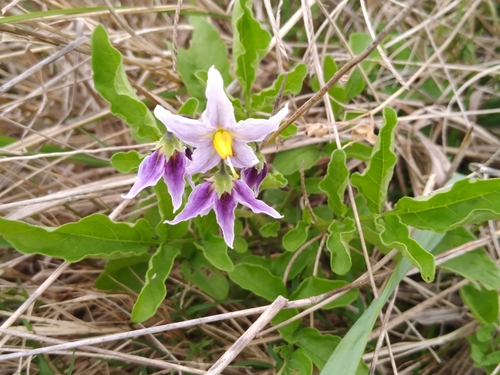
(c) Oretta Muzzi, some rights reserved (CC BY-NC), uploaded by Oretta Muzzi
iNaturalist· cc-by
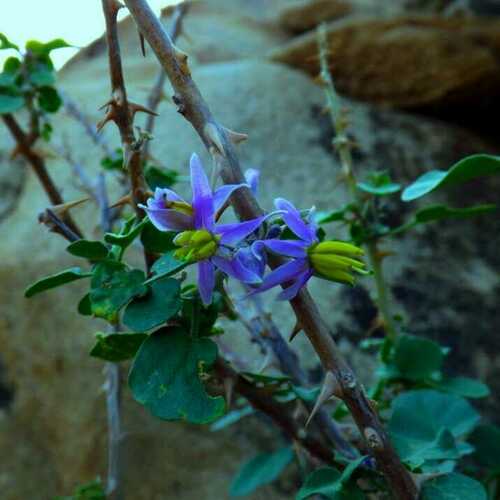
(c) zebedeugalinha, some rights reserved (CC BY)
iNaturalist· cc-by-nc
(c) Luca Boscain, some rights reserved (CC BY-NC), uploaded by Luca Boscain
Summary
Source: WikipediaSolanum linnaeanum is a nightshade species known as devil's apple and, in some places where it is introduced, apple of Sodom. The latter name is also used for other nightshades and entirely different plants elsewhere, in particular the poisonous milkweed Calotropis procera. This poisonous plant bearing tomato-like fruit is native to many African countries Kenya, Tanzania, South Africa, Zimbabwe and Mozambique, and is considered to be an invasive species in Australia, New Zealand, Hawaii, Fiji, New Caledonia, other Pacific Islands, the Aseer region of Saudi Arabia, and northern areas of Pakistan. When raw its fruits are green and look exactly like the Thai eggplant and when ripe they are yellow. In Ukambani eastern Kenya children in the villages in summer season use the poisonous yellow fruit as football, cautiously. Solbec Pharmaceuticals attempted to develop Coramsine, a 1:1 mixture of the alkaloids solamargine and solasonine extracted from Solanum linnaeanum, as a cancer drug. Preliminary clinical trials were initially promising, but the drug was ultimately unsuccessful. Solanum linnaeanum may be confused with Solanum cinereum (Narrawa burr) in Australia, the neotropical Solanum capsicoides, or Solanum incanum in Africa.
Description
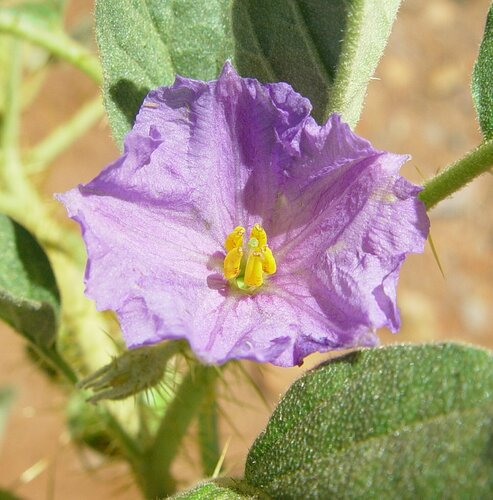
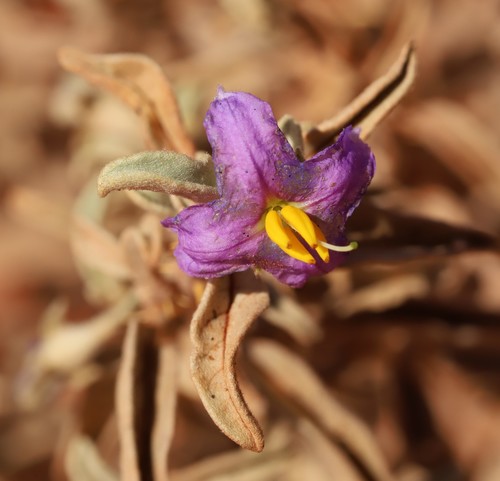
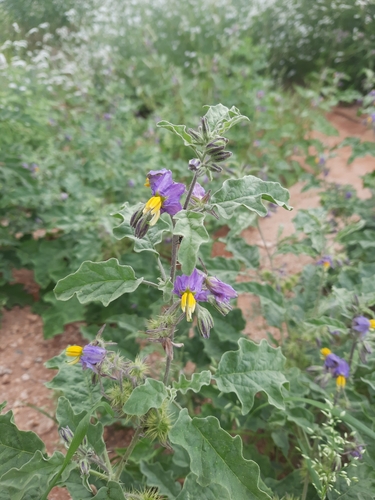
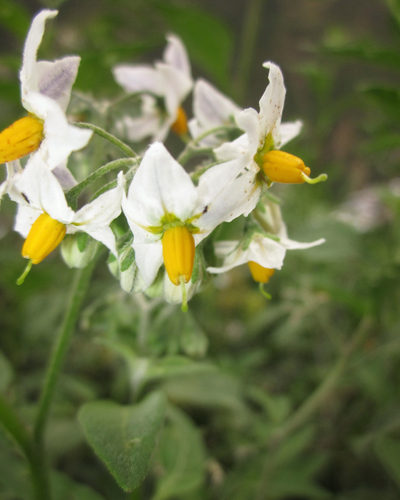
A shrub. It can grow 1.5 m tall. It is prickly. The leaves are deeply lobed and spiny and 15 cm long. There are 1 to a few flowers in the axils of leaves. They are mauve to purple. The fruit are yellow berries 25 mm across.
Medicinal Uses
Used medicinally.
Distribution
It is a subtropical plant. It grows from sea level to 1,200 m above sea level.
Where It Grows
Africa, Australia, Mediterranean, South Africa,
Synonyms
References (1)
- World Checklist of Useful Plant Species 2020. Royal Botanic Gardens, Kew