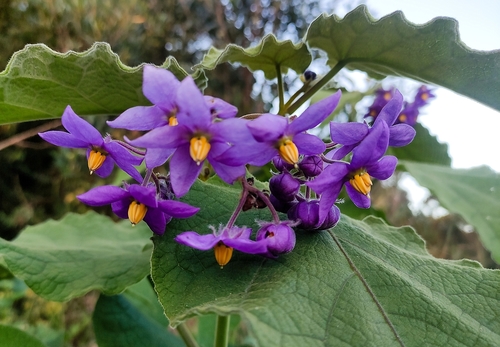
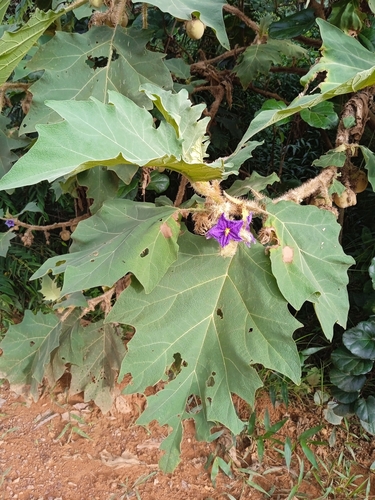
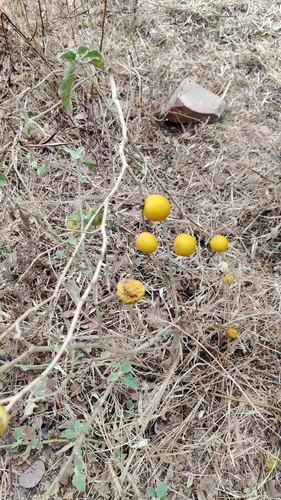
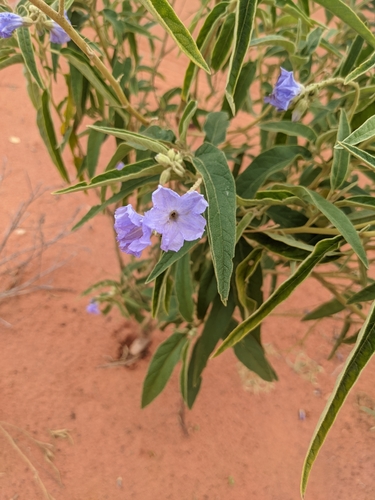
Solanum ajanhuiri
Juz. & Bukasov
Ajanhuiri, Yari
wikimedia· cc0
Wikimedia Commons - Ordercrazy
wikimedia· cc0
Wikimedia Commons - Ordercrazy
Summary
Source: WikipediaPerennial plant. Hardy to UK zone 10 but frost tender. Hermaphroditic. Grows in light sandy, medium loamy, or heavy clay soils. Tolerates mildly acid to basic pH. Adapts to semi-shade or full sun. Prefers moist soil and can tolerate drought.
Description
Perennial plant. Hardy to UK zone 10 but frost tender. Hermaphroditic. Grows in light sandy, medium loamy, or heavy clay soils. Tolerates mildly acid to basic pH. Adapts to semi-shade or full sun. Prefers moist soil and can tolerate drought.
Edible Uses
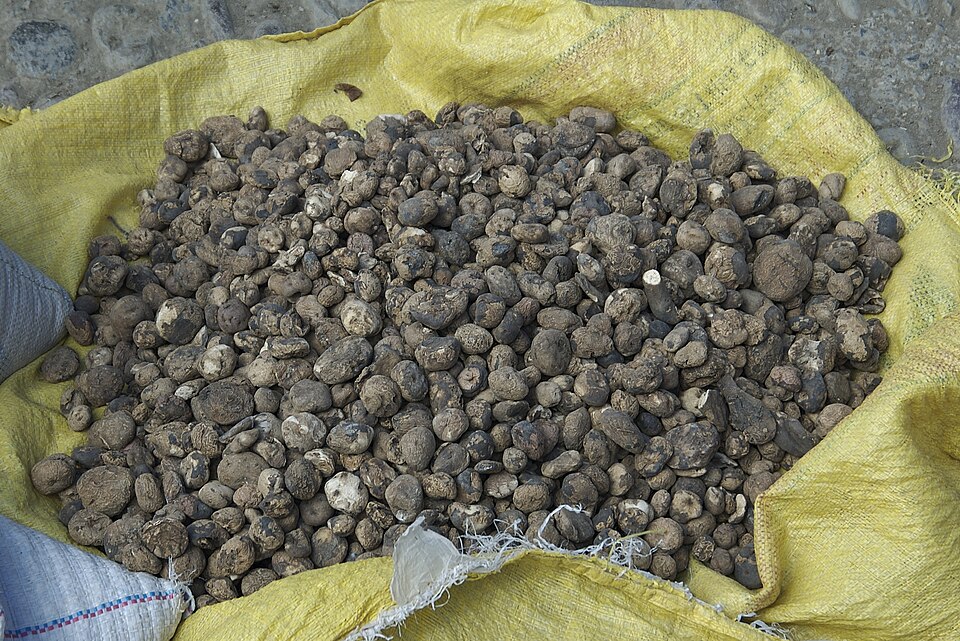
The tubers are eaten cooked. They have a high dry matter content and are a good source of vitamin C. Most forms are bitter and are sweetened by being made into 'chuño', a method of freeze-drying the tubers. Some forms produce sweet, floury tubers.
Medicinal Uses
None known.
Known Hazards
Most parts of the plants, especially the green parts and unripe fruit, are poisonous to humans (although not necessarily to other animals), with some species even being deadly.
Distribution
A tropical plant. In Bolivia it grows between 3,800-4,100 m altitude. It is resistant to frost. It is best in a slightly acid soil. Plants need short days to produce tubers.
Where It Grows
Andes, Bolivia, Ecuador, Peru, South America,
Cultivation
Succeeds in most soils. Dislikes wet or heavy clay soils. Prefers a slightly acid soil, the tubers are subject to scab on limy soils or those deficient in humus. Yields best on a fertile soil rich in organic matter. Tolerates hail and, once established, drought. This plant is one of the S. American species of potatoes, it is possibly a hybrid S. stenototum x S. megistacrolobum. It is more frost hardy than the common potato, tolerating temperatures down to about -5°c, and can probably be grown in much the same way as potatoes are grown by planting out the tubers in spring and harvesting in the autumn. It is cultivated for its tubers in the Andes, there are several forms but only one, called 'sisu' is not bitter - there are blue and white tuber varieties of this form. Plants can produce tubers in 5 - 6 months from planting out. Plants might have strict daylength requirements and may yield poorly in temperate zones because they need short-days in order to induce tuber-formation. A diploid species, it rarely produces fertile seed and even then only in small quantities. It is resistant to viral diseases and round-cyst nematode and is immune to Synchytrium black wart. The tubers store well.
Propagation
Seed - sow early spring in a warm greenhouse. Prick out seedlings into a fairly rich compost as soon as they are large enough to handle and grow on quickly. Plant out after the last expected frosts. Division. Harvest tubers in autumn after top-growth has been cut back by frost. Store in a cool, frost-free place over winter and replant in April.
Other Uses
None known.
Production
Plants can produce tubers in 5-6 months.
Other Information
It is cultivated in some places.
Notes
There are about 1400 Solanum species. It is a diploid potato species.
Also Known As
Papa
References (9)
- Fern, K., 2012, Tropical Species Database http://theferns.info/tropical/
- Huaman, Z., Hawkes, J.G. and Rowe, P.R., 1980, Solanum ajanhuir: An important Diploid Potato Cultivated in the Andean Altiplano. Economic Botany 34(4) pp 335-343
- Kermath, B. M., et al, 2014, Food Plants in the Americas: A survey of the domesticated, cultivated and wild plants used for Human food in North, Central and South America and the Caribbean. On line draft. p 814
- Lim, T. K., 2015, Edible Medicinal and Non Medicinal Plants. Volume 9, Modified Stems, Roots, Bulbs. Springer p 77
- Plants for a Future database, The Field, Penpol, Lostwithiel, Cornwall, PL22 0NG, UK. http://www.scs.leeds.ac.uk/pfaf/
Show all 9 references Hide references
- Samuels, J., 2015, Biodiversity of Food Species of the Solanaceae Family: A Preliminary Taxonomic Inventory of Subfamily Solanoideae. Resources 2015, 4. 277-322
- Torre, de la, L., et al, 2008, Enciclopedia de las Plantas Útiles del Ecuador. Herbario QCA. Pontificia Universidad Católica del Ecuador. p 588 (As ahanhuiri)
- Velasquez-Milla, D., et al, 2011, Ecological and socio-cultural factors influencing in situ conservation of crop diversity by traditional Andean households in Peru. Journal of Ethnobiology and Ethnomedicine 7:40
- Wiersema, J. H. & Leon, B., 2013, World Economic Plants. A Standard Reference CRC Press. 2nd Ed. p 642