Capsicum annuum var. grossum
(L.) Sendt.
Bell pepper
gbif· cc-by
GBIF
gbif· cc-by
GBIF
gbif· cc-by
GBIF
Summary
Source: WikipediaCapsicum annuum is a flowering plant in the family Solanaceae (nightshades), native to the northern regions of South America and to southwestern North America. The plant produces berries of many colors including red, green, and yellow, often with pungent taste. It is one of the oldest cultivated crops, with domestication dating back to around 6,000 years ago in regions of Mexico. The genus Capsicum has over 30 species but Capsicum annuum is the primary species in its genus, as it has been widely cultivated for human consumption for a substantial amount of time and has spread across the world. This species has many uses in culinary, medicine, self-defense, and ornamental applications.
Description
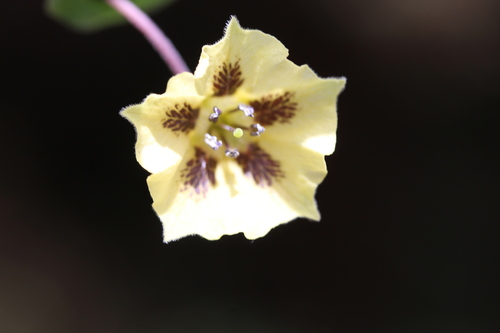
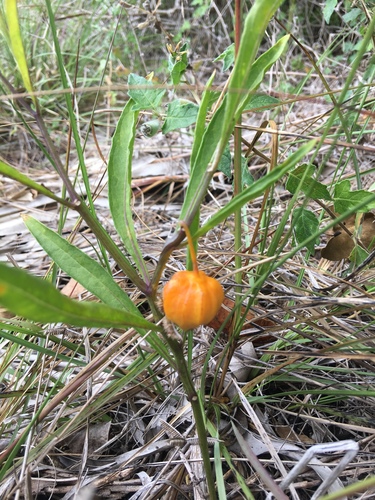
An annual plant up to 1.5 m high. Leaves solitary or paired; the petiole is 4-7 cm and the leaf blade oblong and 4-13 cm long by 1.5-4 cm wide. The flowers are produced singly and are yellow or white. Fruit are about 10 cm long and 6 cm wide and red when fully ripe. Kinds with different shaped fruit also occur. Seeds are pale yellow, kidney shaped and 3-5 mm.
Edible Uses
There are multiple ways this species can be used in food, this includes fresh, dried, pickled, and powdered. It is widely used in traditional Mexican cuisine to create dishes such as Oaxacan black mole. It is added to many dishes worldwide for spice and flavor and is used as a colorant for aesthetics. According to a study looking at Capsicum annuum as a contender for alleviating micronutrient deficiencies, along with their flavor and coloring properties, they are also very rich in micronutrients, including vitamins A, B, B3, and C. The species is a source of popular sweet peppers and hot chilis, with numerous varieties cultivated all around the world, and is the source of popular spices such as cayenne, chili, pimentón and paprika powders, as well as pimiento (pimento). Capsinoid chemicals provide the distinctive tastes in C. annuum variants. In particular, capsaicin creates a burning sensation ("hotness"), which in extreme cases can last for several hours after ingestion. A measurement called the Scoville scale has been created to describe the hotness of peppers and other foods.
Traditional Uses
The fruit are edible raw or cooked. The leaves are edible cooked.
This uses section is brief — help expand it
Medicinal Uses
Capsicum annuum has been widely cultivated and modified through breeding for certain traits, which allows them to be used in multiple applications. These include in food, traditional medicine, cosmetics, and even self defense (pepper spray). In old civilizations such as the Mayan and Aztec, capsicum species including C. annuum were used to treat many illnesses including asthma, toothaches, coughs, and sores. Today these practices still exist in developing countries, using them for their antioxidant, antimicrobial, antifungal, and antiviral properties. There have also been studies linking the consumption of capsaicinoids and a decreased risk of cardiovascular disease and cancer.
Distribution
A tropical plant. Plants grow from sea level up to about 2400 m altitude. They are killed by frost. Soils need to be well drained and fertile. The fruit and plants can rot in the middle of the wettest seasons.
Where It Grows
Africa, Asia, Australia, Central America, China, Fiji, Honduras, Madagascar, India, Nauru, Northeastern India, Pacific, Pakistan, Sikkim, Solomon Islands, South Africa, Southern Africa, Sri Lanka, Tuvalu, Vanuatu,
Cultivation
Plants are grown from seed. It is possible to save your own seed. Seed will keep for 2 to 3 years. Seeds germinate in 6 - 10 days. Plants can be transplanted. Plants need to be about 50 cm apart.
Production
The first fruit can be harvested after 3-4 months.
Other Information
It is a commercially cultivated vegetable.
Notes
There are 10 Capsicum species.
Synonyms
Also Known As
La jiao, Pilopilombazaha, Simla mirch
References (14)
- Bremness, L., 1994, Herbs. Collins Eyewitness Handbooks. Harper Collins. p 237
- Cheifetz, A., (ed), 1999, 500 popular vegetables, herbs, fruits and nuts for Australian Gardeners. Random House p 52
- Cundall, P., (ed.), 2004, Gardening Australia: flora: the gardener's bible. ABC Books. p 326
- Flowerdew, B., 2000, Complete Fruit Book. Kyle Cathie Ltd., London. p 106
- Furusawa, T., et al, 2014, Interaction between forest biodiversity and people's used of forest resources in Roviana, Solomon Islands: implications for biocultural conservation under socioeconomic changes. Journal of Ethnobiology and Ethnomedicine, 10:10
Show all 14 references Hide references
- Hu, Shiu-ying, 2005, Food Plants of China. The Chinese University Press. p 659
- Kays, S. J., and Dias, J. C. S., 1995, Common Names of Commercially Cultivated Vegetables of the World in 15 languages. Economic Botany, Vol. 49, No. 2, pp. 115-152
- Kumar, A., et al, 2012, Ethnobotanical Edible Plant Biodiversity of Lepcha Tribes. Indian Forester, 138 (9):798-803
- C. P. P. Martius, Fl. bras. 10:147. 1846
- Medhi, P. & Borthakur, S. K., 2012, Phytoresources from North Cachur Hills of Assam -3: Edible plants sold at Hflong market. Indian Journal of Natural Products and Resources. 3(1) pp 84-109
- Mulherin, J., 1994, Spices and natural flavourings. Tiger Books, London. p 73
- Thaman, R. R, 2016, The flora of Tuvalu. Atoll Research Bulletin No. 611. Smithsonian Institute p 114
- van Wyk, B., 2005, Food Plants of the World. An illustrated guide. Timber press. p 116
- Walter, A. & Lebot, V., 2007, Gardens of Oceania. ACIAR Monograph No. 122. p 259