Sisymbrium capense
Thunb.
Wild mustard
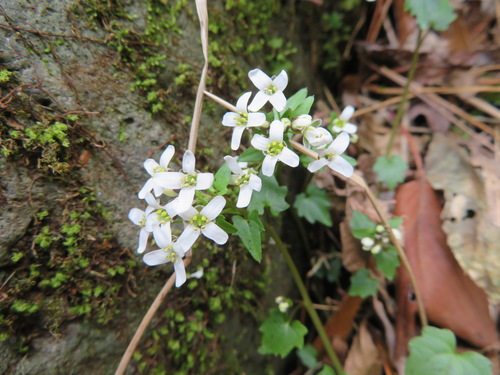
iNaturalist· cc-by-nc-sa
(c) David Hoare, some rights reserved (CC BY-NC-SA), uploaded by David Hoare
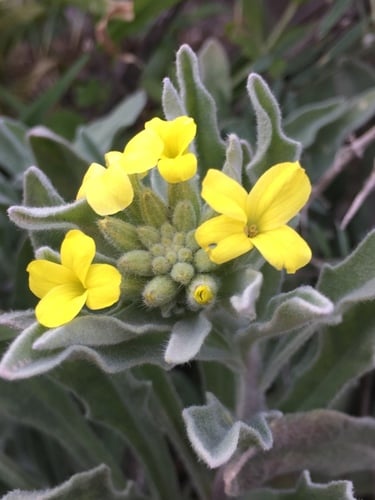
iNaturalist· cc-by-nc-sa
(c) David Hoare, some rights reserved (CC BY-NC-SA)
Description
A cabbage family herb. The stems are erect and hairy. It grows 1 m tall. It can grow for one or two years. The leaves are hairy. The lower leaves are broadly sword shaped and almost in a ring. They have lobes along the stalk. The leaves on the stem are smaller with less lobes. The flowers are small and yellow. They are 6-8 mm long. The fruit are oblong seed capsules. The seeds are narrowly oval and flattened.
Edible Uses
The young leaves are cooked as a potherb and can be dried and stored.
Traditional Uses
The young leaves are cooked as a potherb. The leaves can be dried and stored.
This uses section is brief — help expand it
Distribution
It is a subtropical plant.
Where It Grows
Africa, Lesotho, South Africa, Southern Africa,
Notes
There are about 80 Sisymbrium species.
Also Known As
Quela, Tihako ea khomo, Usiqwashumbe
References (8)
- Fox, F. W. & Young, M. E. N., 1982, Food from the Veld. Delta Books. p 136
- Grivetti, L. E., 1980, Agricultural development: present and potential role of edible wild plants. Part 2: Sub-Saharan Africa, Report to the Department of State Agency for International Development. p 65
- Guillarmod, J., 1966, 1971,
- Jardin, C., 1970, List of Foods Used In Africa, FAO Nutrition Information Document Series No 2.p 101
- Peters, C. R., O'Brien, E. M., and Drummond, R.B., 1992, Edible Wild plants of Sub-saharan Africa. Kew. p 98
Show all 8 references Hide references
- Ruiters-Welcome, A. K., 2019, Food plants of southern Africa. Ph.D. thesis. Univ. of Johannesburg p 40
- van Wyk, Be., & Gericke, N., 2007, People's plants. A Guide to Useful Plants of Southern Africa. Briza. p 76
- Welcome, A. K. & Van Wyk, B.-E., 2019, An inventory and analysis of the food plants of southern Africa. South African Journal of Botany 122 (2019) 136–179