Shorea robusta
C. F. Gaertn.
Sal
iNaturalist· cc-by-nc-nd
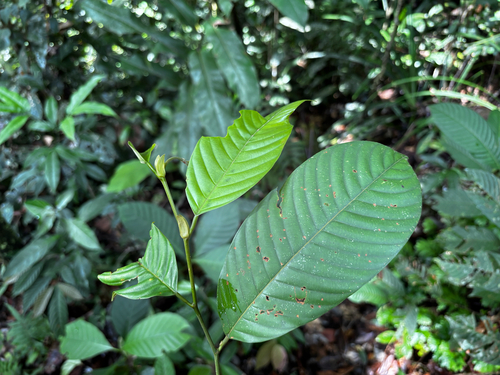
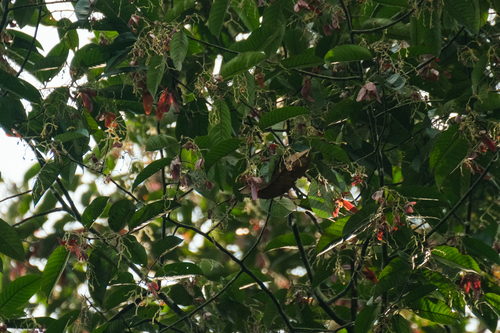
(c) Chief RedEarth, some rights reserved (CC BY-NC-ND), uploaded by Chief RedEarth
iNaturalist· cc-by-nc
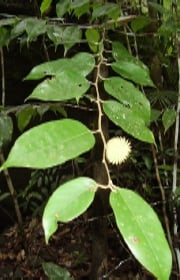
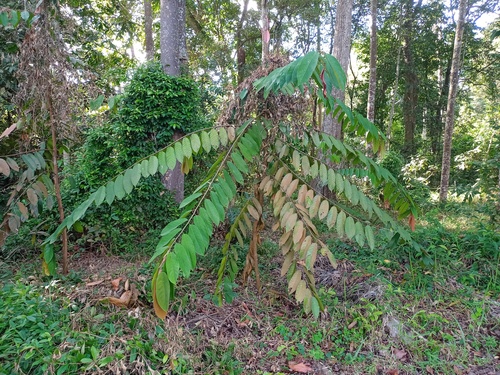
(c) Samarth Jain, some rights reserved (CC BY-NC)
iNaturalist· cc-by-nc
(c) Samarth Jain, some rights reserved (CC BY-NC)
Summary
Source: WikipediaShorea robusta, the sal tree, sāla, shala, sakhua, or sarai, is a species of tree in the family Dipterocarpaceae. The tree is native to India, Bangladesh, Nepal, Tibet and across the Himalayan regions.
Description
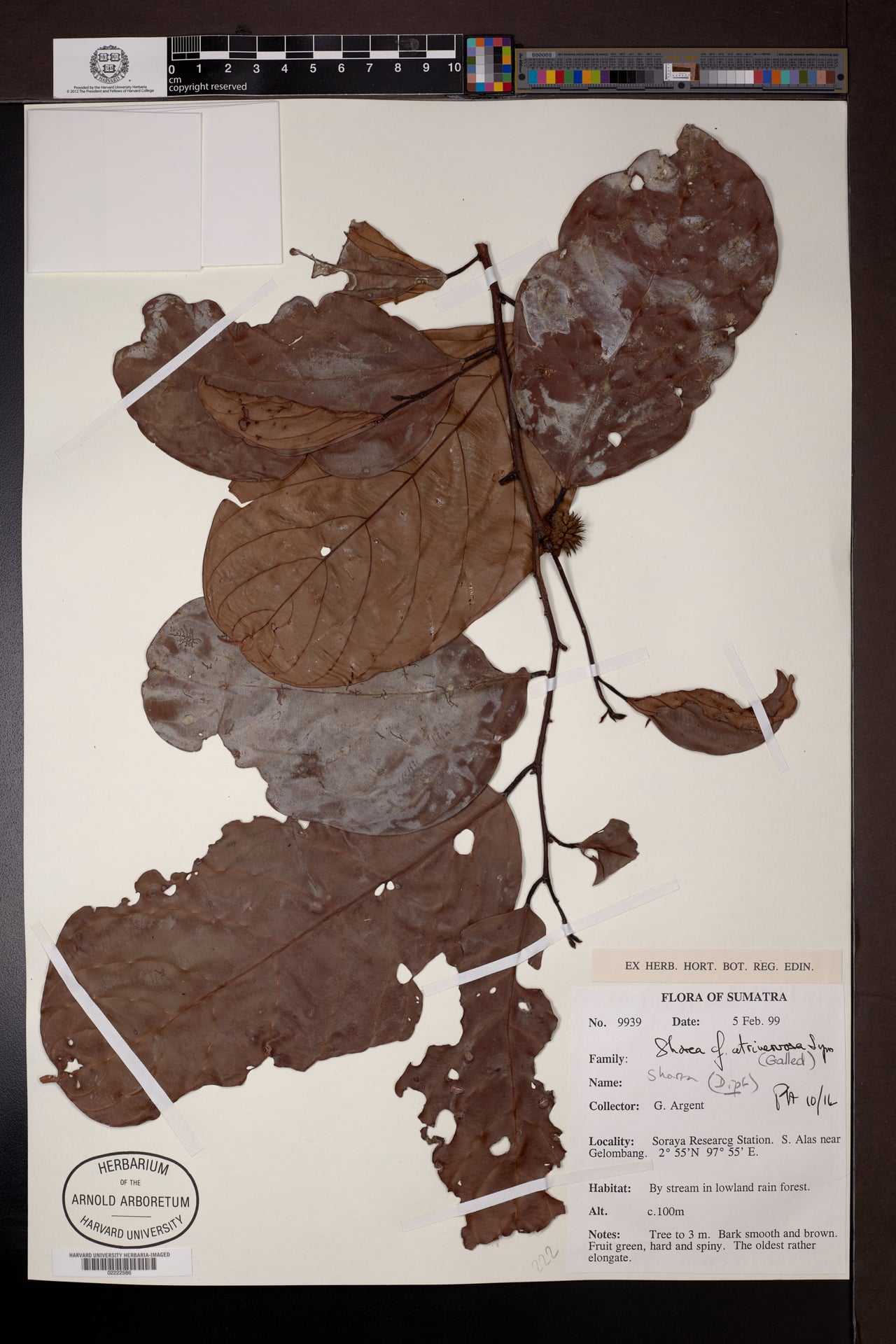
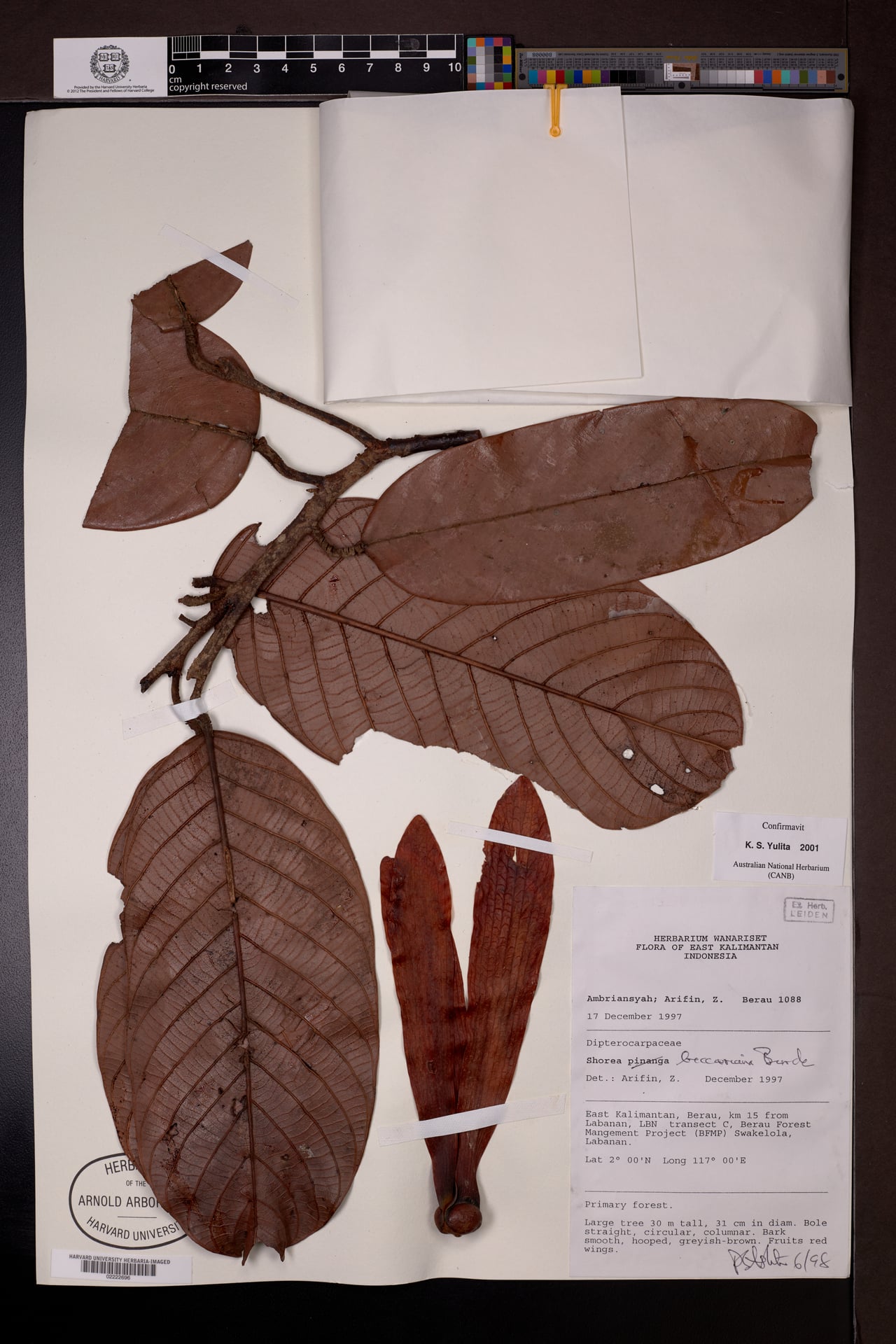
A tree. It loses some of its leaves during the year. It grows about 50 m high. The bark is rough and reddish brown with deep wide cracks along its length. The leaves have stalks. The stalks are 2-5 cm long. The leaves are 10-20 cm long by 5-13 cm wide. They are oval and leathery. They taper to the tip. They are shiny when mature. The base is rounded or heart shaped. The flowers are yellow. They are in open flower arrangements in the axils of leaves or at the ends of branches. The flowers are small but in large numbers. The fruit is oval. It is 10-15 cm across. It is pale yellowish or green in colour. It is hairy with wing-like sepals at the base. It does not split open. It is one seeded with 5 unequal wings. The seed is oval with fleshy green seed leaves. These contain fatty oil.
Edible Uses
The seeds are roasted and can also be boiled into a porridge together with the flowers of Bassia latifolia and the fruits of Dolichos biflorus. They can be ground into a coarse flour to make bread, and the plant serves as a famine food. A de-fatted kernel powder known as sal seed cake contains around 50% starch along with proteins, tannins, and minerals; the physicochemical properties of this starch can be exploited for preparing canned food products. The seeds' chemical composition is approximately 10.8% water, 8% protein, 62.7% carbohydrate, 14.8% oil, 1.4% fibre, and 2.3% ash. The seeds also yield sal butter, an oil used in cooking as a substitute for ghee and as a replacement for cocoa butter in making chocolate. The fruit is occasionally eaten.
Traditional Uses
Roasted seeds are eaten. They are dried and ground into flour and then dried again and used for bread or with other ingredients like salt added. The seed oil remains solid at room temperature and after processing can substitute for Cocoa butter in the Chocolate industry. The fruit are occasionally eaten. CAUTION: The prolonged cooking and drying suggest some toxic substance needs to be removed. They contain tannins or phlobaphene. The flowers are used in curries.
Medicinal Uses
The resin is valued for treating dysentery, gonorrhoea, boils, and toothache. Leaf juice is used for dysentery, and warmed leaves are applied as a poultice to swollen areas of the body, with a reportedly quick effect; they are also placed on the stomachs of children with dysentery. Oil from the seeds is used to treat skin diseases.
Distribution
It is a subtropical plant. In Nepal plants grow to about 1400 m altitude. It grows on the outer ridges of hills. It suits hardiness zones 10-12.
Where It Grows
Asia, Australia, Bangladesh, Bhutan, China, Himalayas, India, Myanmar, Nepal, Northeastern India, SE Asia, Sikkim,
Cultivation
A plant of the tropics, where it is found at elevations up to 2,000 metres. It grows best in areas where annual daytime temperatures are within the range 28 - 34°c, but can tolerate 7 - 47°c. The plant can survive temperatures down to about -1°c. It prefers a mean annual rainfall in the range 1,500 - 3,500mm, but tolerates 1,000 - 7.300mm. There is usually a dry season of 4 - 8 months. Prefers a position in full sun, but tolerates light shade. Succeeds in most well-drained, fertile soils, though it prefers a moist sandy loam with good subsoil drainage. Prefers a pH in the range 5 - 6.7, tolerating 4.5 - 7.5. Young trees grow quickly, developing a long taproot at a very young age and attaining top heights of up to 6 metres after 6 years. Fruit and seed bearing begins around the age of 15 years, the tree then bears fruit regularly every 2 years or so, and a good seed-bearing year can be expected every 3 - 5 years. The tree responds well to coppicing. Rotations of 30 - 40 years are used when coppice regeneration is practised, and 80 - 160 years for high forest regeneration. The tree is very tolerant of forest fires, usually surviving them if not too small.
Propagation
The following is a general guide for the genus. Sow seed as soon as possible; no pre-treatment is required, though soaking for 12 hours before sowing is recommended. Sow in seedbeds covered with a 1:1 mixture of sand and soil, or a thin layer of sawdust. Fresh seed germinates well and rapidly. About two weeks after germination, when seedlings are 5–6cm tall, pot them individually into containers approximately 15 × 23cm with good drainage. A potting mix of forest soil and sand at 3:1 is recommended to introduce appropriate mycorrhizae. Grow seedlings in 50–60% sunlight, watering twice daily. Plant out when 30–40cm tall, after hardening off in full sunlight for one month.
Other Uses
When tapped, the tree produces large quantities of a whitish, aromatic, transparent resin known as lal dhuna, used to caulk boats and ships and as incense. In parts of the Upper Tista forests of the Darjeeling District, large lumps often measuring 450–600 cubic centimetres are found in the ground at the base of trees. The leaves are widely used to make plates and cups and for wrapping food. Seed oil is used for illumination. The bark yields tannins. The heartwood is dark reddish-brown with a whitish thin sapwood band; the grain is strongly spiralled and rather coarsely structured. The wood is hard, heavy, very durable, and highly resistant to termite attack, though seasoning can be problematic. It saws easily but is difficult to plane and turn due to its high resin content, and it tends to split when nailed. This important Indian hardwood is particularly suited to heavy-stress structural use in buildings, hydraulic engineering, ships, and railway cars; it is also used for poles, railway ties and posts, window frames, floors, and many other applications. Coppice shoots are used for household and agricultural implements, and the wood is an important local fuel source.
Production
In Sikkim seeds are available May to June.
Other Information
It is cultivated.
Notes
Chemical composition: Water = 10.8%. Protein = 8%. Carbohydrate = 62.7%. Oil = 14.8%. Fibre = 1.4%. Ash = 2.3%. Sal butter, used in cooking, is derived from the seeds.
Nutrition
| Part | Moisture | kJ | kcal | Protein | Vit A | Vit C | Iron | Zinc |
|---|---|---|---|---|---|---|---|---|
| Seeds | — | — | 10.1 | — | — | — | — | — |
Synonyms
Also Known As
Agrath, Bolsal, Dieng-blei, Gazari, Gugal, Hal-orang, Lon-mani-ingyin, Makka, Maramaram, Ral, Rengal, Sagua, Sakhua, Sakhu, Sakuwa, Sal, Salwa, Sekua, Sekuva, Sekwa, Seral, Shal, Taksal-kung
References (38)
- Acharya K. P. and Acharya, R., 2010, Eating from the Wild: Indigenous knowledge on wild edible plants in Parroha VDC of Rupandehi District, Central Nepal. International Journal of Social Forestry. 3(1):28-48
- Ambasta, S.P. (Ed.), 2000, The Useful Plants of India. CSIR India. p 572
- Behera K. K., et al, 2008, Wild Edible Plants of Mayurbhanj District, Orissa, India. J. Econ. Taxon. Bot. Vol. 32 (Suppl.) pp 305-314
- Bole, P.V., & Yaghani, Y., 1985, Field Guide to the Common Trees of India. OUP p 97
- Cundall, P., (ed.), 2004, Gardening Australia: flora: the gardener's bible. ABC Books. p 1339
Show all 38 references Hide references
- Dangol, D. R., 2002, Economic uses of forest plant resources in western Chitwan, Nepal. Banko Janakari, 12(2): 56-64
- Dangol, D. R. et al, 2017, Wild Edible Plants in Nepal. Proceedings of 2nd National Workshop on CUAOGR, 2017.
- Dey, A. & Mukhererjee, A., 2015, Living and Survival Amidst Hunger: Wild Edible Botanicals as a Prime Forest Productivity in the Rural Purulia District, West Bengal, India from Colonial to Present. Research Journal of Forestry 9(3): 71-86
- Dobriyal, M. J. R. & Dobriyal, R., 2014, Non Wood Forest Produce an Option for Ethnic Food and Nutritional Security in India. Int. J. of Usuf. Mngt. 15(1):17-37
- Facciola, S., 1998, Cornucopia 2: a Source Book of Edible Plants. Kampong Publications, p 91
- Gautam, R. S., et al, 2020, Wild Edible Fruits of Nepal. Int. J. Appl. Sci. Biotechnol. Vol 8(3): 289-304
- Gautam, R. S., et al, 2022, Ethnobotanical Review of Wild Edible Plants of Nepal. Journal of Natural History Museum Volume 32, 2021-22 p 112
- Ghosh, C. & Das A. P., 2011, Some useful and poisonous tea garden weeds from the Darjiling District of West Bengal, India. Pleione 5(1): 91 - 114
- GUPTA,
- Kahlon, L. K. & Singh, R., 2019, Traditional knowledge & Dynamics of edible plants of primitive tribal group ‘Paudi Bhuyan’ with changing demography migration patterns in Northern Odisha. Indian Journal of Traditional Knowledge Vol 18(1), pp 7-15
- Kala, C. P., 2009, Aboriginal uses and management of ethnobotanical species in deciduous forests of Chhattisgarh state in India. Journal of Ethnobiology and Ethnomedicine. 5:32
- Kumar, R. & Saikia, P., 2020, Wild edible plants of Jharkhand and their utilitarian perspectives. Indian Journal of Traditional Knowledge Vol 19 (2), April 2020, pp 237-250
- Manandhar, N.P., 2002, Plants and People of Nepal. Timber Press. Portland, Oregon. p 426
- Marandi, R. R. & Britto, S. J., 2015, Medicinal Properties of Edible Weeds of Crop Fields and Wild plants Eaten by Oraon Tribals of Latehar District, Jharkhand. International Journal of Life Science and Pharma Research. Vo. 5. (2) April 2015
- Manju, S., and Sundriyal, R. C., 2001, Wild Edible Plants of the Sikkim Himalaya: Nutritive Values of Selected Species. Economic Botany 55(3): 377-390
- Menninger, E.A., 1977, Edible Nuts of the World. Horticultural Books. Florida p 30
- Misra S. & Misra M., 2016, Ethnobotanical and Nutritional Evaluation of Some Edible Fruit Plants of Southern Odisha, India. International Journal of Advances in Agricultural Science and Technology, Vol.3 Issue.1, March- 2016, pg. 1-30
- Pasha, M. K. & Uddin, S. B., 2019, Minor Edible Fruits of Bangladesh. Bangladesh J. Plant Taxon. 26(2): 299–313
- Polunin, O., & Stainton, A., 2006, Flowers of the Himalaya, Oxford India Paperbacks. p 60
- Sahni, K.C., 2000, The Book of Indian Trees. Bombay Natural History Society. Oxford. p 34
- Singh, H.B., Arora R.K.,1978, Wild edible Plants of India. Indian Council of Agricultural Research, New Delhi. p 85
- Suppl. carp. 1:48, t. 186, fig. 1. 1805
- Sundriyal, M., et al, 1998, Wild edibles and other useful plants from the Sikkim Himalaya, India. Oecologia Montana 7:43-54
- Sundriyal, M., et al, 2004, Dietary Use of Wild Plant Resources in the Sikkim Himalaya, India. Economic Botany 58(4) pp 626-638
- Sundriyal, M. & Sundriyal, R. C., 2004, Structure, Phenology, Fruit Yield, and Future Prospects of some Prominent Wild Edible Plant Species of the Sikkim Himalaya, India. Journal of Ethnobiology 24(1): 113-138
- Tewari, D.N., 1994, Important Plants of India. International Book Distributors, India. p 45
- Toppo, P. et al, 2016, Wild edible plants of Dhamtari district of Chhattisgarh, India. Van Sangyan Vol. 3, No. 4
- UPHOF,
- Upreti, K., et al, 2010, Diversity and Distribution of Wild Edible Fruit Plants of Uttarakhand. Bioversity Potentials of the Himalaya. p 188
- WATT,
- Wild edible plants of Himachal Pradesh
- World Checklist of Useful Plant Species 2020. Royal Botanic Gardens, Kew
- www.worldagroforestrycentre.org/treedb/