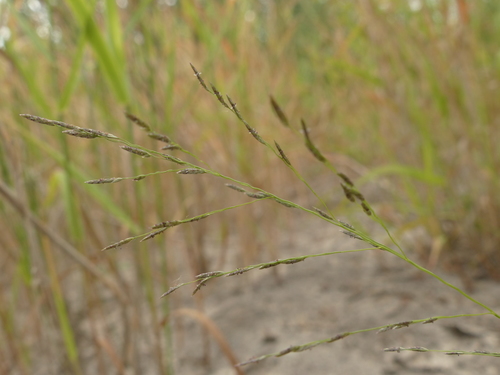
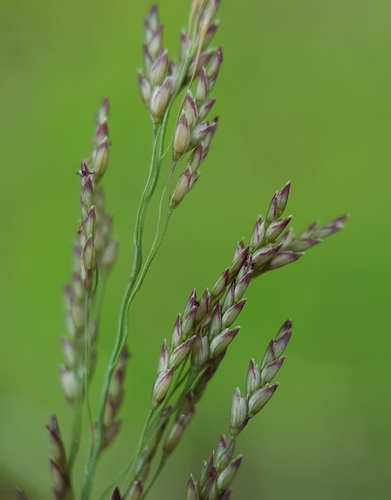
Setaria italica
(L.) P. Beauv.
Foxtail millet, Indian millet
iNaturalist· cc-by-nc
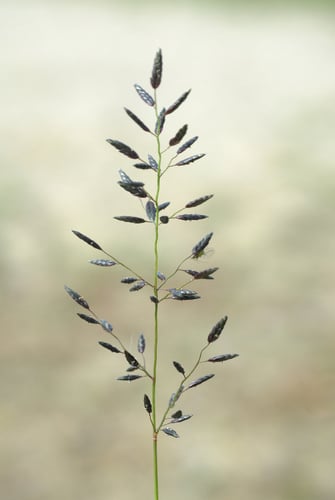
(c) Věra Kafková, some rights reserved (CC BY-NC), uploaded by Věra Kafková
iNaturalist· cc-by-sa
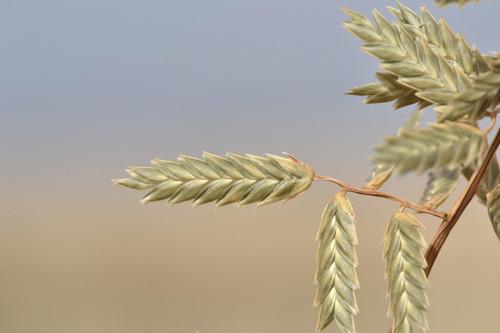
(c) Zinogre, some rights reserved (CC BY-SA), uploaded by Zinogre
iNaturalist· cc0
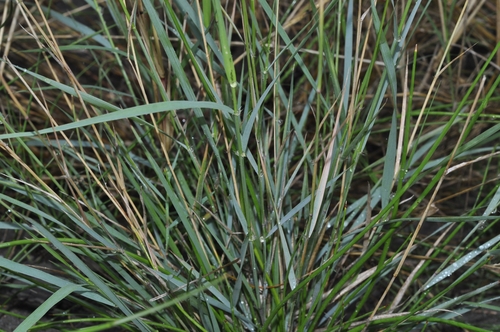
no rights reserved, uploaded by 葉子
Summary
Source: WikipediaAn annual grass reaching 0.5 m tall with a spread of 0.1 m, hardy to UK zone 6. Flowers August to October with seeds ripening September to October. The plant is hermaphroditic and wind-pollinated. It grows in light sandy, medium loamy, and heavy clay soils, preferring well-drained conditions across mildly acid to mildly alkaline pH ranges. Cannot grow in shade, prefers moist soil, and tolerates drought.
Description
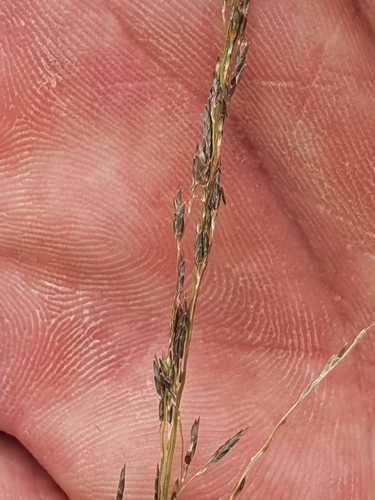
An annual millet grass. It grows 1-1.5 m tall. It can be tinged with purple colour. The stalks are upright and the section between the nodes is hollow. It develops tillers from the base. It has along leaf sheath. The leaf blade is 30-45 cm long by 1.2-2.5 cm wide. It has a prominent midrib and tapers towards the tip. The flower is a spike-like branching flower 7.5-25 cm long by 1.2-5 cm wide. The side branches carry 6-12 small spikes each with 1-3 bristles. The mature grain is 2 mm long. There are many named cultivated varieties.
Edible Uses
The seeds of foxtail millet can be cooked and eaten as sweet or savoury dishes in all the same ways as rice, or ground into flour for porridge, cakes, and puddings. Sprouting the seed before use makes it slightly sweeter. Most cultivars are non-glutinous, making them suitable for people with coeliac disease. The grain is considered nutritious and is often recommended for the elderly and for pregnant women. Per 100g (dry weight): 384 calories, 10.7g protein, 3.3g fat, 84.2g carbohydrate, 1.4g fibre, 1.8g ash; minerals include 37mg calcium, 275mg phosphorus, 6.2mg iron, 8mg sodium, 281mg potassium; vitamins include 0.48mg thiamine (B1), 0.14mg riboflavin (B2), and 2.48mg niacin.
Traditional Uses
It can be cooked and eaten like rice. The seeds can be parched, popped, added to soups and sauces or made into porridge, cakes, puddings, and dumplings. The sprouted seeds can be used as a vegetable. The seeds can be used for making beer. The seeds can also be made into syrup. CAUTION: If the seeds are left outside overwinter they can become toxic.
Medicinal Uses
The germinated seed of yellow-seeded cultivars is astringent, digestive, emollient, and stomachic, used in treating dyspepsia, poor digestion, and food stagnancy in the abdomen. White seeds are refrigerant and used for cholera and fever. Green seeds are diuretic and considered strengthening to virility.
Distribution
A warm temperate plant. It suits regions of low rainfall. It is grown from sea level to 2,000 m altitude. In Nepal it grows to about 1800 m altitude. In Argentina it grows from sea level to 1,000 m above sea level. It can tolerate a wide range of soil conditions. It cannot tolerate waterlogging. It cannot withstand long periods of drought. It can grow in arid places.
Where It Grows
Afghanistan, Africa, Andamans, Argentina, Armenia, Asia, Australia, Austria, Azerbaijan, Azores, Balkans, Bangladesh, Belgium, Brazil, Britain, Cambodia, Canada, Caucasus, Central Asia, China, Cyprus, East Africa, East Timor, Egypt, Europe, France, Georgia, Germany, Ghana, Greece, Guiana, Guyana, Himalayas, Hungary, India, Indochina, Indonesia, Iran, Iraq, Israel, Italy, Jamaica, Japan, Kenya, Korea, Kyrgyzstan, Laos, Macedonia, Malawi, Malaysia, Manchuria, Mauritius, Mediterranean, Middle East, Mozambique, Myanmar, Nepal, North Africa, North America, Northeastern India, Pacific, Pakistan, Papua New Guinea, PNG, Philippines, Russia, Saudi Arabia, SE Asia, South Africa, Southern Africa, Spain, Sri Lanka, Switzerland, Syria, Taiwan, Tajikistan, Tanzania, Tasmania, Thailand, Tibet, Timor-Leste, Trinidad & Tobago, Turkey, Türkiye, Turkmenistan, Ukraine, USA, Vietnam, West Africa, West Indies, West Timor, Yemen, Zimbabwe,
Cultivation
Plants are grown by seed. Seed can be broadcast or drilled. Pure stands require 8-10 kg/ha of seed. Plants are harvested by cutting off the ears.
Propagation
Sow seed in early spring in a greenhouse, barely covering it. Germination is usually quick and good. Prick out seedlings into individual pots as soon as they are large enough to handle and grow them on quickly. Plant out in late spring after the last expected frosts. For larger quantities, seed can be sown in situ in mid-spring, though plants may come into flower later and may not ripen seed in a cool summer.
Other Uses
The plant can be sown in contour strips for erosion control. The straw is used for thatching and bedding in countries such as India. The bran contains up to 9% oil and can be used for oil extraction.
Production
It grows quickly. Plants mature in 80-120 days. Flowering occurs over 10-15 days. Plants can be self or cross pollinated. Yields of 800-900 kg/ha are common and straw yields for livestock feed can be up to 2,500 kg/ha.
Other Information
Foxtail millet is cultivated as a cereal in China. It has many cultivars.
Notes
There are about 130 Setaria species. They are mainly in the tropics and subtropics.
Nutrition
| Part | Moisture | kJ | kcal | Protein | Vit A | Vit C | Iron | Zinc |
|---|---|---|---|---|---|---|---|---|
| Seeds | 13.5 | 1425 | 341 | 9.5 | — | — | 5.5 | 3.5 |
Synonyms
Also Known As
Awa, Bengal grass, Butul, Chenna, Chinaka, Chiurr, Erba, Fatun, Gh'omi, Hetui, Iskoi, Italian millet, Jangmelen, Japanese millet, Jo, Kagano, Kagno, Kaguno, Kala kangni, Kang, Kanghuni, Kangni, Kangu, Kaguno, Kanguni, Kangunika, Kanidhan, Kaon, Karang, Karibiragu, Kaun, Khar, Khauni, Khosanuk, Kirpi darisi, Koni, Kora, Korra, Korralu, Ksongu, Kusht, Liang, Maisha, Mijo de Italia, Milho painco, Mukobi, Munciro, Navane, Pet'vi, Pingi, Pitatandula, Priangu, Priyangu, Rala, Rumput ekur kucing, Salau, Sat, Sekoi, Sekua, Sekui, Shak, Shali, Tanahal, Tangun, Tayak, Tena, Tenai, Thanahal, Thene, Thina, Thinai, U'rao-shoho
References (59)
- Acharya, K. P., Paudel, P. K., 2020, Biodiversity in Karnali Province: Current Status and Conservation. Ministry of Industry, Tourism, Forest and Environment, Karnali Province Government, Surkhet, Nepal. p 31
- Ambasta, S.P. (Ed.), 2000, The Useful Plants of India. CSIR India. p 570
- Anderson, E. F., 1993, Plants and people of the Golden Triangle. Dioscorides Press. p 221
- Bodner, C. C. and Gereau, R. E., 1988, A Contribution to Bontoc Ethnobotany. Economic Botany, 43(2): 307-369
- Borrell, O.W., 1989, An Annotated Checklist of the Flora of Kairiru Island, New Guinea. Marcellin College, Victoria Australia. p 25
Show all 59 references Hide references
- Burkill, I.H., 1966, A Dictionary of the Economic Products of the Malay Peninsula. Ministry of Agriculture and Cooperatives, Kuala Lumpur, Malaysia. Vol 2 (I-Z) p 2034
- Bussman, R. W., et al, 2021, Unity in diversity—food plants and fungi of Sakartvelo (Republic of Georgia), Caucasus. Journal of Ethnobiology and Ethnomedicine (2021) 17:72 p 13
- Cribb, A.B. & J.W., 1976, Wild Food in Australia, Fontana. p 103
- Curtis, W.M., & Morris, D.I., 1994, The Student's Flora of Tasmania. Part 4B St David's Park Publishing, Tasmania, p 343
- Deka, N. & Devi, N., 2015, Wild edible aquatic and marshland angiosperms of Baka district, BTC area, Assam, India. Asian J. Plant Sci. Res. 5(1):32-48
- Ertug, F, Yenen Bitkiler. Resimli Türkiye Florası -I- Flora of Turkey - Ethnobotany supplement
- Ess. Agrostogr. 51, 170, 178. 1812
- Facciola, S., 1998, Cornucopia 2: a Source Book of Edible Plants. Kampong Publications, p 179
- Flora of Pakistan. www.eFloras.org
- Gautam, R. S., et al, 2020, Wild Edible Fruits of Nepal. Int. J. Appl. Sci. Biotechnol. Vol 8(3): 289-304
- Gabrielian, E. & Zohary, D.: Wild relatives of food crops native to Armenia and Nakhichevan. — Fl. Medit. 14: 5-80. 2004. — ISSN 1120-4052.
- Hedrick, U.P., 1919, (Ed.), Sturtevant's edible plants of the world. p 604
- Heywood, V.H., Brummitt, R.K., Culham, A., and Seberg, O., 2007, Flowering Plant Families of the World. Royal Botanical Gardens, Kew. p 394
- Hu, Shiu-ying, 2005, Food Plants of China. The Chinese University Press. p 296
- Hussey, B.M.J., Keighery, G.J., Cousens, R.D., Dodd, J., Lloyd, S.G., 1997, Western Weeds. A guide to the weeds of Western Australia. Plant Protection Society of Western Australia. p 69
- Huxley, A. (Ed.), 1977, The Encyclopedia of the Plant Kingdom. Chartweil Books. p 184
- Khanal, R., et al, 2014, Documenting abundance and use of underutilized plant species in the mid hill region of Nepal. ECOPRINT 21: 63-71, 2014
- Kiple, K.F. & Ornelas, K.C., (eds), 2000, The Cambridge World History of Food. CUP p 119
- Kuhnlein, H. V., et al, 2009, Indigenous Peoples' food systems. FAO Rome p 148 (As Panicum italicum)
- Kunwar, R.M., et al, 2012, Underutilized Plant Species in Far West Nepal. J. Mt. Sci. (2012) 9:589-600
- Kuo, W. H. J., (Ed.) Taiwan's Ethnobotanical Database (1900-2000), http://tk.agron.ntu.edu.tw/ethnobot/DB1.htm
- Lazarides, M. & Hince, B., 1993, Handbook of Economic Plants of Australia, CSIRO. p 217
- Low, T., 1992, Bush Tucker. Australia’s Wild Food Harvest. Angus & Robertson. p 88
- Macmillan, H.F. (Revised Barlow, H.S., et al), 1991, Tropical Planting and Gardening. Sixth edition. Malayan Nature Society. Kuala Lumpur. p 354
- Mal, B., S., et al, (Eds), 2010, Minor Millets in South Asia. Bioversity.
- Manandhar, N.P., 2002, Plants and People of Nepal. Timber Press. Portland, Oregon. p 426
- Maundu, P. et al, 1999, Traditional Food Plants of Kenya. National Museum of Kenya. 288p
- Medhi, P. & Borthakur, S. K., 2012, Phytoresources from North Cachur Hills of Assam -3: Edible plants sold at Hflong market. Indian Journal of Natural Products and Resources. 3(1) pp 84-109
- Menninger, E.A., 1977, Edible Nuts of the World. Horticultural Books. Florida p 150
- Murtem, G. & Chaudhrey, P., 2016, An ethnobotanical note on wild edible plants of Upper Eastern Himalaya, India. Brazilian Journal of Biological Sciences, 2016, v. 3, no. 5, p. 63-81
- Nyadanu, D., et al, 2015, Agro-biodiversity and challenges of on-farm conservation: the case of plant genetic resources of neglected and underutilized crop species in Ghana. Genet. Resourc. Crop Evol. 62(7):
- Paczkowska, G. & Chapman, A.R., 2000, The Western Australian Flora. A Descriptive Catalogue. Western Australian Herbarium. p 116
- Peduruhewa, P. S., et al, 2021, Potential of Underutilized Wild Edible Plants as the Food for the Future – A Review. Journal of Food Security, Vol. 9, No. 4, 136-147
- Plants for a Future database, The Field, Penpol, Lostwithiel, Cornwall, PL22 0NG, UK. http://www.scs.leeds.ac.uk/pfaf/
- PROSEA (Plant Resources of South East Asia) handbook Volume 10 Cereals. p 127
- Purseglove, J.W., 1972, Tropical Crops. Monocotyledons. Longmans p 256
- Rajapaksha, U., 1998, Traditional Food Plants in Sri Lanka. HARTI, Sri Lanka. p 404
- Royal Botanic Gardens, Kew (1999). Survey of Economic Plants for Arid and Semi-Arid Lands (SEPASAL) database. Published on the Internet; http://www.rbgkew.org.uk/ceb/sepasal/internet [Accessed 4th June 2011]
- Ruiters-Welcome, A. K., 2019, Food plants of southern Africa. Ph.D. thesis. Univ. of Johannesburg p 89
- Shah, S. K., 2014, Dietary contribution of underutilized minor crops and indigenous plants collected from uncultivated lands and forests in Nepal. in Promotion of Underutilized Indigenous Food Resources for Food Security and Nutrition in Asia and Pacific. FAO. Bangkok p 64
- Small, E., 2009, Top 100 Food Plants. The world's most important culinary crops. NRC Research Press. p 352
- Smith, P.M., 1979, Foxtail Millet, in Simmonds, N.W., (ed), Crop Plant Evolution. Longmans. London. p 309
- Song, M., et al, 2013, Traditional knowledge of wild edible plants in Jeju Island, Korea. Indian Journal of Traditional Knowledge. 12(2) pp 177-194
- Srivastava, R. C., 2010, Traditional knowledge of Nyishi (Daffla) tribe of Arunachal Pradesh. Indian Journal of Traditional Knowledge. 9(1):26-37
- Tasmanian Herbarium Vascular Plants list p 89
- Teron, R. & Borthakur, S. K., 2016, Edible Medicines: An Exploration of Medicinal Plants in Dietary Practices of Karbi Tribal Population of Assam, Northeast India. In Mondal, N. & Sen, J.(Ed.) Nutrition and Health among tribal populations of India. p 154
- Ulian, T., et al, 2020, Unlocking plant resources to support food security and promote sustainable agriculture. Plants, People, Planet. 2020;2:421–445.
- USDA, ARS, National Genetic Resources Program. Germplasm Resources Information Network - (GRIN). [Online Database] National Germplasm Resources Laboratory, Beltsville, Maryland. Available: www.ars-grin.gov/cgi-bin/npgs/html/econ.pl (10 April 2000)
- van Wyk, Be, & Gericke, N., 2007, People's plants. A Guide to Useful Plants of Southern Africa. Briza. p 12
- Welcome, A. K. & Van Wyk, B.-E., 2019, An inventory and analysis of the food plants of southern Africa. South African Journal of Botany 122 (2019) 136–179
- Wiersema, J. H. & Leon, B., 2013, World Economic Plants. A Standard Reference CRC Press. 2nd Ed. p 633
- Wilson, J.M. & Witcombe, J.R., Crops for Arid lands, in Wickens, G.E., Goodin, J.R., and Field, D.V.,(Eds.) 1985, Plants for Arid Lands. Unwin Hyman, London, p 38
- World Checklist of Useful Plant Species 2020. Royal Botanic Gardens, Kew
- Zeven, A. C. & de West, J. M. J., 1982, Dictionary of cultivated plants and their regions of diversity. Wageningen. p 38