Rhodiola atropurpurea
(Turcz.) Trautv. & Mey.
Roseroot
gbif· cc-by-nc-sa
MBG
gbif· cc-by-sa
GBIF
gbif· cc-by-nc-sa
MBG
Description
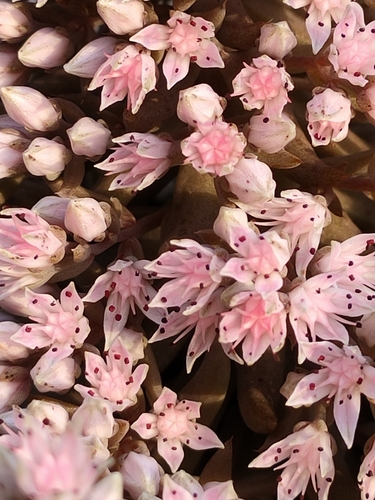
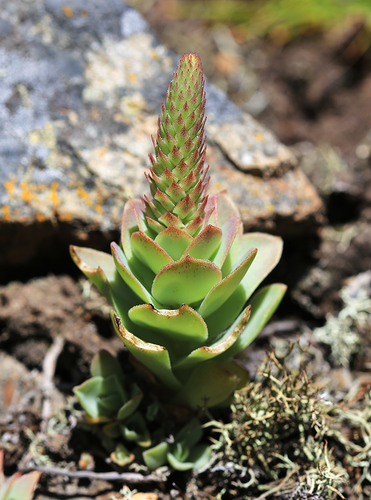
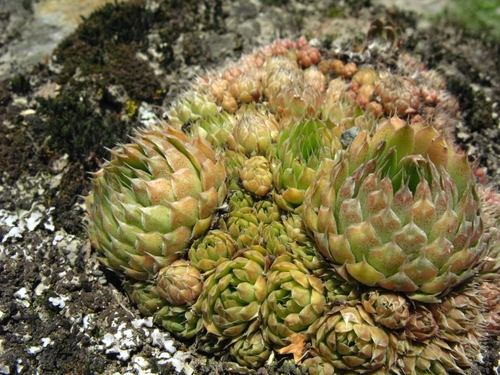
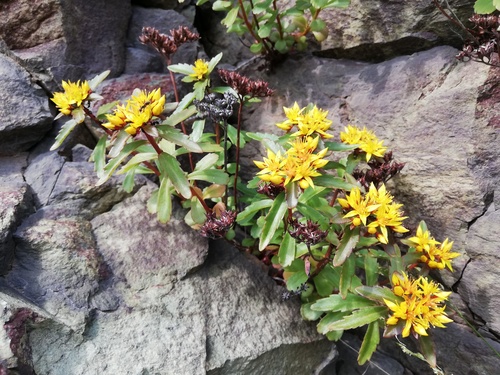
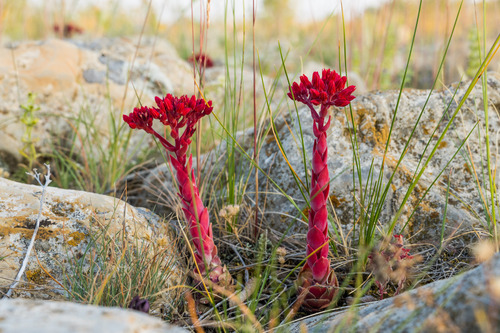
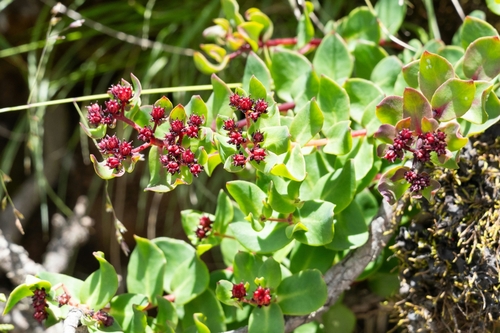
A succulent herb. It keeps growing from year to year. It has a fleshy taproot. Annual stems grow from along the root. The roots smell faintly of rose. The leaves are green and fleshy and without leaf stalks. They are narrowly oval or sword shaped. They narrow to the tip and have shallow teeth along the edge. The leaves are crowded along the stems. The leaves turn dark red in autumn. The flowers are in a dome shaped cluster at the top of the stem. The flowers are dark purple. Flowers are separately male and female. The fruit develop in clusters and dry off.
Edible Uses
Leaves or plant tops are brewed into a tea-like drink or eaten fresh. The boiled roots are also eaten. It is a popular food throughout its range.
Traditional Uses
The leaves or top of the plant is used to make a tea like drink. They are also eaten. The boiled roots are eaten.
This uses section is brief — help expand it
Distribution
It is a cold temperate plant. It can grow in silty soil and moist locations. It can tolerate salty conditions.
Where It Grows
Alaska, North America, Russia, Siberia, USA,
Other Information
It is a popular food.
Synonyms
Also Known As
Cuqlamcaraat, Nunivak
References (3)
- Ager, T. A. & Ager, L. P., 1980, Ethnobotany of the eskimos of Nelson Island, Alaska. Arctic Anthropology Vol 17. No. 1 pp 26-48 (As Sedum rosea subsp. integrifolium)
- Ainana, L. & Zagrebin, I., 2014, Edible Plants Used by the Siberian Yupik Eskimos of Southeastern Chukotka Peninsula, Russia, (English translation). p 54 (As Sedum rosea subsp. integrifolium)
- Moerman, D. F., 2010, Native American Ethnobotany. Timber Press. p 525 (As Sedum rosea subsp. integrifolium)