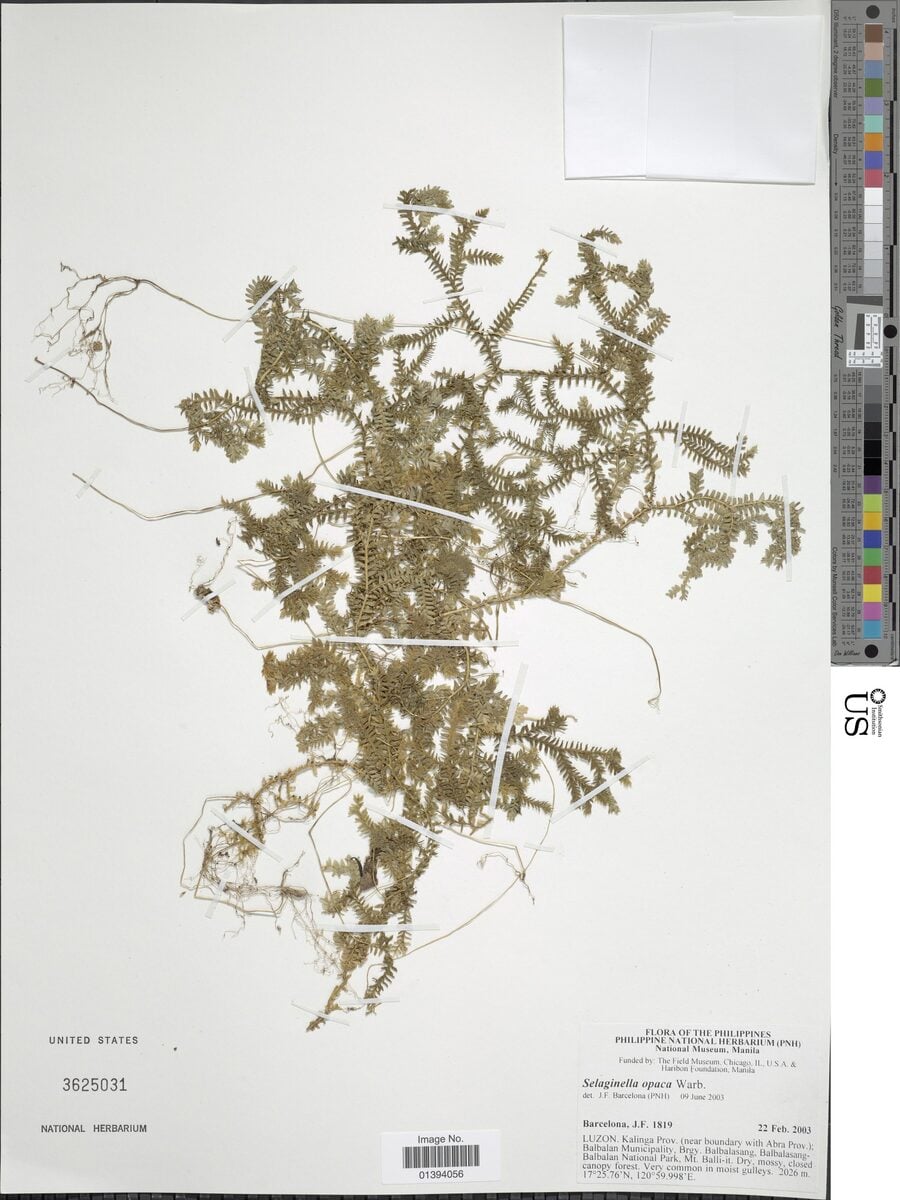
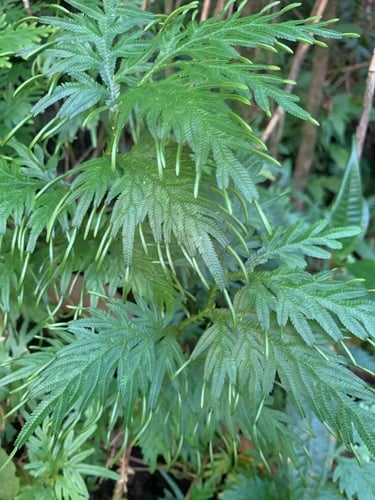
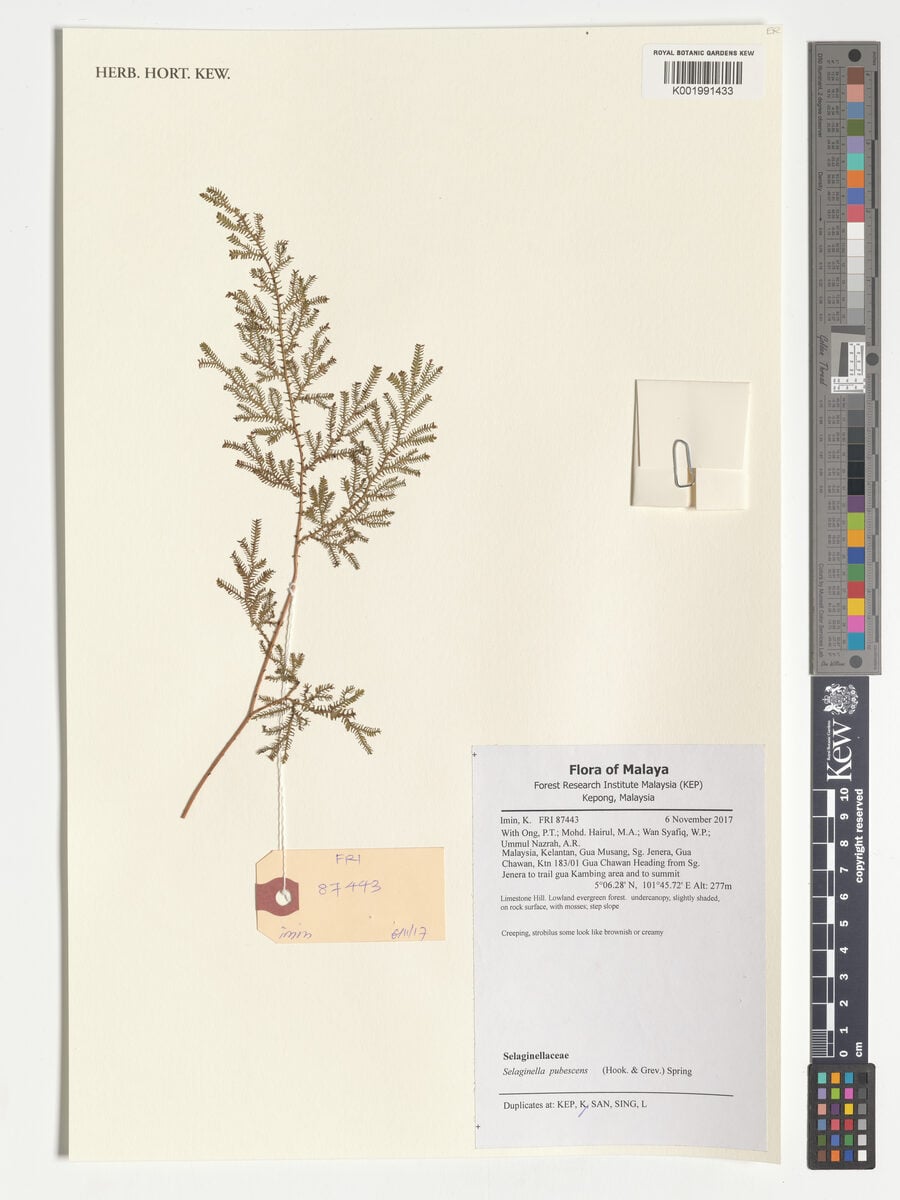
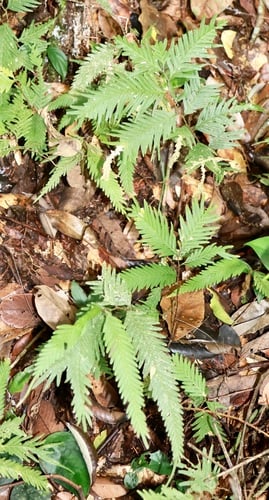
Selaginella tamariscina
(Beauv.) Spring.
iNaturalist· cc-by-nc
(c) Chuangzao, some rights reserved (CC BY-NC), uploaded by Chuangzao
iNaturalist· cc-by-nc-sa
(c) Kuan-Chieh (Chuck) Hung, some rights reserved (CC BY-NC-SA), uploaded by Kuan-Chieh (Chuck) Hung
iNaturalist· cc-by-nc
(c) Allen Chen, some rights reserved (CC BY-NC), uploaded by Allen Chen
Summary
Source: WikipediaSelaginella tamariscina is a species of plant in the Selaginellaceae family, endemic to China, India, Japan, Korea, Philippines, Russia (Siberia), Taiwan, and northern Thailand. It was first described in 1804 by Palisot de Beauvois as Stachygynandrum tamariscinum (or possibly in 1805) It was transferred to the genus, Selaginella, in 1843 by Antoine Frédéric Spring. It is an evergreen perennial growing to 45 cm in height. It is often used as an herbal medicine, and has been used to treat gout and hyperuricemia.
Description
A fern. The stems form in rings. The stems and roots form a tree like trunk. It grows 5-15 cm tall.
This description is brief — help expand it
Edible Uses
Young shoots are edible when cooked.
Medicinal Uses
The whole plant is astringent and haemostatic. A decoction is used in the treatment of traumatic bleeding, haemoptysis in pulmonary disease, gastro-intestinal bleeding, metrorrhagia, haematuria, persistence of post-partum lochial discharge, rectal prolapse, and leucorrhoea.
Distribution
It is a temperate and subtropical plant. It grows on limestone rocks. It grows between 500-1,500 m above sea level in China.
Where It Grows
Asia, China, India, Indochina, Indonesia, Japan, Korea, Manchuria, Philippines, Russia, SE Asia, Siberia, Taiwan, Thailand, Vietnam,
Cultivation
Selaginella tamariscina is found from the temperate zone to the tropics. Established plants are very drought resistant. This is a curious fern; when dry, the fronds, particularly the young ones, contract or roll up like the claws of a bird or like a miniature Cypress tree and become yellowish-brown; and when moistened, they spread out again and assume a green colour.
Propagation
By seed.
Other Uses
None known.
Notes
There are about 700 Selaginella species.
Synonyms
References (3)
- Bull. Acad. Roy. Sci. Bruxelles 10:136. 1843
- Plants for a Future database, The Field, Penpol, Lostwithiel, Cornwall, PL22 0NG, UK. http://www.scs.leeds.ac.uk/pfaf/
- www.eFloras.org Flora of China