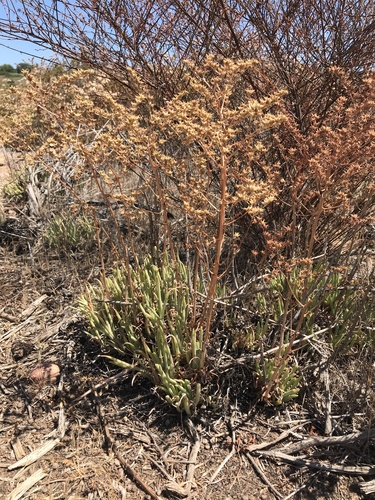
Sedum pallidum
M. Bieb.
iNaturalist· cc-by-nc
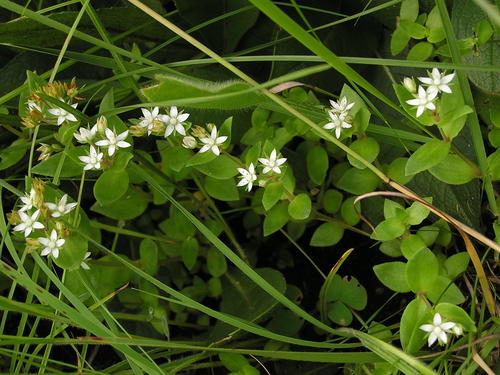
(c) ivan_savinov, some rights reserved (CC BY-NC), uploaded by ivan_savinov
iNaturalist· cc-by-nc
(c) Krylenko VV, some rights reserved (CC BY-NC), uploaded by Krylenko VV
iNaturalist· cc-by-nc
(c) urij777, some rights reserved (CC BY-NC), uploaded by urij777
Description
A temperate herb in the Crassulaceae family.
This description is brief — help expand it
Edible Uses
The leaves of most stonecrops are edible, excepting Sedum rubrotinctum, although toxicity has also been reported in some other species. The juice from the stems and leaves may irritate skin if handled excessively. Sedum reflexum, known as "prickmadam", "stone orpine", or "crooked yellow stonecrop", is occasionally used as a salad leaf or herb in Europe, including the United Kingdom. It has a slightly astringent sour taste. Sedum divergens, known as "spreading stonecrop", was eaten by First Nations people in northwest British Columbia. The plant is used as a salad herb by the Haida and the Nisga'a people. It is common in the Nass Valley of British Columbia. Biting stonecrop (Sedum acre) contains high quantities of piperidine alkaloids (namely (+)-sedridine, (−)-sedamine, sedinone and isopelletierine), which give it a sharp, peppery, acrid taste and make it somewhat toxic.
Traditional Uses
The leaves are eaten raw.
This uses section is brief — help expand it
Distribution
It is a temperate plant.
Where It Grows
Caucasus, Turkey, Türkiye,
Synonyms
Also Known As
Tirike pire, Tulfilasfor
References (1)
- Yesil, Y., et al, 2019, Wild edible plants in Yeşilli (Mardin-Turkey), a multicultural area. Journal of Ethnobiology and Ethnomedicine (2019) 15:52