Arctostaphylos alpina
(L.) Spreng.
Alpine bearberry, Black bearberry, Alpine manzanita, Amprick
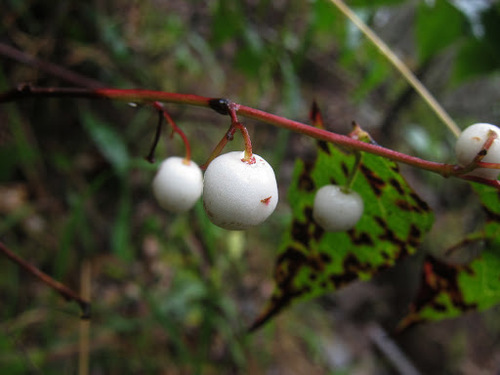
iNaturalist· cc-by-nc
(c) Colin Chapman-Lam, some rights reserved (CC BY-NC)
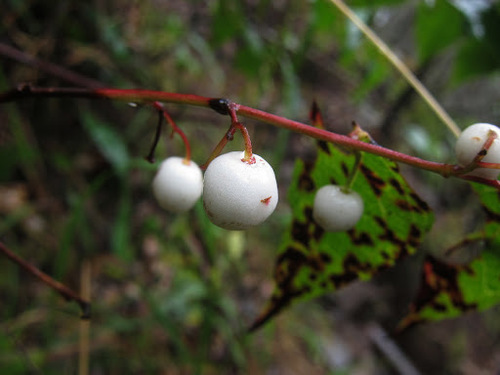
iNaturalist· cc-by-nc
(c) Alexander Yakovlev, some rights reserved (CC BY-NC)
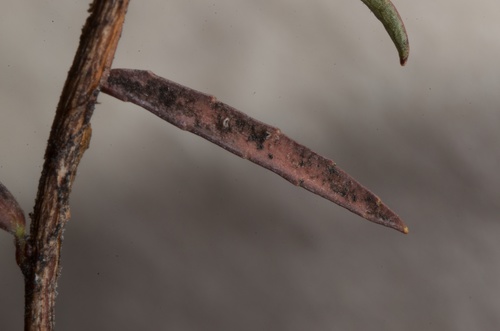
iNaturalist· cc-by-nc
(c) ivangoal, some rights reserved (CC BY-NC)
Summary
Source: WikipediaA deciduous shrub reaching 0.1m in height and width. Hardy to UK zone 1. Flowers April to June. Hermaphrodite and self-fertile, pollinated by bees. Thrives in light sandy or medium loamy, well-drained soil with mildly to very acid pH. Tolerates semi-shade to full sun and prefers moist conditions.
Description
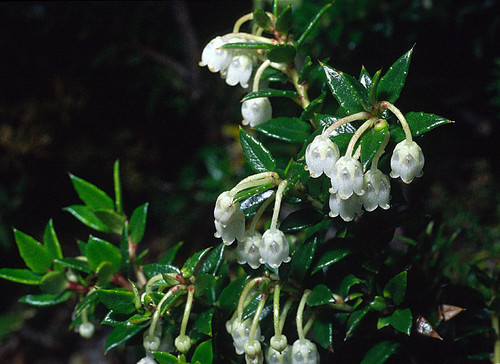
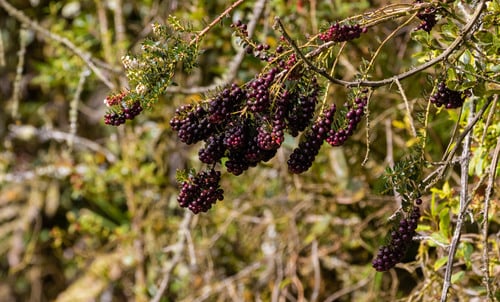
A shrub. It is a plant which lies along the ground. It grows 15 cm high. It spread 20 cm wide. The leaves fall off. The twigs are woody. The bark peels off. There can be a mat of dead leaves and plant 90 cm across. The leaves have fine teeth. It loses its leaves during the year. The leaves are sword shape and turn bright red in autumn. The flowers hang down and are white or pink. The fruit are red berries which turn black when ripe. They are 6 mm across. See Arctous alpina
Edible Uses
Edible Parts: Fruit Edible Uses: Fruit - raw or cooked. Very juicy but slightly bitter. Another report says that they are juicy but insipid. The flavour is much improved by cooking. Not as nice as many other wild fruits, but nor are they unpleasant. The fruit is about 6 - 9mm in diameter, it is not usually produced very freely.
Traditional Uses
They are juicy and edible but have an unpleasant taste. They are best cooked with sugar and eaten with other berries. The flavour improves with cooking.
Medicinal Uses
Antirheumatic Blood purifier Narcotic An infusion of the pounded plant has been used as an external wash in the treatment of rheumatism and general illnesses. A decoction of the bark is used in the treatment of internal blood diseases. The leaves are narcotic and have been smoked to cause intoxication.
Distribution
It is a cold temperate plant. It grows in the Arctic. It grows in sandy heath and rocky locations. It always grows on acidic rocks. It is cold hardy. It grows in hardiness zones 1-8.
Where It Grows
Alaska, Albania, Arctic, Australia, Britain, Canada, Europe, Finland, North America, Russia, Scandinavia, USA,
Propagation
Seed - best sown in a shady position in a greenhouse as soon as it is ripe. Pre-soak dried seed and sow as early in the year as possible. The seed usually germinates in 2 - 3 months at 15°c. When large enough to handle, prick the seedlings out into individual pots and grow them on in greenhouse or cold frame for at least their first winter. Plant out in late spring or early summer. Cuttings of side shoots, 5 - 8cm with a heel, August to December in a frame. Takes one year. Division in early spring. Take care because the plant resents root disturbance. Pot the divisions up and keep them in a lightly shaded position in a cold frame or greenhouse until they are growing away actively. Layering in spring.
Other Uses
None known Special Uses
Notes
There are about 60 Arctostaphylos species. In The Plant List the correct name in Arctous alpina (L.) Nied.
Synonyms
Also Known As
Kavlak, Kavlagpak
References (19)
- Bircher, A. G. & Bircher, W. H., 2000, Encyclopedia of Fruit Trees and Edible Flowering Plants in Egypt and the Subtropics. AUC Press. p 38 (As Arctous alpinus)
- Cundall, P., (ed.), 2004, Gardening Australia: flora: the gardener's bible. ABC Books. p 175 (As Arctostaphylos alpina)
- Elias, T.S. & Dykeman P.A., 1990, Edible Wild Plants. A North American Field guide. Sterling, New York p 159 (As Arctostaphylos alpina)
- Etherington, K., & Imwold, D., (Eds), 2001, Botanica's Trees & Shrubs. The illustrated A-Z of over 8500 trees and shrubs. Random House, Australia. p 101 (As Arctostaphylos alpina)
- Hedrick, U.P., 1919, (Ed.), Sturtevant's edible plants of the world. p 69 (As Arctostaphylos alpina)
Show all 19 references Hide references
- Heller, C. A., 1962, Wild Edible and Poisonous Plants of Alaska. Univ. of Alaska Extension Service. p 38 (As Arctostaphylos alpina)
- Jernigan, K. (Ed.), 2012, A Guide to the Ethnobotany of the Yukon-Kuskokwim Region. Draft. p 21
- Johansson, A., Laakso, P. and Kallio, H., 1997, Characterization of seed oils of wild, edible Finnish berries. Food Chemistry 204:300-307 (As Arctostaphylos alpina)
- Jones, A., 2010, Plants that we eat. University of Alaska Press. p 133 (As Arctostaphylos alpina)
- Kremer, B.P., 1995, Shrubs in the Wild and in Gardens. Barrons. p 112. (Fruit listed as inedible)
- Lyle, S., 2006, Discovering fruit and nuts. Land Links. p 76 (As Arctostaphylos alpina)
- MacKinnon, A., et al, 2009, Edible & Medicinal Plants of Canada. Lone Pine. p 120 (As Arctostaphylos alpina)
- Morley, B. & Everard, B., 1970, Wild Flowers of the World. Ebury press. Plate 6 (As Arctostaphylos alpina)
- Plants for a Future database, The Field, Penpol, Lostwithiel, Cornwall, PL22 0NG, UK. http://www.scs.leeds.ac.uk/pfaf/ (As Arctostaphylos alpina)
- Porsild, A.E., 1953, Edible Plants of the Arctic, Arctic 6:15-34, page 23
- Porsild, A.E., 1974, Rocky Mountain Wild Flowers. Natural History Series No. 2 National Museums of Canada. p 304 (As Arctostaphylos alpina)
- Syst. veg. 2:287. 1825 (As Arctostaphylos alpina)
- Tozer, F., 2007, The Uses of Wild Plants. Green Man Publishing. p 30
- www.desert-tropicals.com (As Arctostaphylos alpina)