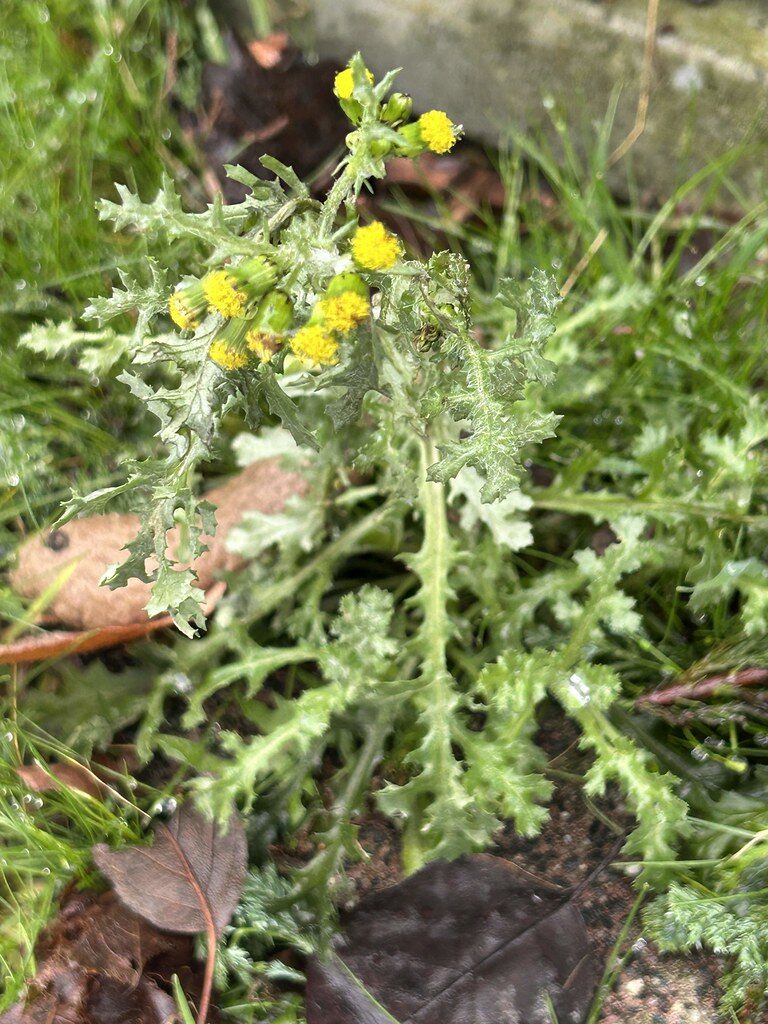
Scolymus hispanicus
L.
Spanish Oyster Plant, Spanish salsify
iNaturalist· cc-by-nc
(c) ARSENIO GONZALEZ NAVARRO, some rights reserved (CC BY-NC), uploaded by ARSENIO GONZALEZ NAVARRO
iNaturalist· cc-by-nc
(c) Сергей, some rights reserved (CC BY-NC), uploaded by Сергей
iNaturalist· cc-by-nc
(c) Giuseppe Buscemi, some rights reserved (CC BY-NC), uploaded by Giuseppe Buscemi
Summary
Source: WikipediaScolymus hispanicus, the common golden thistle or Spanish oyster thistle, is a flowering plant in the genus Scolymus in the family Asteraceae, native to southern and western Europe, north to northwestern France. It is a herbaceous biennial or short-lived perennial plant growing to 80 cm tall, with spiny stems and leaves. The flowerheads are bright yellow to orange-yellow, 2–3 cm diameter
Description
A plant with spiny leaves, stems and flower bases. It keeps growing from year to year. The stems have wings and are spiny. It grows 30-100 cm high. It has a deep taproot. The roots resemble parsnips. They are long and taper and are 8 cm thick. The leaves are rigid, spiny and with deep teeth. The leaves have pale coloured veins. The flowers are bright yellow. They occur singly at the ends of branches or in the axils of upper leaves. There are stiff prickly bracts around the flowers.
Edible Uses
The stalks are eaten raw or boiled. The plant also has uses as a coffee substitute and as a colouring agent.
Traditional Uses
The thick root can be prepared the same way as salsify. It can be eaten boiled, mashed, or baked. It is used as a substitute for coffee. The young leaves can be cooked and eaten. The leaf stalks are blanched and eaten in salads. They are also cooked and dressed with olive oil, salt and vinegar. The flowers are used to adulterate saffron. The flower buds are eaten raw or added to salads.
Medicinal Uses
None known.
Distribution
It is a Mediterranean climate plant. In Argentina it grows below 500 m below sea level.
Where It Grows
Africa, Argentina, Australia, Balkans, Belgium, Bosnia, Britain, Canaries, Caucasus, Chile, Crete, Croatia, Cyprus, Europe, France, Greece, Italy, Libya, Mediterranean, Morocco, Netherlands, North Africa, North America, Portugal, Sicily, South America, Spain*, Tunisia, Turkey, Türkiye, USA,
Cultivation
Plants can regrow from the taproot.
Propagation
Seed: sow in spring in a greenhouse. Prick out seedlings into individual pots once large enough to handle and plant out in summer. Seed can likely also be sown in situ. Division in spring: larger divisions can go directly into permanent positions; smaller ones are best potted up and grown on in a lightly shaded cold frame, then planted out once well established in summer.
Other Uses
None known.
Other Information
It is a commercially cultivated vegetable. It is cultivated occasionally as a vegetable in the Mediterranean region.
Nutrition
| Part | Moisture | kJ | kcal | Protein | Vit A | Vit C | Iron | Zinc |
|---|---|---|---|---|---|---|---|---|
| Leaves | 92.3 | 69 | 17 | 0.5 | — | 20 | 3.2 | 0.4 |
Synonyms
Also Known As
Askolympros, Bouhalliba, Carde sante, Cardillo, Cardo amarillo, Carducci, Carduncidde, Common golden thistle, Elguernina, Gardu, Golden thistle, Guernina, Holiba, Kara ot, Marsh ragwort, Sahura, Scoddu, Sculimbri, Sevket-i bostan, Spina bianca, Tagarnina, Tagarrina, Taynajelt
References (57)
- Aceituno-Mata, L., et al, 2021, The Persistence of Flavor: Past and Present Use of Wild Food Plants in Sierra Norte de Madrid, Spain. Front. Sustain. Food Syst., 11 January 2021
- Ben Ismail, H., 2013, Edible Wild Vegetables Used in North West of Tunisia. PARIPEX - Indian Journal of Reearch 2(9) :219-221
- Biscotti, N. & Pieroni, A., 2015, The hidden Mediterranean diet: wild vegetables traditionally gathered and consumed in the Gargano area, Apulia, SE Italy. Acta Societatis Botanicorum Poloniae 84 (3): 327-338
- Biscotti, N. et al, 2018, The traditional food use of wild vegetables in Apulia (Italy) in the light of Italian ethnobotanical literature. Italian Botanist 5:1-24
- Blamey, M and Grey-Wilson, C., 2005, Wild flowers of the Mediterranean. A & C Black London. p 459
Show all 57 references Hide references
- Blanco-Salas, J., et al, 2019, Wild Plants Potentially Used in Human Food in the Protected Area “Sierra Grande de Hornachos” of Extremadura (Spain). Sustainability 2019, 11, 456
- Ciftcioglu, C. G., 2015, Sustainable wild-collection of medicinal and edible plants in Lefke region of North Cyprus. Agroforest Syst. Springer
- Cribb, A.B. & J.W., 1976, Wild Food in Australia, Fontana. p 160
- Della, A., et al, 2006, An ethnobotanical survey of wild edible plants of Paphos and Larnaca countryside of Cyprus. J. Ethnobiol. Ethnomed. 2:34
- Dogan, Y., et al, 2004, The Use of Wild Edible Plants in Western and Central Anatolia (Turkey). Economic Botany 58(4) pp. 684-690
- Dogan, Y., 2012, Traditionally used wild edible greens in the Aegean Region of Turkey. Acta Societatis Botanicorum Poloniae 81(4): 329-342
- Dogan, Y. et al, 2013, Wild Edible Plants sold in the Local Markets of Izmir, Turkey. Pak. J. Bot. 45(S1): 177-184
- Dop, M. C., et al, 2019, Identification and frequency of consumption of wild edible plants over a year in central Tunisia: a mixed-methods approach. Public Health Nutrition: 23(5), 782–794
- Ertug, F., 2004, Wild Edible Plants of the Bodrum Area. (Mugla, Turkey). Turk. J. Bot. 28 (2004): 161-174
- Ertug, F, Yenen Bitkiler. Resimli Türkiye Florası -I- Flora of Turkey - Ethnobotany supplement
- Facciola, S., 1998, Cornucopia 2: a Source Book of Edible Plants. Kampong Publications, p 41
- Geraci, A., et al, 2018, The wild taxa utilized as vegetables in Sicily (Italy): a traditional component of the Mediterranean diet. Journal of Ethnobiology and Ethnomedicine (2018) 14:14
- Ghanimi, R., et al, 2022, Ethnobotanical study on wild edible plants traditionally used by Messiwa people, Morocco. Journal of Ethnobiology and Ethnomedicine. 18:16
- Gonzalez, J. A., et al, 2011, The consumption of wild and semi-domesticated edible plants in the Arribes del Duero (Salamanca-Zamora, Spain): an analysis of traditional knowledge. Genetic. Resour Crop Evolution 58:991-1006
- Hadjichambis, A. C., et al, 2007, Wild and semi-domesticated food plant consumption in seven circum-Mediterranean areas. International Journal of Food Sciences and Nutrition. 2007, 1-32.
- Hedrick, U.P., 1919, (Ed.), Sturtevant's edible plants of the world. p 599
- Hermandez Bermejo, J.E., and Leon, J. (Eds.), 1994, Neglected Crops. 1492 from a different perspective. FAO Plant Production and Protection Series No 26. FAO, Rome. p 263, 328
- INFOODSUpdatedFGU-list.xls
- Jardin, C., 1970, List of Foods Used In Africa, FAO Nutrition Information Document Series No 2.p 99
- Kays, S. J., and Dias, J. C. S., 1995, Common Names of Commercially Cultivated Vegetables of the World in 15 languages. Economic Botany, Vol. 49, No. 2, pp. 115-152
- Lamp, C & Collet F., 1989, Field Guide to Weeds in Australia. Inkata Press. p 258
- Lazarides, M. & Hince, B., 1993, Handbook of Economic Plants of Australia, CSIRO. p 214
- Lentini, F. and Venza, F., 2007, Wild food plants of popular use in Sicily. J Ethnobiol Ethnomedicine. 3: 15
- Licata, M., et al, 2016, A survey of wild plant species for food use in Sicily (Italy) – results of a 3-year study in four Regional Parks. Journal of Ethnobiology and Ethnomedicine 12:12
- Lim, T. K., Edible Medicinal and Non-Medicinal Plants Volume 7 Flowers
- Lim, T. K., 2015, Edible Medicinal and Non Medicinal Plants. Volume 9, Modified Stems, Roots, Bulbs. Springer p 76
- Low, T., 1991, Wild Herbs of Australia and New Zealand. Angus & Robertson. p 37
- Luczaj, L. et al, 2013, Wild food plants used in the villages of the Lake Vrana Nature Park (northern Dalmatia, Croatia). Acta Societatis Botanicorum Poloniae, 82(4): 275-281
- Luczaj, L. et al, 2014, Wild Food Plants of Dalmatia (Croatia). in A. Pieroni, C. L. Quave (eds.), Ethnobotany and Biocultural Diversities in the Balkans, p 143
- Mahklouf, M. H., 2019, Ethnobotanical Study of Edible Wild Plants in Libya. European Journal of Ecology. 5(2): 30-40
- Malezas Comestibles del Cono Sur, INTA, 2009, Buernos Aires
- Martin, F.W. & Ruberte, R.M., 1979, Edible Leaves of the Tropics. Antillian College Press, Mayaguez, Puerto Rico. p 186
- Molina, M. et al, 2014, Weeds and Food Diversity: Natural Yield Assessment and Future Alternatives for Traditionally Consumed Wild Vegetables. Journal of Ethnobiology 34(1): 44–67
- Nassif, F., & Tanji, A., 2013, Gathered food plants in Morocco: The long forgotten species in Ethnobotanical Research. Life Science Leaflets 3:17-54
- Nebel, S., Pieroni, A. & Heinrich, M., 2006, Ta cho`rta: Wild edible greens used in the Graecanic area in Calabria, Southern Italy. Appetite 47 (2006) 333–342
- Pasta, S., et al, 2020, An Updated Checklist of the Sicilian Native Edible Plants: Preserving the Traditional Ecological Knowledge of Century-Old Agro-Pastoral Landscapes. Frontiers in Plant Science. Volume 11|Article 388
- Plants for a Future database, The Field, Penpol, Lostwithiel, Cornwall, PL22 0NG, UK. http://www.scs.leeds.ac.uk/pfaf/
- Psaroudaki, A., et al, 2015, Genetic structure and population diversity of eleven edible herbs of Eastern Crete. Journal of Biological Research-Thessaloniki, 22:7
- Sanchez-Mata, M. C., et al, 2010, Wild vegetables of the Mediterranean area as valuable sources of bioactive compounds. Genet. Resourc. Crop Evol. 59:431-443
- Signorini, M. A., et al, 2009, Plants and traditional knowledge: An ethnobotanical investigation on Monte Ortobene (Nuoro, Sardinia). Journal or Ethnobiology and Ethnomedicine, 5:6
- Skoula, M & Sarpaki, A., 2005, Traditional knowledge on the uses of wild plants in Crete, Greece.
- Sp. pl. 2:813. 1753
- Tanji, A and Nassif, F., 1995, Edible Weeds in Morocco. Weed Technology. Vol. 9, No. 3, pp. 617-620
- Tardio, J., et al, Ethnobotanical review of wild edible plants in Spain. Botanical J. Linnean Soc. 152 (2006), 27-71
- Tbatou, M, et al, 2016, Wild Edible Plants traditionally used in the countryside of El Jadida, Coastal Area in the Center of Morocco. Life Sciences Leaflets 75:28-48
- Terra, G.J.A., 1973, Tropical Vegetables. Communication 54e Royal Tropical Institute, Amsterdam, p 71
- Turner, N. J. et al, 2011, Edible and Tended Wild Plants, Traditional Ecological Knowledge and Agroecology. Critical Reviews in Plant Sciences, 30:198-225
- Ulian, T., et al, 2020, Unlocking plant resources to support food security and promote sustainable agriculture. Plants, People, Planet. 2020;2:421–445.
- USDA, ARS, National Genetic Resources Program. Germplasm Resources Information Network - (GRIN). [Online Database] National Germplasm Resources Laboratory, Beltsville, Maryland. Available: www.ars-grin.gov/cgi-bin/npgs/html/econ.pl (10 April 2000)
- Wiersema, J. H. & Leon, B., 2013, World Economic Plants. A Standard Reference CRC Press. 2nd Ed. p 622
- World Checklist of Useful Plant Species 2020. Royal Botanic Gardens, Kew
- Zeven, A. C. & de West, J. M. J., 1982, Dictionary of cultivated plants and their regions of diversity. Wageningen. p 105