Scaevola parvifolia
F.Muell. ex Benth.
Fan flower, Camel weed
iNaturalist· cc-by-nc-nd
(c) Zig Madycki, some rights reserved (CC BY-NC-ND), uploaded by Zig Madycki
iNaturalist· cc-by-nc
(c) geoffbyrne, some rights reserved (CC BY-NC)
iNaturalist· cc-by-nc
(c) geoffbyrne, some rights reserved (CC BY-NC)
Summary
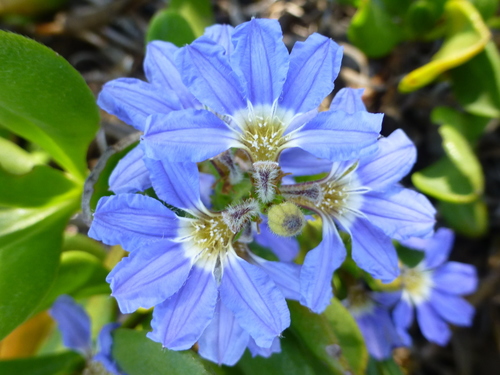
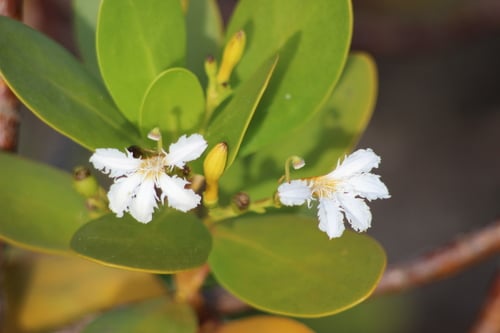
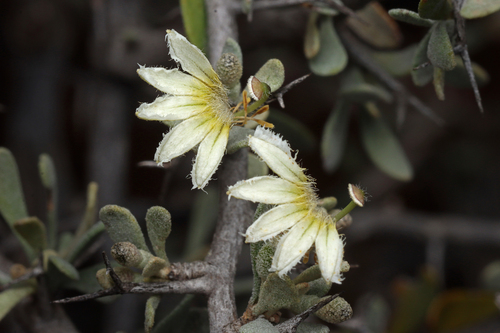
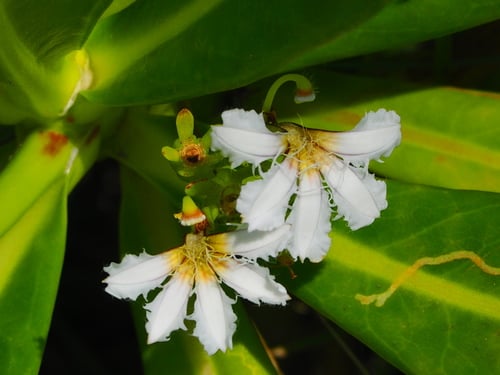
Source: WikipediaScaevola parvifolia (common name - camel weed) is an erect, many stemmed perennial in the family Goodeniaceae, which is native to Western Australia, the Northern Territory, Queensland and South Australia. It grows to a height of 0.6 m, and its blue-purple flowers may be seen from March to October.
Description
A herb. It is erect and spreading. It grows 20-50 cm high. The flowers are pale blue or purple.
This description is brief — help expand it
Edible Uses
The fruit is eaten.
Traditional Uses
Australia*,
This uses section is brief — help expand it
Distribution
A tropical plant. It grows in tropical places. It grows on sand, clays or loams. It can grow in arid places.
Production
There are about 100 Scaevola species.
References (6)
- Cancilla, D., 2018, Ethnobotanical and Ethnozoological Values Desktop Assessment - Eliwana Project. p 14
- Cherikoff V. & Isaacs, J., The Bush Food Handbook. How to gather, grow, process and cook Australian Wild Foods. Ti Tree Press, Australia p 190
- Kenneally, K.E., Edinger, D. C., and Willing T., 1996, Broome and Beyond, Plants and People of the Dampier Peninsula, Kimberley, Western Australia. Department of Conservation and Land Management. p 109
- Latz, P.K., 1996, Bushfires and Bushtucker: Aboriginal plant use in Central Australia. IAD Press Alice Springs p 263
- Paczkowska, G. & Chapman, A.R., 2000, The Western Australian Flora. A Descriptive Catalogue. Western Australian Herbarium. p 264
Show all 6 references Hide references
- Wheeler, J.R.(ed.), 1992, Flora of the Kimberley Region. CALM, Western Australian Herbarium, p 902