Sarcozona praecox
(F. Muell.) S. T. Blake ex H. Eichler
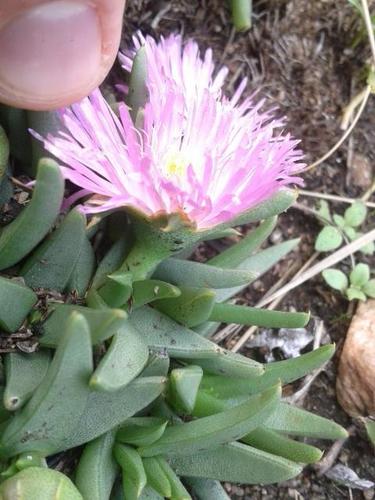
Sarcozona, Indian pigface
iNaturalist· cc-by-nc
(c) jjudy, some rights reserved (CC BY-NC), uploaded by jjudy
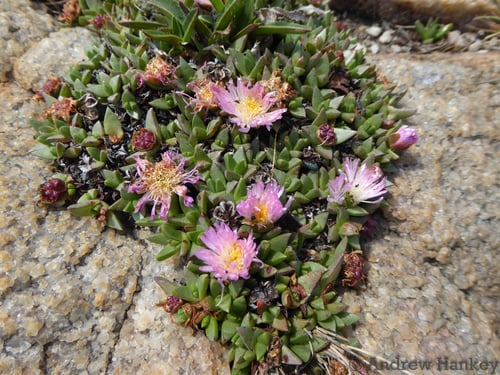
iNaturalist· cc-by
(c) Thomas Mesaglio, some rights reserved (CC BY)
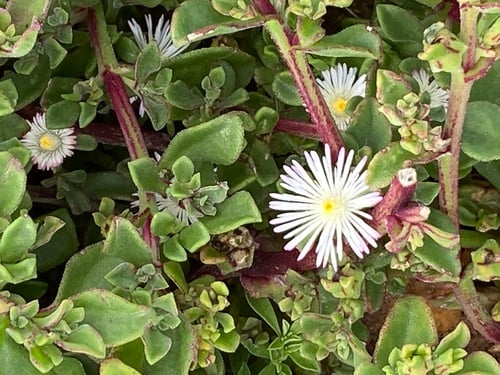
iNaturalist· cc-by
(c) Thomas Mesaglio, some rights reserved (CC BY)
Summary
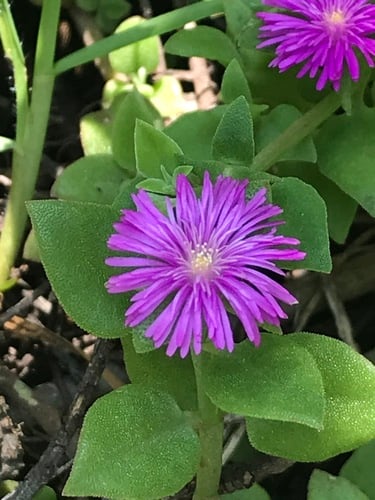
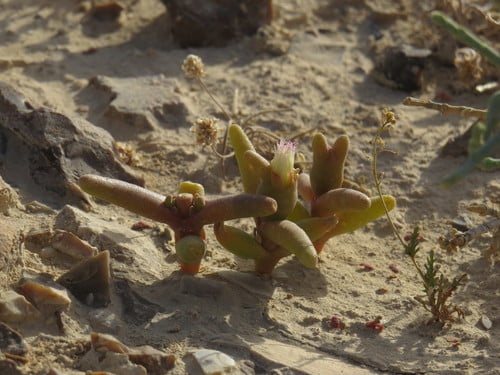
Source: WikipediaSarcozona praecox, commonly known as sarcozona, is species of flowering plant in the family Aizoaceae and is endemic to Australia. It is a small erect to low-lying, succulent shrub with leaves that are triangular in cross-section and arranged in opposite pairs, and daisy-like flowers with twenty to eighty pink, petal-like staminodes and 20 to 150 stamens.
Description
An erect, succulent shrub. It grows 10-30 cm high. The flowers are pink and white.
This description is brief — help expand it
Edible Uses
The flowers and white flesh of the fruit are mixed with other foods and served in salads.
Traditional Uses
The flowers and white flesh of the fruit are mixed with other foods in salads.
This uses section is brief — help expand it
Distribution
It grows on sandy loams, salt lakes and granite rocks. It grows in subtropical and warm temperate places.
Where It Grows
Australia*,
Synonyms
References (7)
- Bodkin, F., 1991, Encyclopedia Botanica. Cornstalk publishing, p 910
- Cribb, A.B. & J.W., 1976, Wild Food in Australia, Fontana. p 73
- Flora of Australia, Volume 4, Phytolaccaceae to Chenopodiaceae, Australian Government Publishing Service, Canberra (1984) p 28
- Lazarides, M. & Hince, B., 1993, Handbook of Economic Plants of Australia, CSIRO. p 211
- Low, T., 1991, Wild Food Plants of Australia. Australian Nature FieldGuide, Angus & Robertson. p 30
Show all 7 references Hide references
- Paczkowska, G. & Chapman, A.R., 2000, The Western Australian Flora. A Descriptive Catalogue. Western Australian Herbarium. p 135
- Williams A. & Sides, T., 2008, Wiradjuri Plant Use in the Murrumbidgee Catchment. Murrumbidgee Catchment Management Authority. Wagga Wagga, p 84