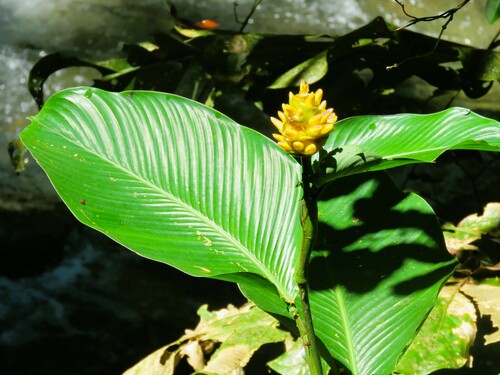
Sarcophrynium brachystachyum
(Benth.) K. Schum.
Yoruba soft cane
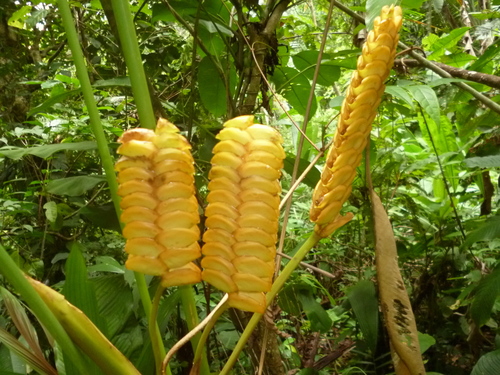
iNaturalist· cc-by-nc
(c) Carel Jongkind, some rights reserved (CC BY-NC)
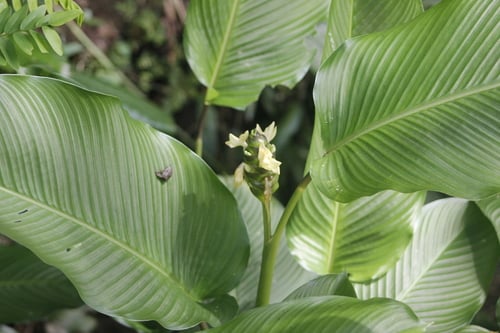
iNaturalist· cc-by-nc
(c) Carel Jongkind, some rights reserved (CC BY-NC)
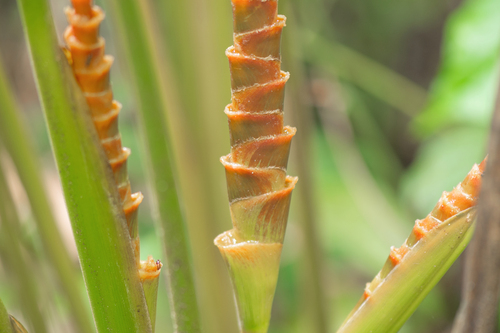
iNaturalist· cc-by-nc
(c) Carel Jongkind, some rights reserved (CC BY-NC)
Description
A semi-woody herb. It has underground stems or rhizomes. The leaves develop in a close clump. They have long stalks. They grow 50-170 cm high. The flowers are white. The fruit are red.
Edible Uses
Sarcophrynium brachystachys has various uses. In Cameroon, the leaves of S. brachystachys are used to wrap food. The plant is used medicinally in Gabon, Ghana, and the Ivory Coast. In Nigeria, it is used for ritual purposes. Sarcophrynium brachystachys is also grown as an ornamental.
Traditional Uses
The fruit pulp is eaten raw.
This uses section is brief — help expand it
Distribution
A tropical plant. It grows as an under-shrub in damp swampy forest.
Where It Grows
Africa, Cameroon, Central Africa, Central African Republic, CAR, Congo, Gabon, Ghana, Guinea, Guinée, Guinea-Bissau, Liberia, Senegal, Sierra Leone, West Africa,
Synonyms
Also Known As
Bale, Koindaga, Koto-haban, Pura
References (7)
- Abbiw, D.K., 1990, Useful Plants of Ghana. West African uses of wild and cultivated plants. Intermediate Technology Publications and the Royal Botanic Gardens, Kew. p 49
- Burkill, H. M., 1985, The useful plants of west tropical Africa, Vol. 4. Kew.
- Dalziel, J. M., 1937, The Useful plants of west tropical Africa. Crown Agents for the Colonies London.
- H. G. A. Engler, Pflanzenr. IV. 48(Heft 11):36. 1902
- Jardin, C., 1970, List of Foods Used In Africa, FAO Nutrition Information Document Series No 2.p 160
Show all 7 references Hide references
- Peters, C. R., O'Brien, E. M., and Drummond, R.B., 1992, Edible Wild plants of Sub-saharan Africa. Kew. p 35 (As Sarcophrynium brachystachys)
- World Checklist of Useful Plant Species 2020. Royal Botanic Gardens, Kew