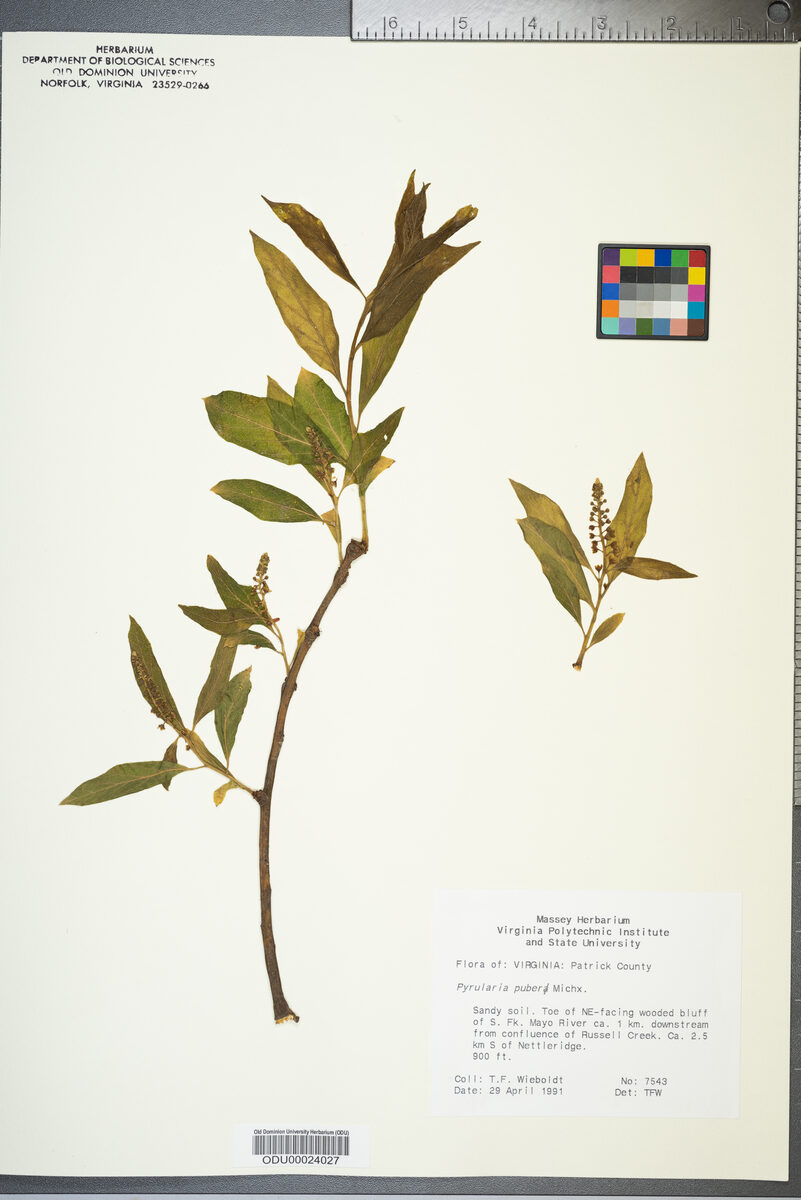
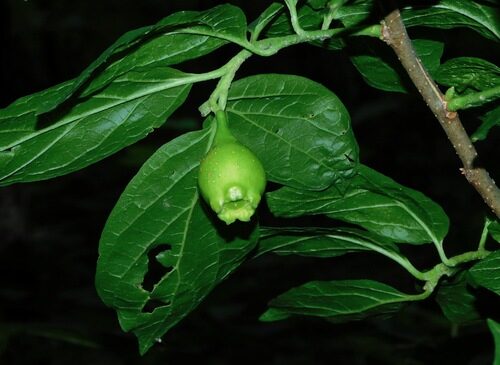
Santalum murrayanum
(Mitch.) C. Gardner
Bitter quandong, Ming
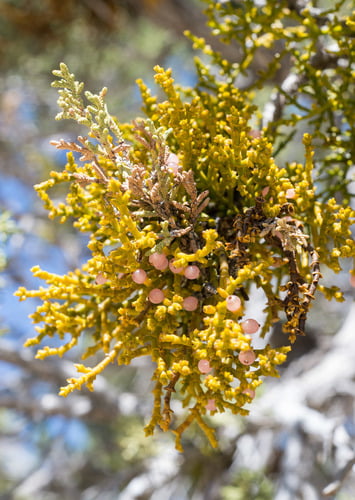
iNaturalist· cc-by-nc
(c) davidsando, some rights reserved (CC BY-NC), uploaded by davidsando
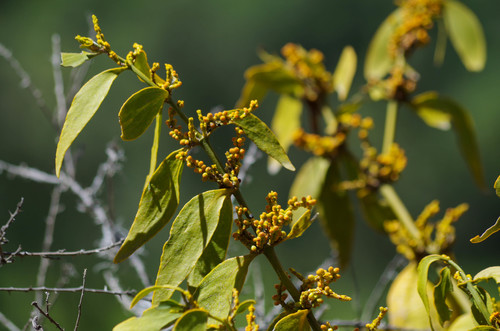
iNaturalist· cc-by-nc
(c) Darcy Whittaker, some rights reserved (CC BY-NC)
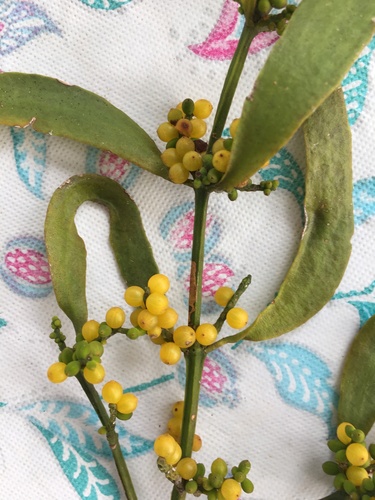
iNaturalist· cc-by-nc
(c) Darcy Whittaker, some rights reserved (CC BY-NC)
Summary
Source: WikipediaSantalum murrayanum, commonly known as the bitter quandong, is an Australian plant in the sandalwood family, Santalaceae. The Noongar name for the plant is coolyar. It bears a bitter fruit, from which a common name derives, in contrast to congener Santalum acuminatum - sweet quandong. The plant is also known as Ming. It occurs in a hemi-parasitic relationship with the roots of several other plants, in a non-destructive way, as with all the species of the genus Santalum. The shrub or small tree typically grows to a height of 1 to 5 metres (3 to 16 ft). It blooms between October and January producing white to yellow-green flowers. It is found on sandplains and dunes and has a scattered distribution through the Wheatbelt, Great Southern and Goldfields-Esperance regions of Western Australia where it grows in sandy or gravelly lateritic soils.
Description
A small tree. The leaves droop. The flowers are small and in panicles in the axils of leaves. The fruit are brown and bitter. The stone in the fruit only has slight pits. They grow attached to the roots of other plants.
Edible Uses
The root bark can be eaten after roasting.
Traditional Uses
The bark of the roots is roasted.
This uses section is brief — help expand it
Medicinal Uses
None known
Distribution
It is a temperate and subtropical plant. They grow in low to moderate rainfall areas in South Australia.
Where It Grows
Australia*,
Cultivation
Not known
Propagation
Propagate by seed.
Other Uses
None known Special Uses
Nutrition
| Part | Moisture | kJ | kcal | Protein | Vit A | Vit C | Iron | Zinc |
|---|---|---|---|---|---|---|---|---|
| Kernel | 2.3 | — | — | 24.4 | — | — | — | — |
Synonyms
References (15)
- Bindon, P., 1996, Useful Bush Plants. Western Australian Museum. p 221
- Bodkin, F., 1991, Encyclopedia Botanica. Cornstalk publishing, p 908
- Boomsma, C.D., 1972, Native Tree of South Australia. Woods & Forests Department South Australia, Bulletin No.19. p 215
- Cherikoff V. & Isaacs, J., The Bush Food Handbook. How to gather, grow, process and cook Australian Wild Foods. Ti Tree Press, Australia p 190
- Clarke, P. A., 2013, The Aboriginal Ethnobotany of the Adelaide Region, South Australia. Transactions of the Royal Society of South Australia. (2013), 137(1): 97-126
Show all 15 references Hide references
- Cribb, A.B. & J.W., 1976, Wild Food in Australia, Fontana. p 140
- Dashorst, G.R.M., and Jessop, J.P., 1998, Plants of the Adelaide Plains & Hills. Botanic Gardens of Adelaide and State Herbarium. p 50
- Hedrick, U.P., 1919, (Ed.), Sturtevant's edible plants of the world. p 321 (As Fusanus persicarius)
- Holliday, I., 1989, A Field Guide to Australian Trees. Hamlyn. p 292
- Lazarides, M. & Hince, B., 1993, Handbook of Economic Plants of Australia, CSIRO. p 211
- Lim, T. K., 2015, Edible Medicinal and Non Medicinal Plants. Volume 9, Modified Stems, Roots, Bulbs. Springer p 74
- Lord, E.E., & Willis, J.H., 1999, Shrubs and Trees for Australian gardens. Lothian. p 20
- Low, T., 1991, Wild Food Plants of Australia. Australian Nature FieldGuide, Angus & Robertson. p 178
- Paczkowska, G . & Chapman, A.R., 2000, The Western Australian Flora. A Descriptive Calatogue. Western Australian Herbarium. p 527
- Zola, N., & Gott, B., 1992, Koorie Plants Koorie People. Koorie Heritage Trust. p 27