Salvia sclarea
L.
Clary, Clary Sage, Cleareye, Muscatel sage
iNaturalist· cc-by-nc
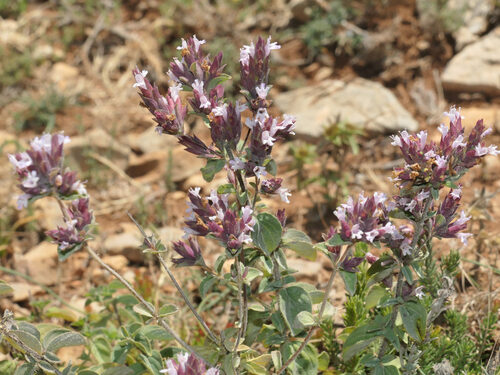
(c) A Emmerson, some rights reserved (CC BY-NC), uploaded by A Emmerson
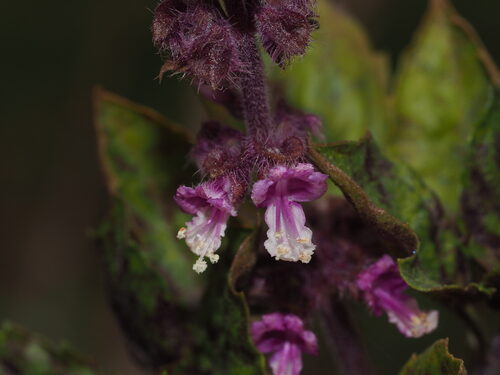
iNaturalist· cc-by-nc
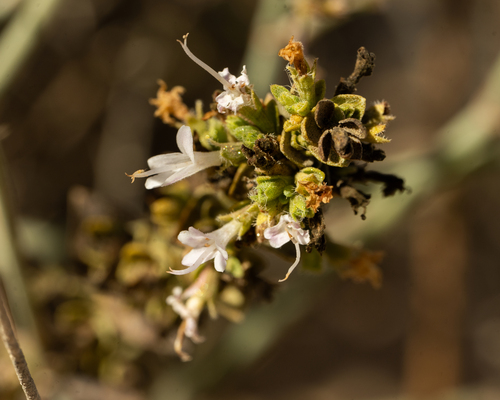
(c) Vladislav Marušic, some rights reserved (CC BY-NC)
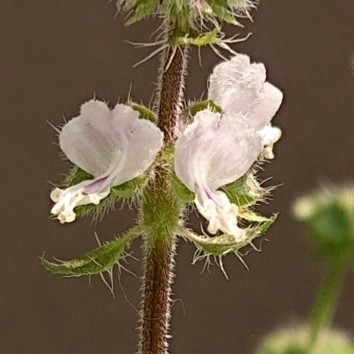
iNaturalist· cc-by-nc-sa
(c) Nicolas Zwahlen, some rights reserved (CC BY-NC-SA), uploaded by Nicolas Zwahlen
Summary
Source: WikipediaSalvia sclarea, the clary or clary sage (clary deriving from Middle English clarie, from Anglo-Norman sclaree, from Late or Medieval Latin sclarēia meaning clear), is a biennial (short-lived) herbaceous perennial in the genus Salvia. It is native to the northern Mediterranean Basin and to some areas in north Africa and Central Asia. The plant has long been cultivated as an herb and is currently grown for its essential oil.
Description
A plant with a two year life cycle. It grows to 1 m high and spreads to 1 m across. The stem is erect and square in cross section. It is brown and has few branches. The leaves are velvety and without leaf stalks. They occur in pairs. They are oblong, heart shaped and wrinkled with irregular margins. The flowers are pale blue or white. They occur in loose clusters at the ends of branches.
Edible Uses
Leaves can be eaten raw or cooked, with a strong, warm, aromatic taste and scent similar to sage (S. officinalis). They are used mainly as a flavouring in cooked dishes and can be dipped in batter and fried to make fritters. The flowers are edible raw, with a pleasant flavour; they can be sprinkled over chopped salads or used to make a tea. The plant is sometimes used as a substitute for hops in flavouring beer, imparting considerable bitterness and intoxicating properties — reportedly making people either deeply drunk or intensely exhilarated. The leaves have also been used to adulterate wine and give it a muscatel flavour.
Traditional Uses
The leaves have a sweet smell and are used fresh or dried. The are used to flavour jams, jellies and wine. It has a role similar to sage in cooking. They can be dipped in cream and fried and eaten with sugar and orange sauce. They are also dipped in egg batter and fried as fritters. The leaves are used for sarma in Turkey. They are rolled around a filling of rice or minced meat. The flowering tops have a taste between sage and mint. They are added to tossed salads.
Medicinal Uses
Clary has been regarded both as a milder form of sage (Salvia officinalis) and as a herb of value in its own right. As an antispasmodic and aromatic plant, it is used primarily for digestive complaints such as wind and indigestion, and is also considered a calming tonic that helps relieve period pain and pre-menstrual problems. Its oestrogen-stimulating action makes it most effective when levels of this hormone are low. The whole plant, particularly the leaves, is antispasmodic, appetizer, aromatic, astringent, balsamic, carminative, pectoral, and tonic, useful in disorders of the stomach and kidneys and as a remedy for menopausal complaints, especially hot flushes. It should not be prescribed to pregnant women. Leaves can be used fresh or dried; for drying, harvest before the plant flowers. The seed, when soaked in water for a few minutes, forms a thick mucilage that can be used to remove small particles of dust from the eyes. The essential oil is used in aromatherapy, where its keyword is 'Euphoric'.
Distribution
It is a temperate plant. A native of Europe and Syria. It prefers light well drained soil. It does best in an open sunny position. It is drought and frost resistant. It suits hardiness zones 4-9. In Hobart Botanical gardens.
Where It Grows
Armenia, Asia, Australia, Balkans, Britain, Canada, Caucasus, Central Asia, Europe, France, Greece, Himalayas, India, Iran, Italy, Kyrgyzstan, Macedonia, Mediterranean, Middle East, Nepal, North America, Pakistan, Portugal, Serbia, Slovenia, Spain, Syria, Tajikistan, Tasmania, Turkey, Türkiye, USA, Uzbekistan,
Cultivation
Requires a very well-drained light sandy soil in a sunny position. Thrives on any ground that is not too wet. Plants can be killed by excessive winter wet. Hardy to about -20°c. A biennial or short-lived perennial. The flowers can be air-dried and used as everlasting flowers. A very ornamental plant, it is strongly aromatic and is sometimes cultivated for its essential oil, there are some named varieties. When bruised, the leaves release a deliciously pungent and refreshing smell of fresh grapefruit. The flowers are very attractive to bees. Members of this genus are rarely if ever troubled by browsing deer.
Propagation
Seed can be sown in situ in spring, or alternatively sown in August/September to overwinter, which produces larger plants. Thinnings can be transplanted. Seed remains viable for 3 years.
Other Uses
An essential oil distilled from the flowering stems, known as 'Muscatel oil', has an ambergris-like aroma and is used in soaps, cosmetics, and as a fixative in perfumery. A drying oil obtained from the seed is used in varnishes and paints.
Other Information
It is sold in local markets. It is cultivated.
Notes
There are about 900 Salvia species. It has anticancer properties.
Synonyms
Also Known As
Eghespak, Misk adacayi, Muškatna kadulja, Paskulak, Tuylu adacayi
References (27)
- Blamey, M and Grey-Wilson, C., 2005, Wild flowers of the Mediterranean. A & C Black London. p 402
- Bodkin, F., 1991, Encyclopedia Botanica. Cornstalk publishing, p 905
- Bremness, L., 1994, Herbs. Collins Eyewitness Handbooks. Harper Collins. p 126
- Burnie, G & Fenton-Smith, J., 1999, A Grower's Guide to Herbs. Murdoch Books. p 61
- Cundall, P., (ed.), 2004, Gardening Australia: flora: the gardener's bible. ABC Books. p 1305
Show all 27 references Hide references
- Dogan, A. & Tuzlaci, E., 2015, Wild Edible Plants of Pertek (Tunceli-Turkey). Marmara Pharmaceutical Journal 19: 126-135
- Dogan, Y., et al, 2015, Of the importance of a leaf: the ethnobotany of sarma in Turkey and the Balkans. Journal of Ethnobiology and Ethnomedicine, 11:56
- Ertug, F, Yenen Bitkiler. Resimli Türkiye Florası -I- Flora of Turkey - Ethnobotany supplement
- Esperanca, M. J., 1988. Surviving in the wild. A glance at the wild plants and their uses. Vol. 1. p 234
- Facciola, S., 1998, Cornucopia 2: a Source Book of Edible Plants. Kampong Publications, p 135
- Flora of Pakistan. www.eFloras.org
- Hedrick, U.P., 1919, (Ed.), Sturtevant's edible plants of the world. p 592
- Hibbert, M., 2002, The Aussie Plant Finder 2002, Florilegium. p 285
- http://www.botanic-gardens-ljubljana.com/en/plants
- Kintzios, S. E., 2006, Terrestrial Plant-Derived Anticancer Agents and Plant Species Used in Anticancer research. Critical Reviews in Plant Sciences. 25: pp 79-113
- Kiple, K.F. & Ornelas, K.C., (eds), 2000, The Cambridge World History of Food. CUP p 1758
- Kybal, J., 1980, Herbs and Spices, A Hamlyn Colour Guide, Hamlyn Sydney p 176
- Lawton, B.P., 2002, Mints. A Family of Herbs and Ornamentals. Timber Press, Portland, Oregon. p 78,
- Lentini, F. and Venza, F., 2007, Wild food plants of popular use in Sicily. J Ethnobiol Ethnomedicine. 3: 15
- Nanagulyan, S., et al, 2020, Wild plants and fungi sold in the markets of Yerevan (Armenia). Journal of Ethnobiology and Ethnomedicine 16:26
- Pardo-de-Santayana, M., et al, 2007, Traditional knowledge of wild edible plants used in the northwest of the Iberian Peninsula (Spain and Portugal): a comparative study. Journal of Ethnobiology and Ethnomedicine 2007, 3:27
- Plants for a Future database, The Field, Penpol, Lostwithiel, Cornwall, PL22 0NG, UK. http://www.scs.leeds.ac.uk/pfaf/
- Sp. pl. 1:27. 1753
- van Wyk, B., 2005, Food Plants of the World. An illustrated guide. Timber press. p 335
- Wiersema, J. H. & Leon, B., 2013, World Economic Plants. A Standard Reference CRC Press. 2nd Ed. p 610
- World Checklist of Useful Plant Species 2020. Royal Botanic Gardens, Kew
- Zeven, A. C. & de West, J. M. J., 1982, Dictionary of cultivated plants and their regions of diversity. Wageningen. p 113