Stachys affinis
Bunge
Chinese artichoke, Japanese artichoke
iNaturalist· cc-by-nc
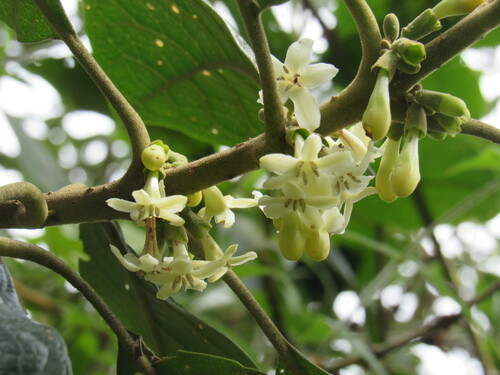
(c) 小铖/Smalltown, some rights reserved (CC BY-NC), uploaded by 小铖/Smalltown
wikimedia· cc-by-sa
Wikimedia Commons
wikimedia· cc-by-sa
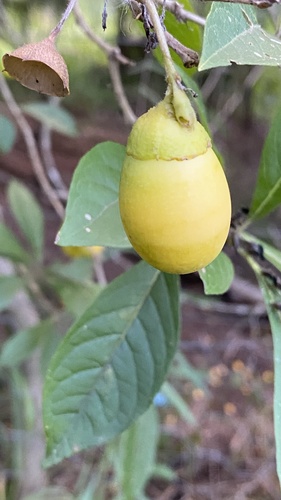
Wikimedia Commons - Krzysztof Ziarnek, Kenraiz
Summary
Source: WikipediaStachys affinis, commonly called crosne, Chinese artichoke, Japanese artichoke, knotroot, or artichoke betony, is a perennial herbaceous plant of the family Lamiaceae, originating from China. Its rhizome is a root vegetable that can be eaten raw, pickled, dried or cooked.
Description
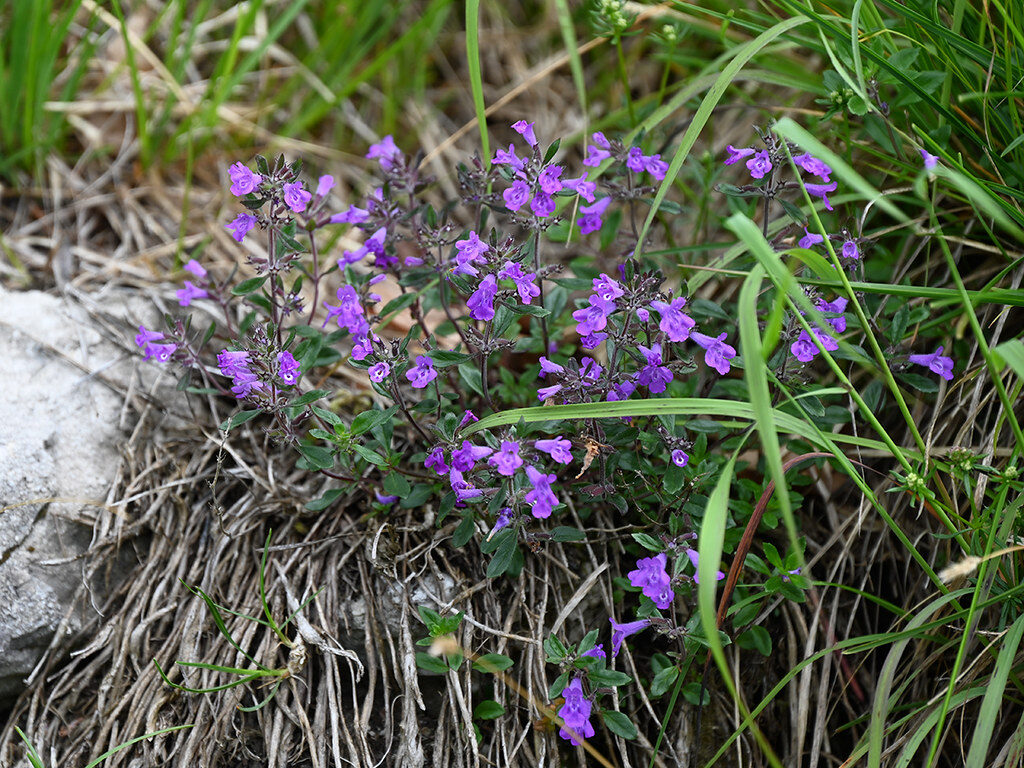
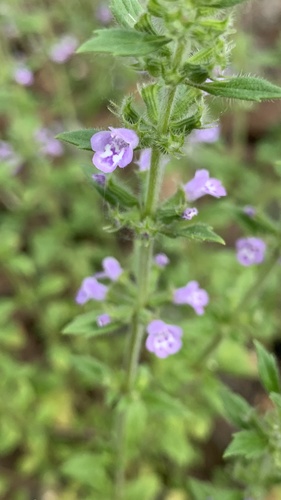
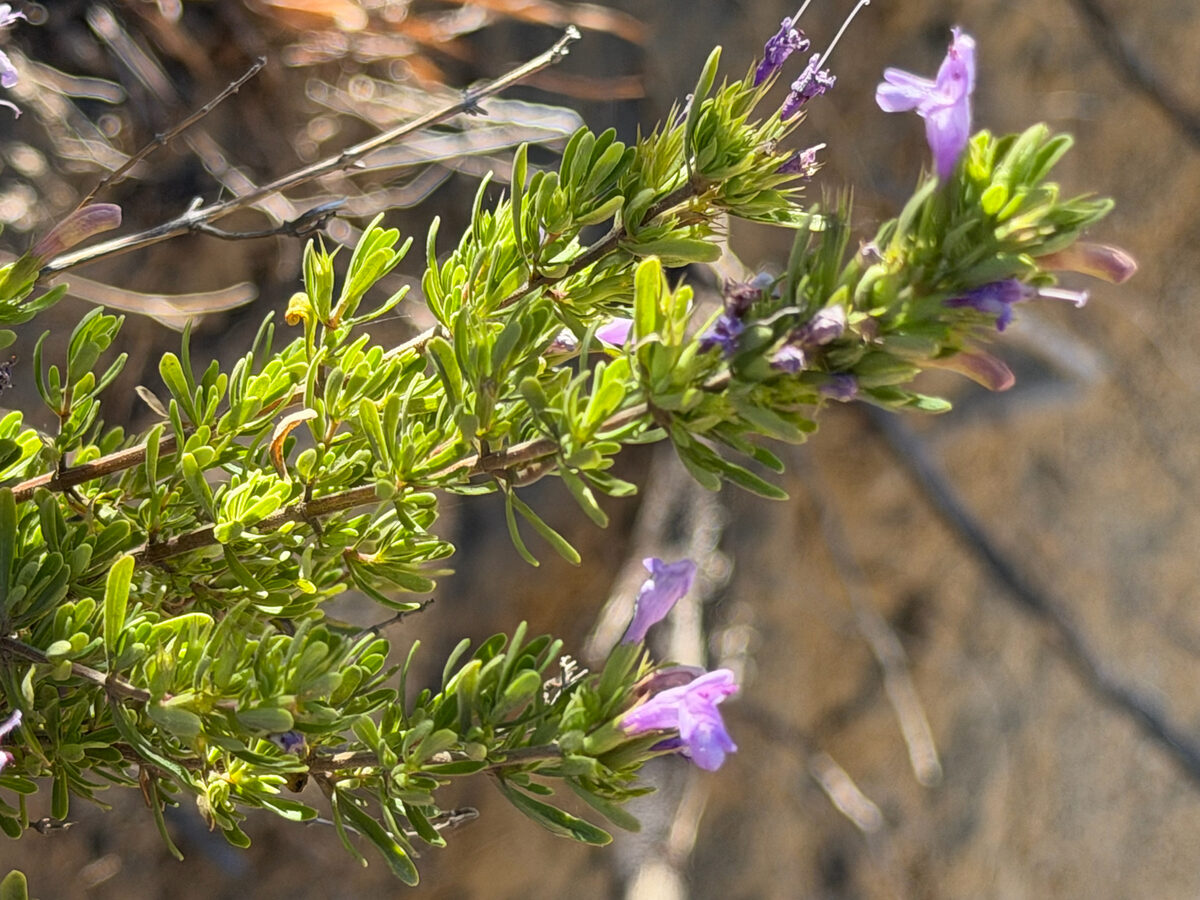
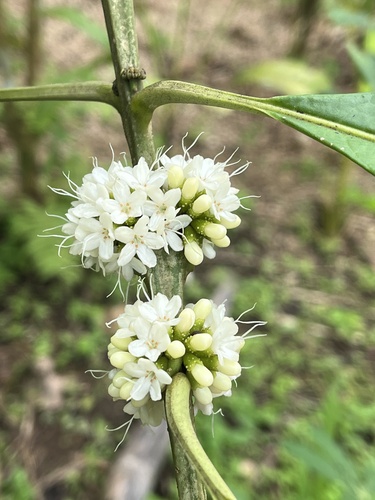
A herb. It is a tuber crop that keeps growing from year to year. It forms a low spreading clump. This is 30-45 cm tall. It produces a string of white tubers on the underground stems. The flowers are blue. The tubers are 3-5 cmlong by 2 cm wide. They are cylinder shaped with rings. See Stachys sieboldii.
Edible Uses
The tubers can be eaten raw or cooked and have a pleasant, mild, nutty, artichoke-like flavour that is easily digested. They measure roughly 5–8 cm long and 2 cm wide — fairly small and fiddly to prepare. They can be eaten raw on their own, added to salads, or lightly cooked. The tubers discolour quickly when cut and are said to lose flavour if peeled, so it is best to harvest them as needed and use them promptly. Yields are around 1 kg per square metre. The leaves can also be cooked, though they are regarded as a famine food, used only when nothing better is available.
Traditional Uses
Tubers are eaten raw or boiled. They are washed and eaten raw in salads. They can be roasted or stir fried. They can be pickled.
This uses section is brief — help expand it
Medicinal Uses
The dried, powdered root is anodyne. The whole plant has been used to treat colds and pneumonia.
Distribution
It is a temperate plant. It is best in rich, well-drained soil in full sun. It suits hardiness zones 5-9.
Where It Grows
Asia, Brazil, China, Europe, France, India, Japan, Mongolia, New Zealand, North America, Slovenia, South America, USA,
Cultivation
Prefers a well-drained soil in a sunny position. Thrives in an ordinary garden soil, preferring one that is not too heavy. It grows best in a soil that has been well fed and does not dry out in the growing season. Plants seem to withstand even water-logged conditions in the winter. The Chinese artichoke is occasionally cultivated for its edible tubers, they are planted out in March and harvested from October onwards. Although top growth is killed back by frost, the tubers are very hardy and can be left in the ground over winter to be harvested as required. It is virtually impossible to find all the tubers, there are always some left behind that will grow the following season. Plants are very tolerant of high summer temperatures. The tubers begin to sprout at temperatures above about 5°c. Plants take 5 - 7 months to develop their tubers. Plants rarely flower in Britain.
Propagation
Sow seed in spring in a cold frame and prick seedlings into individual pots once large enough to handle. If growth is sufficient, plant out during summer; otherwise keep in pots through the first summer, leave the tubers in the pots to overwinter in a cold frame, and plant out in late spring when actively growing. Seed is rarely if ever produced on plants grown in Britain. Tubers can also be divided and replanted at any point during dormancy, though since growth begins early in the year it is advisable to complete any moves by the end of March.
Other Uses
None known Special Uses Food Forest
Production
Tubers are harvested after the tops die back with the first frost.
Other Information
It is a cultivated food plant.
Synonyms
Also Known As
Bazi, Crosnes, Diguniu, Gan lu zi, Knotroot
References (11)
- Arora, R. K., 2014, Diversity in Underutilized Plant Species - An Asia-Pacific Perspective. Bioversity International. p 27
- Crawford, M., 2012, How to grow Perennial Vegetables. Green Books. p 87
- http://www.botanic-gardens-ljubljana.com/en/plants
- Jackes, D. A., 2007, Edible Forest Gardens
- Kang, Y., et al, 2012, Wild food plants and wild edible fungi in two valleys on the Qinling Mountains (Shaanxi, central China) Journal of Ethnobiology and Ethnomedicine; 9:26
Show all 11 references Hide references
- Kang, Y., et al, 2014, Wild food plants used by the Tibetans of Gongba Valley (Zouqu country, Gansu, China) Journal of Ethnobiology and Ethnomedicine 10:20
- Kang, J. et al, 2016, Wild food plants and fungi used in the mycophilous Tibetan community of Zhagana (Tewo Country, Gansu, China) Journal of Ethnobiology and Ethnomedicine. 12:21
- Lim, T. K., 2015, Edible Medicinal and Non Medicinal Plants. Volume 9, Modified Stems, Roots, Bulbs. Springer p 79
- onecommunityglobal.org
- Wiersema, J. H. & Leon, B., 2013, World Economic Plants. A Standard Reference CRC Press. 2nd Ed. p 658
- World Checklist of Useful Plant Species 2020. Royal Botanic Gardens, Kew