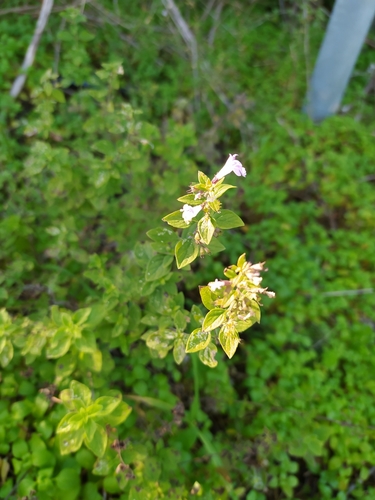
Salvia columbariae
Benth.
California chia, Golden chia
iNaturalist· cc-by-nc-sa
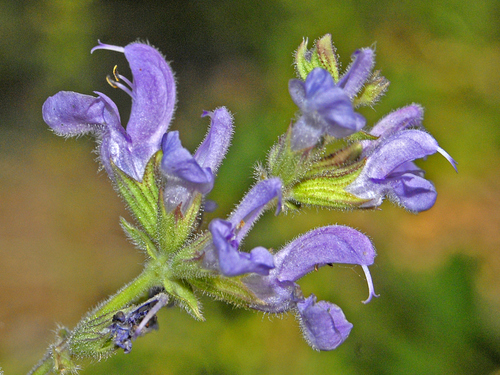
(c) Miriam Olivera, some rights reserved (CC BY-NC-SA), uploaded by Miriam Olivera
iNaturalist· cc-by-nc
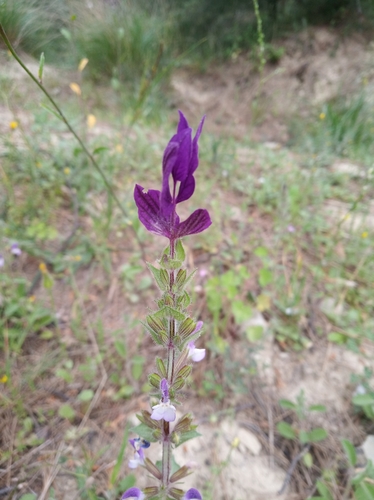
(c) Eric Koberle, some rights reserved (CC BY-NC), uploaded by Eric Koberle
iNaturalist· cc-by
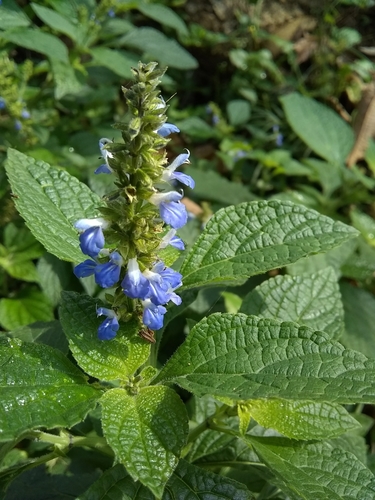
(c) Trevor Harding, some rights reserved (CC BY), uploaded by Trevor Harding
Summary
Source: WikipediaSalvia columbariae is an annual plant that is commonly called chia, chia sage, golden chia, or desert chia, because its seeds are used in the same way as those of Salvia hispanica (chia). It grows in California, Nevada, Utah, Arizona, New Mexico, Sonora, and Baja California, and was an important food for Native Americans. Some native names include pashiiy from Tongva and it'epeš from Ventureño.
Description
A herb which can grow each year from seed or keep growing from year to year. It grows 50-60 cm high. The flowers are blue. The leaves are hairy or woolly. The leaves are 10 cm long and divided into leaflets along the stalk. It produces pods full of tiny seeds.
Edible Uses
The seed can be eaten raw or cooked. It is typically ground into a powder and used as piñole or pressed into dark-coloured cakes and loaves with a nutty flavour. It can be mixed with cornmeal for mush or with ground wheat for gruel. The seed is rich in niacin, thiamine, zinc, calcium, and manganese, is a good source of protein and easily digested fats, and has high overall food value. Sprouted seeds can be added to salads and sandwiches. A refreshing drink is made by steeping seeds in cold water. Alternatively, seeds can be roasted, ground to a powder, and mixed with water, quickly forming a copious gelatinous mass that is palatable and nutritious. The seed has also been used to improve the taste of alkaline water by removing alkalis. The leaves are occasionally used as a sage-like seasoning.
Traditional Uses
Seeds used for chia drink. They are also used as a grain. They are roasted, ground into meal for baking for flat bread and porridge. The seeds are soaked in water then added to pancakes, waffles, biscuits and cakes. The leaves are occasionally used as a sage-like seasoning. The dried seeds heads can be brewed into a tea. Sprouted seeds can be used in salads and sandwiches.
Medicinal Uses
The seed is digestive, disinfectant, febrifuge, and ophthalmic. An infusion can treat fevers, and a poultice of seed mush can be applied to infections. Seeds have been chewed and kept in the mouth during long journeys on foot to sustain strength. Seeds have also been used to cleanse the eyes — placed in the eye, a seed forms a gelatinous coating to which foreign matter adheres, and it is then washed out naturally by the eye's own tears.
Known Hazards
None mentioned.
Distribution
It is a tropical and warm temperate plant. It needs well drained soil. It needs a sunny position. It suits hardiness zone 7.
Where It Grows
Central America, Mexico*, North America, USA,
Cultivation
Requires a very well-drained light sandy soil in a sunny position. Prefers a rich soil. Plants are lodge resistant. This plant was a staple food crop of the Aztecs. It is often cultivated for its edible seeds, which are used to make a refreshing and nourishing drink. A good bee plant. Members of this genus are rarely if ever troubled by browsing deer.
Propagation
Sow seed in April directly in situ, as the plant dislikes root disturbance. If seed is limited, sow in pots in a greenhouse in March or April, pot on into individual containers once seedlings are large enough to handle, then plant out in May. Germination typically takes 10–14 days at 20°C.
Other Uses
Disinfectant None known Special Uses Attracts Wildlife
Other Information
It has been an important food.
Notes
There are about 900 Salvia species.
Nutrition
| Part | Moisture | kJ | kcal | Protein | Vit A | Vit C | Iron | Zinc |
|---|---|---|---|---|---|---|---|---|
| Seed | 5.3 | 1975 | 472 | 16.6 | 4 | 15.7 | 10 | 5.32 |
Synonyms
References (18)
- Altschul, S.V.R., 1973, Drugs and Foods from Little-known Plants. Notes in Harvard University Herbaria. Harvard Univ. Press. Massachusetts. no. 3750
- Anderson, M. K., 2012, Edible Seeds and Grains of California Tribes and the Klamath Tribe of Oregon in the Phoebe Apperson Hearst Museum of Anthropology Collections, University of California, Berkeley. USDA p 32
- Beckstrom-Sternberg, Stephen M., and James A. Duke. "The Foodplant Database." http://probe.nalusda.gov:8300/cgi-bin/browse/foodplantdb.(ACEDB version 4.0 - data version July 1994)
- Esperanca, M. J., 1988. Surviving in the wild. A glance at the wild plants and their uses. Vol. 1. p 217
- Facciola, S., 1998, Cornucopia 2: a Source Book of Edible Plants. Kampong Publications, p 134
Show all 18 references Hide references
- Hedrick, U.P., 1919, (Ed.), Sturtevant's edible plants of the world. p 590
- https://www.fireflyforest.com/flowers/category/edible-plants/ Edible Plants – Southeastern Arizona Wildflowers and Plants
- Kermath, B. M., et al, 2014, Food Plants in the Americas: A survey of the domesticated, cultivated and wild plants used for Human food in North, Central and South America and the Caribbean. On line draft. p 778
- Kiple, K.F. & Ornelas, K.C., (eds), 2000, The Cambridge World History of Food. CUP p 1751
- Labiat. gen. spec. 302. 1833
- Lawton, B.P., 2002, Mints. A Family of Herbs and Ornamentals. Timber Press. p 182
- MacMahon, J.A., 1990, Deserts. Audubon Society Nature Guides. Knopf. p 367 Plate 64
- Moerman, D. F., 2010, Native American Ethnobotany. Timber Press. p 509
- Plants for a Future database, The Field, Penpol, Lostwithiel, Cornwall, PL22 0NG, UK. http://www.scs.leeds.ac.uk/pfaf/
- Saunders, C.F., 1948, Edible and Useful Wild Plants. Dover. New York. p 43
- USDA, ARS, National Genetic Resources Program. Germplasm Resources Information Network - (GRIN). [Online Database] National Germplasm Resources Laboratory, Beltsville, Maryland. Available: www.ars-grin.gov/cgi-bin/npgs/html/econ.pl (10 April 2000)
- Wiersema, J. H. & Leon, B., 2013, World Economic Plants. A Standard Reference CRC Press. 2nd Ed. p 610
- World Checklist of Useful Plant Species 2020. Royal Botanic Gardens, Kew