Salvia carduacea
Benth.
Thistle sage
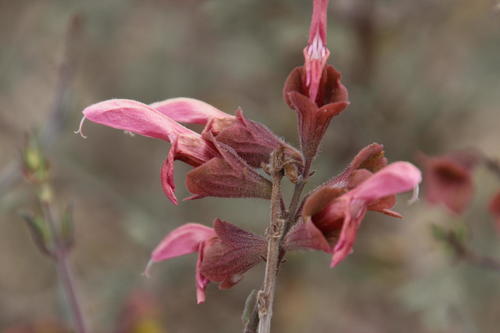
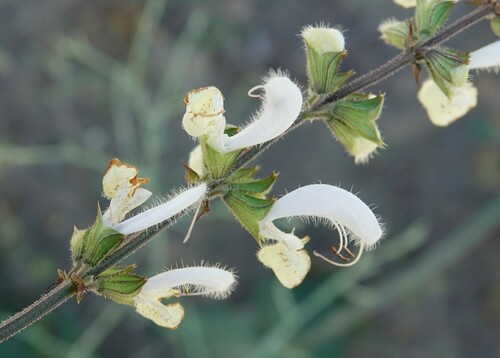
iNaturalist· cc-by-nc
(c) mariajj, some rights reserved (CC BY-NC)
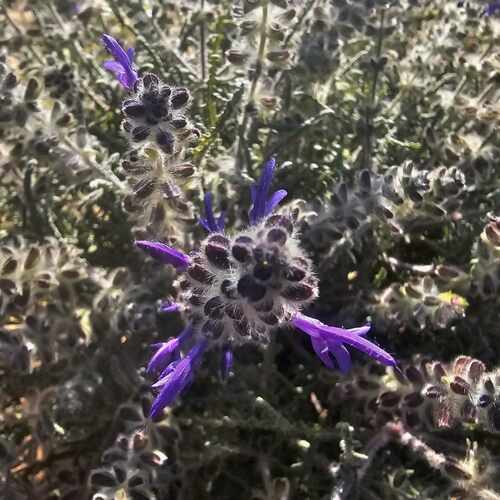
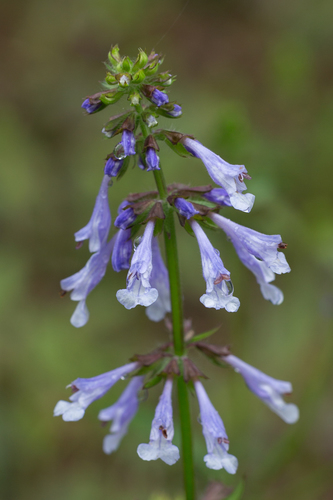
iNaturalist· cc-by-nc
(c) mariajj, some rights reserved (CC BY-NC)
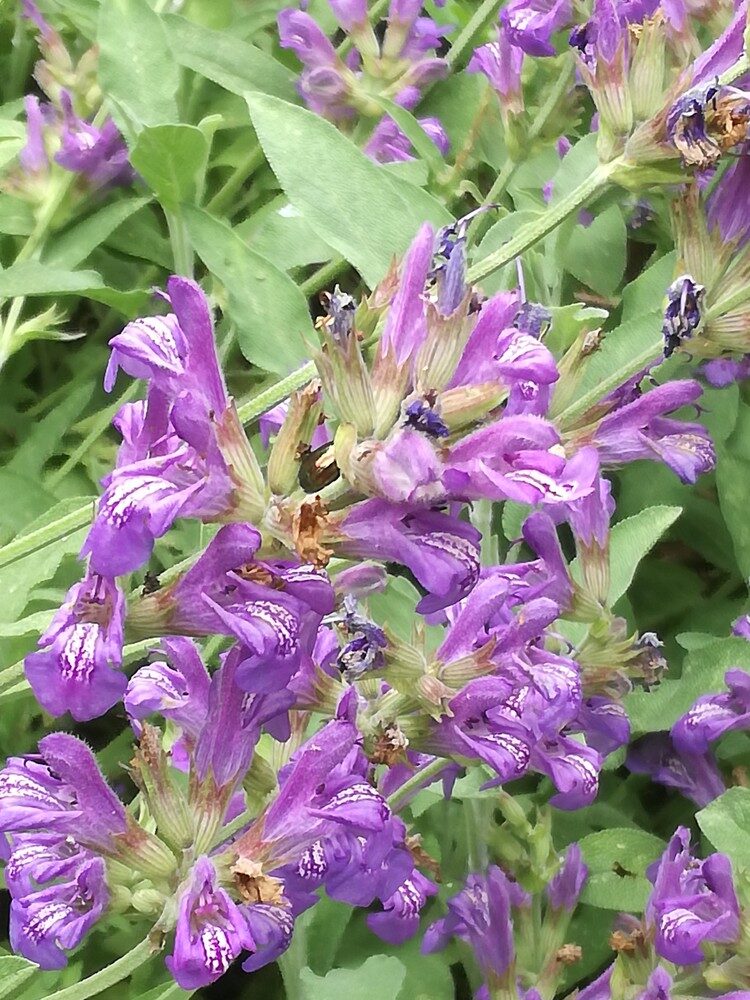
iNaturalist· cc-by-nc
(c) Jim Andre, some rights reserved (CC BY-NC)
Summary
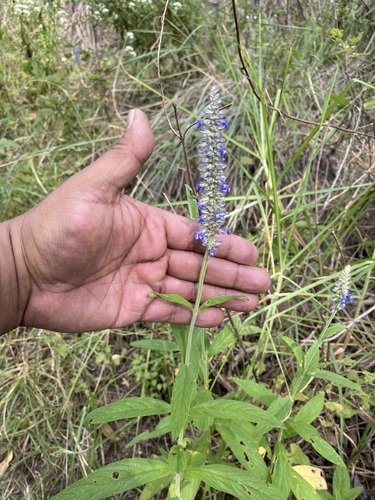
Source: WikipediaSalvia carduacea, the thistle sage, is an annual herb native to California and Baja California, found up to 1400 m elevation. It responds drastically to its environment, growing anywhere from 15 cm to 1 m in height. The wooly white basal leaves resemble a thistle's, with long spines, while the flowers grow in whorls on calyces that are wooly and spiny. The flowers are a vibrant lavender with bright orange anthers. The foliage is pungent, with a scent similar to citronella.
Description
A thistle like herb. It is hairy. It grows 60 cm high. The leaves are oblong and 8-15 cm long. The leaves have teeth and are spiny.
This description is brief — help expand it
Edible Uses
The seed can be eaten raw or cooked. It may be roasted, ground into a powder, and combined with other seeds as a mush, or added to wheat to improve flavour. It can also be prepared as a cooling beverage.
Traditional Uses
The roasted seeds are ground into flour. They are added to wheat to improve the flavour. They are also used to make a cooling drink.
This uses section is brief — help expand it
Medicinal Uses
None known
Distribution
It is a warm temperate plant. It suits hardiness zone 8.
Where It Grows
North America, USA,
Cultivation
Requires a very well-drained light sandy soil in a sunny position. Prefers a rich soil. Plants can be killed by excessive winter wet. This species is not very cold-hardy in Britain, tolerating short periods when temperatures fall to about -3°c. An autumn-germination plant in the wild, it might succeed outdoors in the milder areas of the country but is usually either grown as a spring-sown annual in Britain or grown in an alpine greenhouse. Members of this genus are rarely if ever troubled by browsing deer.
Propagation
Sow seed in March or April in a greenhouse; germination typically occurs within 2 weeks. Prick out seedlings into individual pots when large enough to handle and plant out in early summer. Where the plant is near the edge of its hardiness range, overwinter young plants under glass and plant out in late spring of the following year. Cuttings of half-ripe wood can be taken at almost any point during the growing season.
Other Uses
None known Special Uses
Notes
There are about 900 Salvia species.
References (10)
- Anderson, M. K., 2012, Edible Seeds and Grains of California Tribes and the Klamath Tribe of Oregon in the Phoebe Apperson Hearst Museum of Anthropology Collections, University of California, Berkeley. USDA p 32
- Beckstrom-Sternberg, Stephen M., and James A. Duke. "The Foodplant Database." http://probe.nalusda.gov:8300/cgi-bin/browse/foodplantdb.(ACEDB version 4.0 - data version July 1994)
- Facciola, S., 1998, Cornucopia 2: a Source Book of Edible Plants. Kampong Publications, p 134
- Kermath, B. M., et al, 2014, Food Plants in the Americas: A survey of the domesticated, cultivated and wild plants used for Human food in North, Central and South America and the Caribbean. On line draft. p 778
- Labiat. gen. sp. 302. 1833
Show all 10 references Hide references
- Lawton, B.P., 2002, Mints. A Family of Herbs and Ornamentals. Timber Press. p 182
- Moerman, D. F., 2010, Native American Ethnobotany. Timber Press. p 509
- Plants for a Future database, The Field, Penpol, Lostwithiel, Cornwall, PL22 0NG, UK. http://www.scs.leeds.ac.uk/pfaf/
- Saunders, C.F., 1948, Edible and Useful Wild Plants. Dover. New York. p 43
- World Checklist of Useful Plant Species 2020. Royal Botanic Gardens, Kew