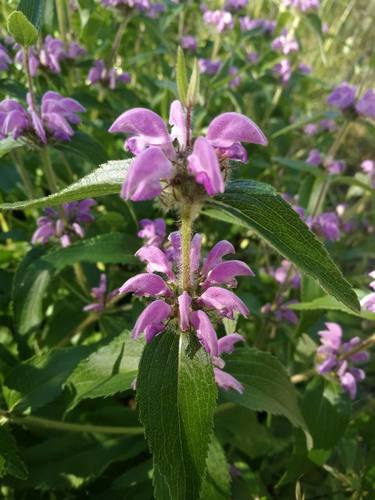
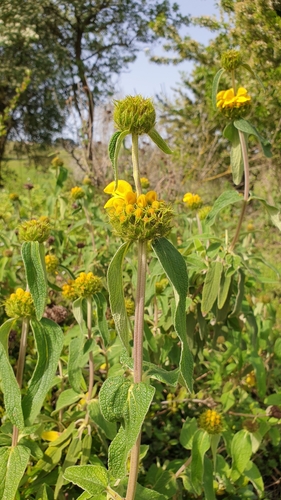
Salvia lanigera
Poir.
Nu'aymih
iNaturalist· cc-by-nc
(c) Abdulnaser Abdulkarim, some rights reserved (CC BY-NC)
iNaturalist· cc-by-nc
(c) Abdulnaser Abdulkarim, some rights reserved (CC BY-NC)
iNaturalist· cc-by-nc
(c) Abdulnaser Abdulkarim, some rights reserved (CC BY-NC)
Summary
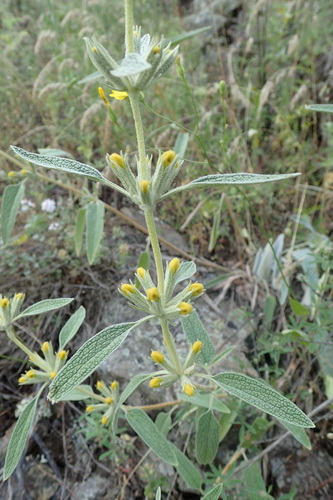
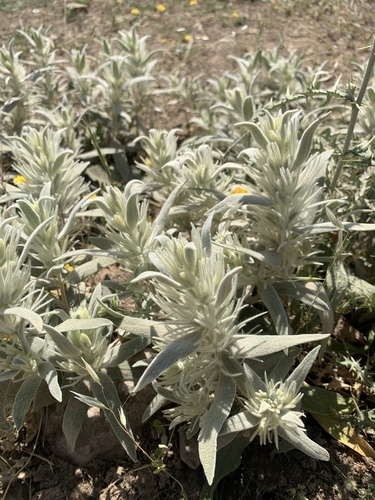
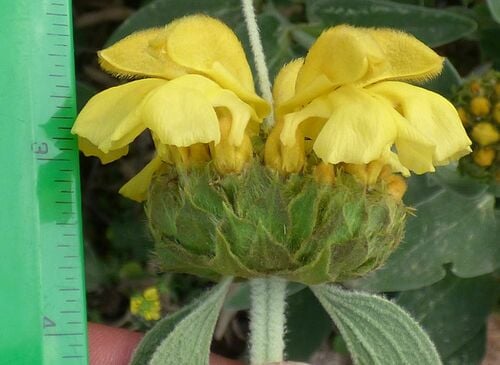
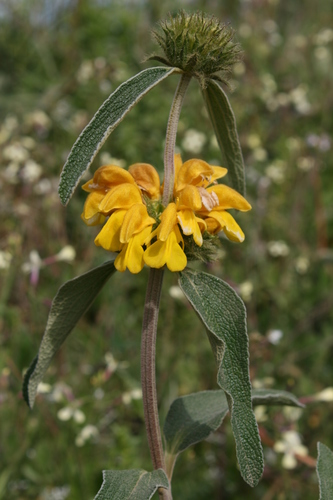
Source: WikipediaSalvia lanigera (Libyan wild clary) is a small herbaceous perennial that is native from northern Egypt and Arabia, to the south of Turkey and Iran. It grows in low altitude deserts, in sandy loam and chalky sandstone soils. The specific epithet "lanigera" means "wool-bearing" or "fleecy", referring to the hairs that cover all parts of the plant. It was first described in 1817 by Jean Louis Marie Poiret, a French clergyman sent by Louis XVI to Algeria to study the native plants. Following the French Revolution, Poiret became a professor at the Grandes écoles in Aisne. In cultivation it grows from 4-8 inches high, and up to 1 foot in its native habitat. The plant is a soft pale gray-green color, giving off a pungent odor when brushed, and is covered with short erect hairs. The narrow leaves are deeply divided, with linear segments. The violet flowers grow in whorls of 6–8, and are held in a tiny calyx covered in long white hairs. In cold climates it is treated as an annual, freely reseeding itself, with seeds overwintering even in sub-freezing climates. It adapts itself to small spaces in between other plants, preferring full sun, lean soil, moderate irrigation, and good drainage.
Description
A shrub with hermaphroditic flowers pollinated by insects. Grows in light sandy to medium loamy, well-drained soil with mildly acidic to mildly alkaline pH. Requires full sun and tolerates both dry and moist soil conditions.
Edible Uses
The plant is used as a condiment for tea.
Traditional Uses
The leaves are used as a condiment for tea.
This uses section is brief — help expand it
Medicinal Uses
None known
Distribution
It is a Mediterranean plant.
Where It Grows
Egypt - Sinai, Israel, Jordan, Mediterranean, Middle East,
Cultivation
We have very little information on this species and do not know if it will be hardy in Britain, though judging by its native range it could succeed outdoors at least in the milder parts of this country. The following notes are based on the general needs of the genus. Requires a very well-drained light sandy soil in a sunny position. Prefers a rich soil. Plants can be killed by excessive winter wet. Members of this genus are rarely if ever troubled by browsing deer.
Propagation
Sow seed in March or April in a greenhouse; germination usually takes place within 2 weeks. Prick out seedlings into individual pots when large enough to handle and plant out in early summer. In areas at the limits of the plant's hardiness, grow on under glass through the first winter and plant out in late spring the following year. Cuttings of half-ripe wood can be taken at almost any time during the growing season.
Other Uses
None known
References (1)
- Bailey, C. and Danin, A., 1981, Bedouin Plant Utilization in Sinai and the Negev. Economic Botany 35(2): 145-162