Salix repens
L.
Creeping willow, Arctic creeping willow
iNaturalist· cc-by
(c) Maja Dumat, some rights reserved (CC BY)
iNaturalist· cc-by-nc
(c) Johan Devos, some rights reserved (CC BY-NC), uploaded by Johan Devos
iNaturalist· cc-by-nc
(c) Benjamin Schmid, some rights reserved (CC BY-NC), uploaded by Benjamin Schmid
Summary
Source: WikipediaSalix repens, the creeping willow, is a small, shrubby species of willow in the family Salicaceae, growing up to 1.5 metres in height. Found amongst sand dunes and heathlands, it is a polymorphic species, with a wide range of variants. In the UK, at least, these range from small, prostrate, hairless plants at one end of the spectrum to taller, erect or ascending silky-leaved shrubs at the other. This wide variation in form has resulted in numerous synonyms.
Description
A very small plant. It grows 5 cm high and spreads 45-90 cm wide. The branches are reddish brown. The leaves are green and wrinkled. They are paler bluish underneath. They have dense long hairs on both surfaces. The flowers catkins are erect and have long haired black tipped scales.
Edible Uses
The inner bark can be eaten raw or cooked, or dried, ground into a powder, and blended with cereal flour for bread-making. It has a very bitter flavour and is a famine food, used only when nothing else is available. Young shoots can be eaten raw or cooked, though they are not very palatable.
Medicinal Uses
The fresh bark of all willows contains salicin, which likely breaks down into salicylic acid (closely related to aspirin) in the body. This gives it properties as an anodyne and febrifuge.
Known Hazards
None listed.
Distribution
It suits hardiness zones 2-8.
Where It Grows
Australia, Britain, Europe, Luxembourg, North America, Russia, USA,
Cultivation
Succeeds in most soils, including wet, ill-drained or intermittently flooded soils, but prefers a damp, heavy soil in a sunny position. Rarely thrives on chalk. A polymorphic plant, there are many sub-species and cultivars. Hybridizes freely with other members of this genus. Although the flowers are produced in catkins early in the year, they are pollinated by bees and other insects rather than by the wind. Plants in this genus are notably susceptible to honey fungus. Dioecious. Male and female plants must be grown if seed is required.
Propagation
Seed must be surface sown as soon as it ripens in late spring, as viability is very short — perhaps only a few days. Cuttings of mature wood from the current year's growth can be taken November to February and rooted in a sheltered outdoor bed or planted directly into their permanent position with a good weed-suppressing mulch; this is very easy. Plant out in autumn. Half-ripe cuttings taken June to August and rooted in a frame are also very easy. The plant can also be propagated by division of suckers.
Other Uses
The plant makes an excellent ground cover, and its extensive root system makes it a good soil stabilizer on sand dunes — the subspecies S. repens argentea is best suited for this purpose. It is also used to stabilize old waste tips and slag heaps. The bark contains about 10% tannin. The plant is a dynamic accumulator.
Notes
There are about 300 Salix species.
References (5)
- Cundall, P., (ed.), 2004, Gardening Australia: flora: the gardener's bible. ABC Books. p 1299
- Hibbert, M., 2002, The Aussie Plant Finder 2002, Florilegium. p 284
- Kremer, B.P., 1995, Shrubs in the Wild and in Gardens. Barrons. p 125
- Plants for a Future database, The Field, Penpol, Lostwithiel, Cornwall, PL22 0NG, UK. http://www.scs.leeds.ac.uk/pfaf/
- Sp. pl. 2:1020. 1753
More from Salicaceae
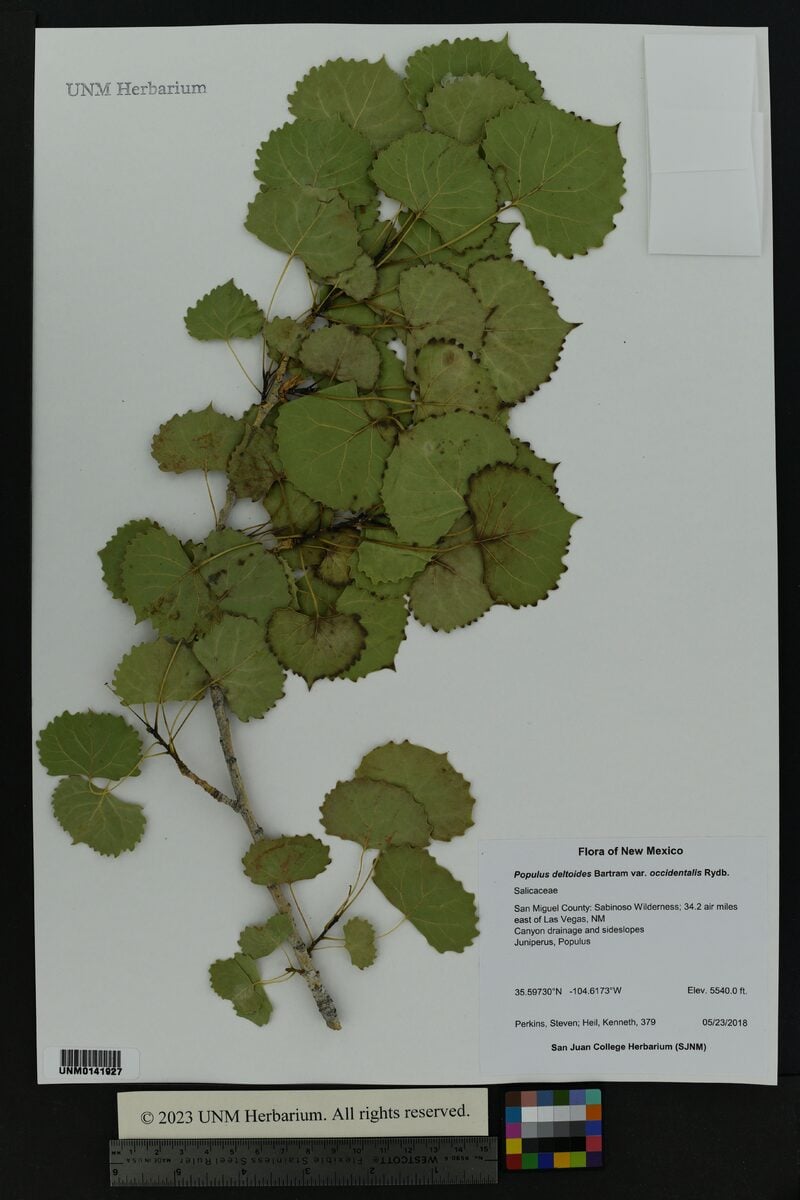
Populus deltoides var. occidentalis
Plains cottonwood
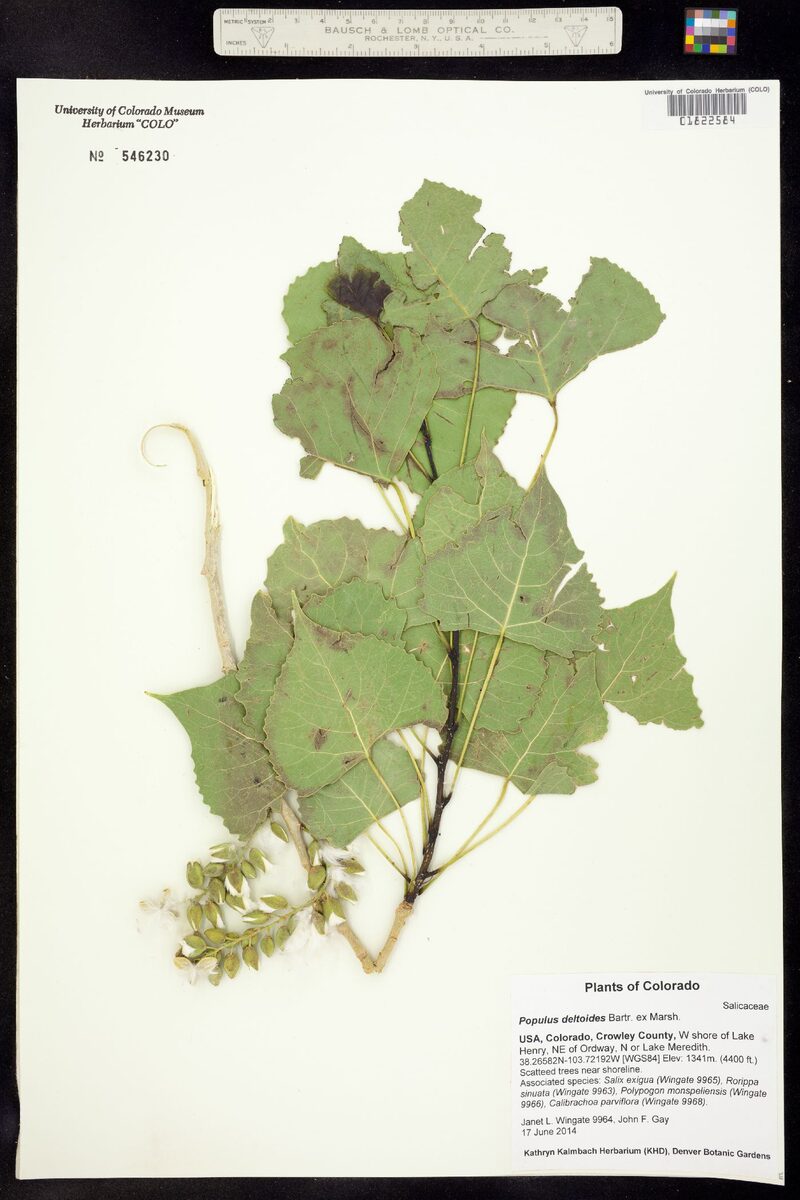
Populus deltoides var. wislizenii
Rio grande cottonwood
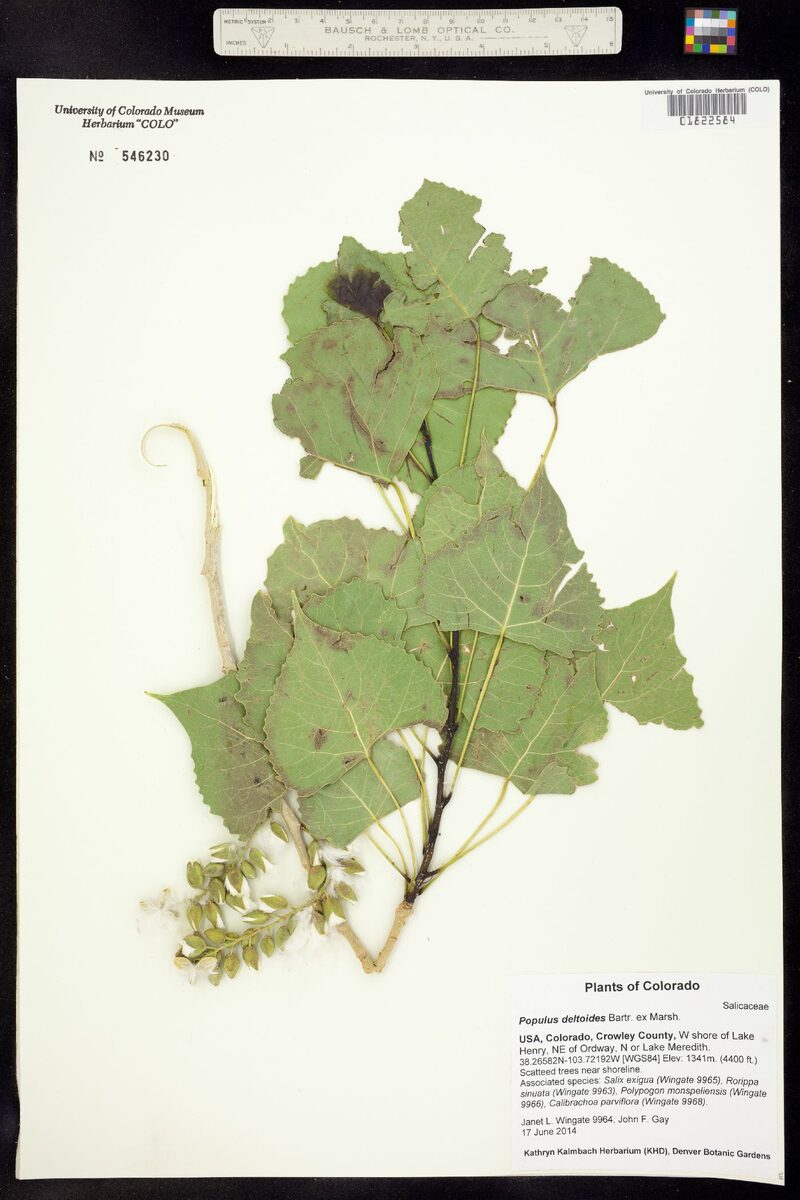
Populus deltoides wislizenii - (S.Watson.)Eckenw.
Rio Grande Cottonwood
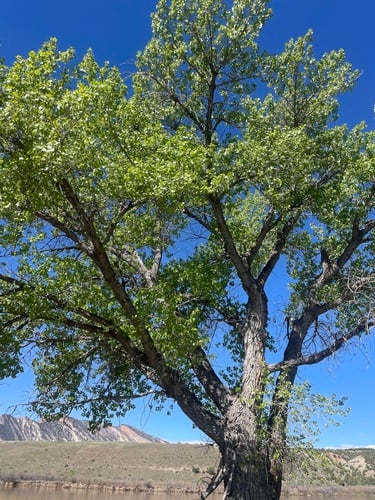
Populus fremontii
Fremot's cottonwood
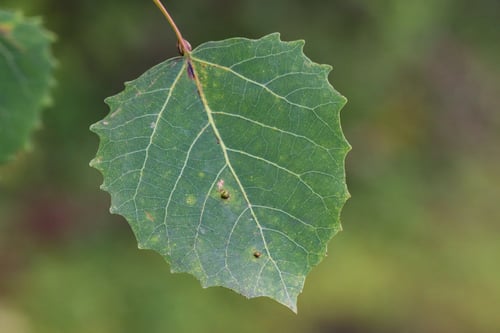
Populus grandidentata
Bigtooth Aspen, Largetooth aspen
Populus hybrids
Hybrid poplar