Salix babylonica
L.
Weeping willow
iNaturalist· cc-by-nc
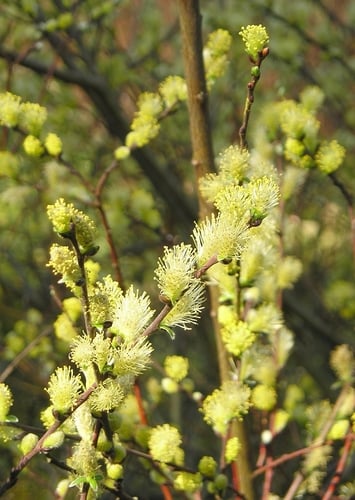
(c) Carlos Eduardo Simental Crespo, some rights reserved (CC BY-NC), uploaded by Carlos Eduardo Simental Crespo
iNaturalist· cc-by-nc
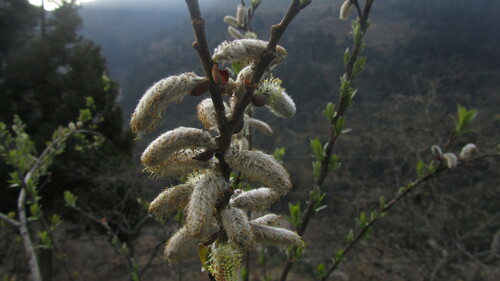
(c) Heriberto Ávila-González, some rights reserved (CC BY-NC), uploaded by Heriberto Ávila-González
iNaturalist· cc-by-nc
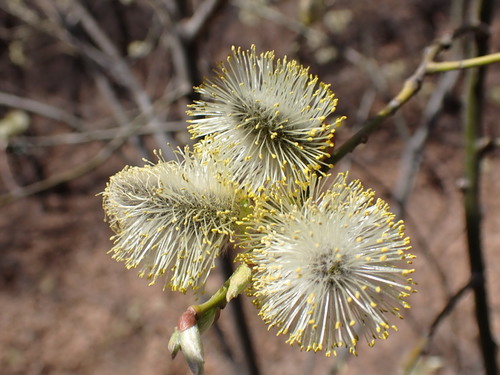
(c) trichocereus, some rights reserved (CC BY-NC), uploaded by trichocereus
Summary
Source: WikipediaSalix babylonica (Babylon willow or weeping willow; Chinese: 垂柳; pinyin: chuí liǔ) is a species of willow native to dry areas of northern China, Korea, Mongolia, Japan, and Siberia but cultivated for millennia elsewhere in Asia, being traded along the Silk Road to southwest Asia and Europe.
Description
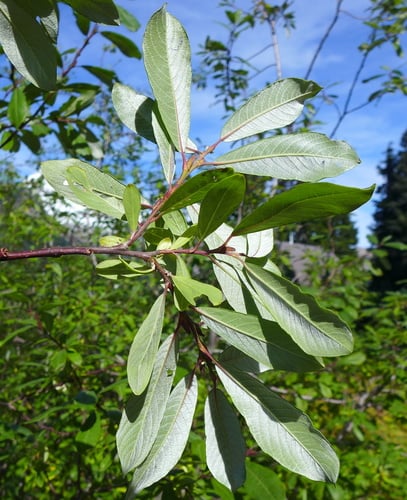
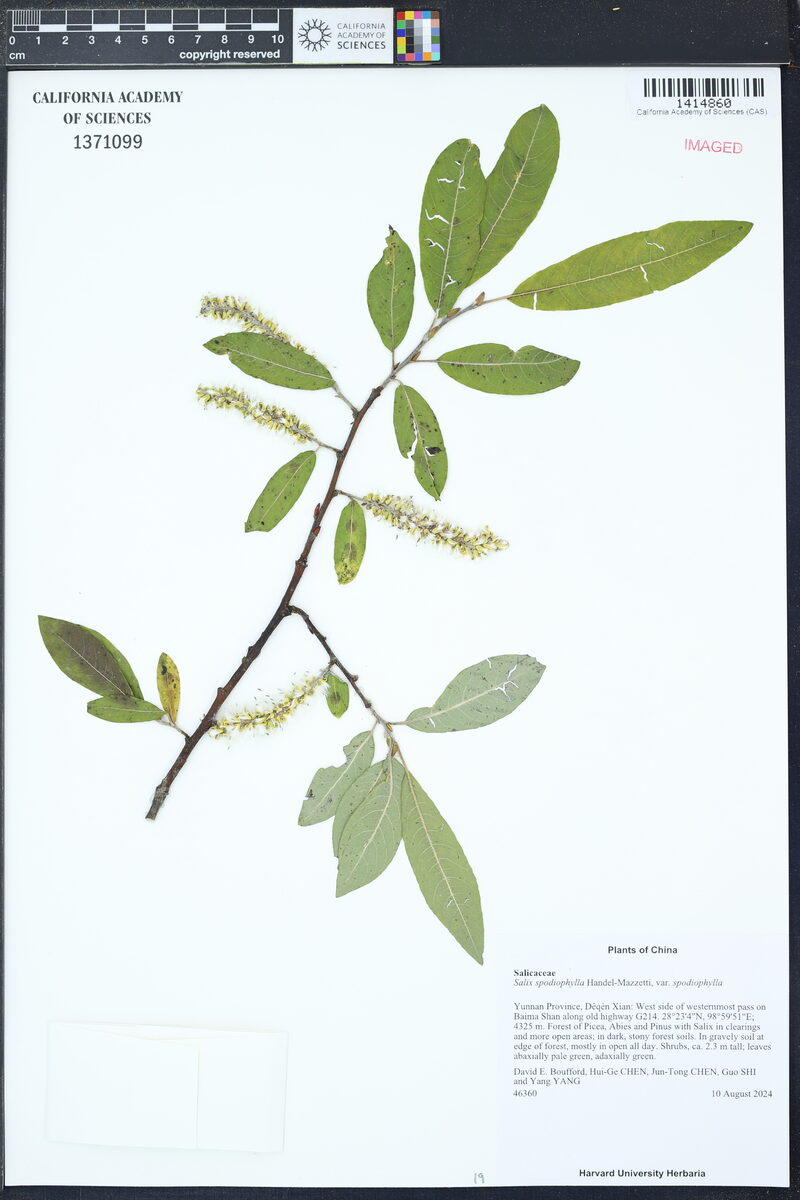
A spreading tree. It loses its leaves during the year. It grows 12 m tall. The end branches hang down. The trunk can be 75 cm across. The primary branches are brittle. The leaves are alternate. The leaves are 2-12 cm long by 0.5-2 cm wide. There are teeth along the edge. The flowers or catkins are of one sex.
Edible Uses
The inner bark can be eaten raw or cooked, or dried and ground into a powder to blend with cereal flour for bread-making. It has a very bitter flavour and is considered a famine food, used only as a last resort. Young shoots and flower buds can be cooked, though they are not very palatable. Older leaves are used to adulterate tea. The plant is also a source of a manna-like substance.
Traditional Uses
The young leaves, shoots and flower buds are parboiled and eaten. The older leaves are used to adulterate tea. The tree is the source of a manna like substance.
Medicinal Uses
The leaves and bark are antirheumatic, astringent, and tonic. A decoction of the leaves treats abscesses, carbuncle, fever, rheumatism, skin diseases, and ulcers. An infusion of the bark has been used for diarrhoea and fevers, and the bark itself can be applied as a poultice. Stem bark treats skin eruptions caused by parasites, and root bark is used in a bath for parasitic skin diseases. A gum from the stems treats foul sores, and the down of the seeds is used in treating fevers, haemorrhages, jaundice, and rheumatism. The fresh bark contains salicin, which probably decomposes into salicylic acid (closely related to aspirin) in the human body, and is used as an anodyne and febrifuge.
Distribution
It is a warm temperate plant. It is native to North China. It grows along rivers and near dams. In Argentina it grows from sea level to 900 m above sea level. It suits hardiness zones 5-10. Tasmania Herbarium. Arboretum Tasmania.
Where It Grows
Afghanistan, Africa, Algeria, Argentina, Asia, Australia, Austria, Belgium, Botswana, Britain, Canada, Caucasus, Chile, China, Cuba, Dominican Republic, East Africa, Europe, Fiji, Haiti, Himalayas, Hungary, India, Indonesia, Iran, Iraq, Japan, Korea, Kurdistan, Lebanon, Lesotho, Manchuria, Mediterranean, Mexico, Middle East, Mongolia, Morocco, North America, Northeastern India, Pakistan, Portugal, Puerto Rica, Romania, SE Asia, Singapore, South Africa, Southern Africa, Syria, Tasmania, Thailand, Turkmenistan, USA, Uzbekistan, Vietnam, West Indies, Zimbabwe,
Cultivation
Succeeds in most soils, including wet, ill-drained or intermittently flooded soils, but prefers a damp, heavy soil in a sunny position. Rarely thrives on chalk. This species rarely thrives in Britain, it is very subject to canker and has been largely replaced in cultivation by S. 'Chrysocoma'. The root system is rather aggressive and can cause problems with drains. Hybridizes freely with other members of this genus. Although the flowers are produced in catkins early in the year, they are pollinated by bees and other insects rather than by the wind. Plants in this genus are notably susceptible to honey fungus. Dioecious. Male and female plants must be grown if seed is required.
Propagation
Seed must be surface sown as soon as it ripens in late spring, as viability is very short — perhaps only a few days. Cuttings of mature wood from the current year's growth can be taken November to February, either in a sheltered outdoor bed or planted straight into their permanent position with a weed-suppressing mulch; these root very easily. Plant out permanently in autumn. Half-ripe cuttings taken June to August in a frame also root very easily.
Other Uses
The very flexible stems are used in basket-making. The plant is typically coppiced annually for basketry, or every two years when thick upright poles are needed. The extensive root system helps bind soils and controls erosion, though aggressive surface roots are possible. A decoction or infusion of the bark has been used as a hair wash to encourage growth. It is also used as a pollard or specimen planting. Functions as a dynamic accumulator.
Notes
There are about 300 Salix species. Populus euphratica Oliv. is the willow of Babylon.
Synonyms
Also Known As
Babylonian weeping willow, Chui liu, Pendulous willow
References (29)
- Ambasta, S.P. (Ed.), 2000, The Useful Plants of India. CSIR India. p 540
- BARANOV, (As Salix pseudo-matsudana)
- Coombes, A.J., 2000, Trees. Dorling Kindersley Handbooks. p 292
- Cronin, L., 1989, The Concise Australian Flora. Reed. p 162
- Cundall, P., (ed.), 2004, Gardening Australia: flora: the gardener's bible. ABC Books. p 1296
Show all 29 references Hide references
- Facciola, S., 1998, Cornucopia 2: a Source Book of Edible Plants. Kampong Publications, p 221
- Flora of Pakistan. www.eFloras.org
- Hibbert, M., 2002, The Aussie Plant Finder 2002, Florilegium. p 283
- Hussey, B.M.J., Keighery, G.J., Cousens, R.D., Dodd, J., Lloyd, S.G., 1997, Western Weeds. A guide to the weeds of Western Australia. Plant Protection Society of Western Australia. p 212
- Kew Plants of the World Online
- Morley, B.D., & Toelken, H.R., (Eds), 1983, Flowering Plants in Australia. Rigby. p 108
- Palgrave, K.C., 1996, Trees of Southern Africa. Struik Publishers. p 91
- Little, E.L., 1980, National Audubon Society Field Guide to North American Trees. Alfred A. Knopf. p 329
- Lord, E.E., & Willis, J.H., 1999, Shrubs and Trees for Australian gardens. Lothian. p 72
- Plants for a Future database, The Field, Penpol, Lostwithiel, Cornwall, PL22 0NG, UK. http://www.scs.leeds.ac.uk/pfaf/ (As Salix pseudo-matsudana)
- Plants of Haiti Smithsonian Institute http://botany.si.edu/antilles/West Indies
- Romanowski, N., 2007, Edible Water Gardens. Hyland House. p 114
- Ruiters-Welcome, A. K., 2019, Food plants of southern Africa. Ph.D. thesis. Univ. of Johannesburg p 99
- Sainty, G.R. & Jacobs, S.W.L., 1981, Waterplants of New South Wales. Water Resources Commission. NSW p 401
- Schuler, S., (Ed.), 1977, Simon & Schuster's Guide to Trees. Simon & Schuster. No. 162
- Slocum, P.D. & Robinson, P., 1999, Water Gardening. Water Lilies and Lotuses. Timber Press. p 134
- Sp. pl. 2:1017. 1753
- Sukarya, D. G., (Ed.) 2013, 3,500 Plant Species of the Botanic Gardens of Indonesia. LIPI p 493
- Tanaka,
- Tasmanian Herbarium Vascular Plants list p 53
- Valder, P., 1999, The Garden Plants of China. Florilegium. p 326
- van Wyk, B, van Wyk, P, and van Wyk B., 2000, Photographic guide to Trees of Southern Africa. Briza. p 274
- Welcome, A. K. & Van Wyk, B.-E., 2019, An inventory and analysis of the food plants of southern Africa. South African Journal of Botany 122 (2019) 136–179
- World Checklist of Useful Plant Species 2020. Royal Botanic Gardens, Kew