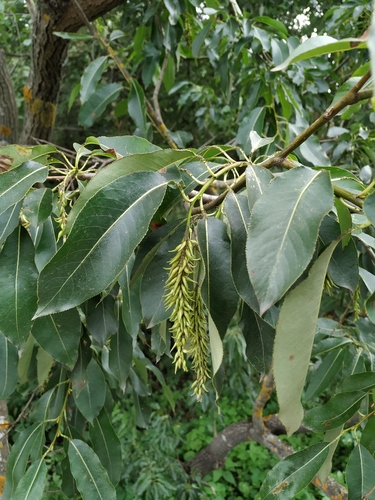
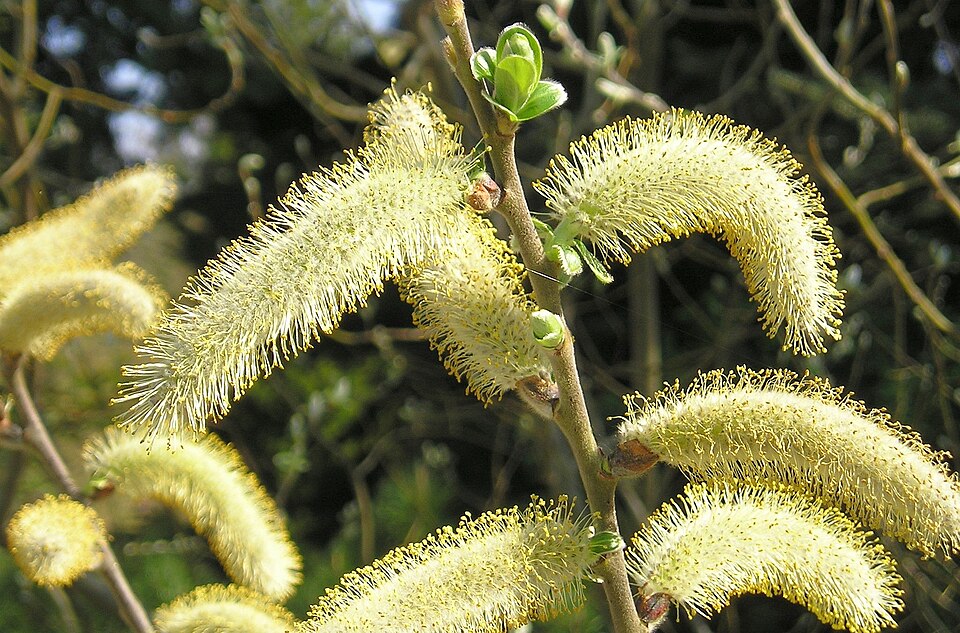
Salix lucida subsp. lasiandra
(Benth.) E. Murr.
Yellow willow, Pacific willow, Western black willow
iNaturalist· cc-by-nc-nd
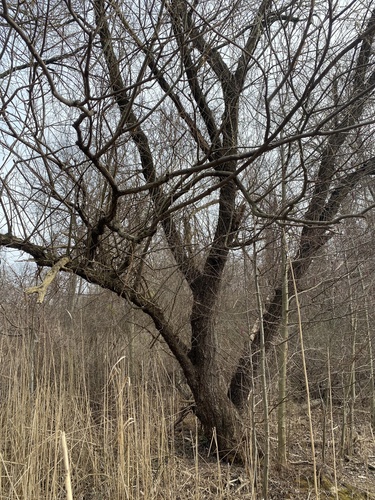
(c) Ed Morris, some rights reserved (CC BY-NC-ND), uploaded by Ed Morris
iNaturalist· cc-by-nc
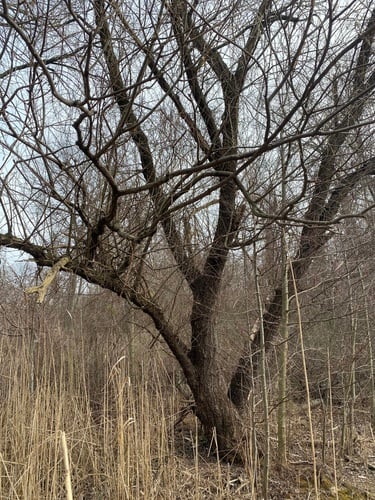
(c) Mireille Delisle-Oldham, some rights reserved (CC BY-NC), uploaded by Mireille Delisle-Oldham
iNaturalist· cc-by-nc
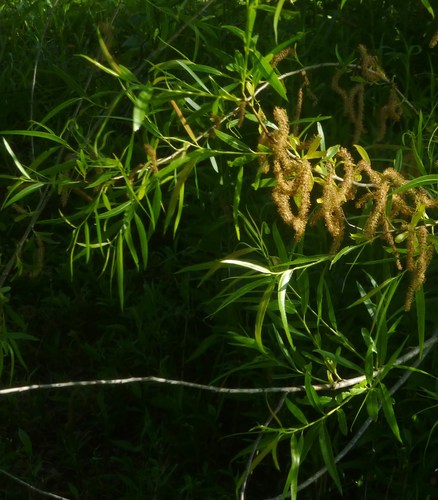
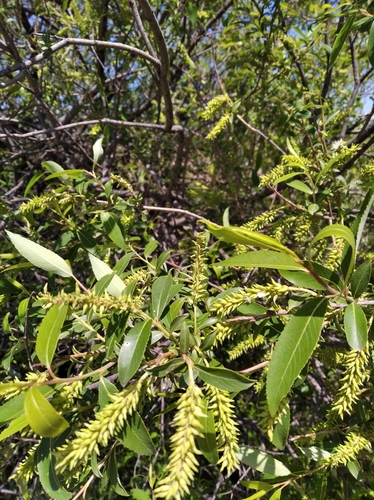
(c) Grant Fessler, some rights reserved (CC BY-NC), uploaded by Grant Fessler
Summary
Source: WikipediaSalix lucida, the shining willow, Pacific willow, red willow, or whiplash willow, is a species of willow native to northern and western North America, occurring in wetland habitats. It is the largest willow found in British Columbia. It is a deciduous large shrub or small tree growing to 4–15 metres (13–49 ft) tall. The shoots are greenish-brown to grey-brown. The leaves are narrow elliptic to lanceolate, 4–17 centimetres (1+1⁄2–6+1⁄2 in) long and 1–3.5 cm (1⁄2–1+1⁄2 in) broad, glossy dark green above, usually glaucous green below, hairless or thinly hairy. The flowers are yellow catkins 1–9 cm (1⁄2–3+1⁄2 in) long, produced in late spring after the leaves emerge. The subspecies are: S. l. lucida – shining willow, Newfoundland west to eastern Saskatchewan, and south to Maryland and South Dakota S. l. lasiandra (Benth.) E.Murray (syn. S. lasiandra Benth.) – Pacific willow, Alaska east to Northwest Territory, and south to California and New Mexico. S. l. caudata (Nutt.) E.Murray – whiplash willow, interior western North America from eastern British Columbia south to eastern California and Nevada, included in S. l. lasiandra by some authors. It is closely related to Salix pentandra of Europe and Asia.
Description
A temperate shrub or small tree in the Salicaceae family.
This description is brief — help expand it
Edible Uses
The inner bark and leaves are edible.
Distribution
It is a temperate plant.
Where It Grows
Australia, Canada, North America, USA,
Notes
There are about 300 Salix species.
Synonyms
References (3)
- Farrar, J.L., 1995, Trees of the Northern United States and Canada. Iowa State University press/Ames p 322
- Plants for a Future database, The Field, Penpol, Lostwithiel, Cornwall, PL22 0NG, UK. http://www.scs.leeds.ac.uk/pfaf/
- Pl. hartw. 335. 1857