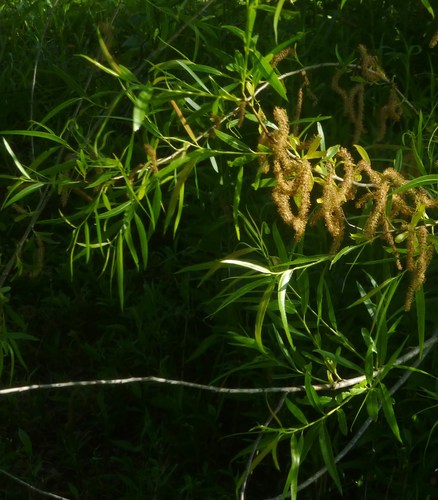
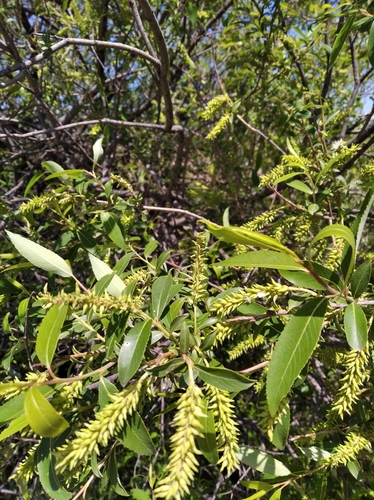
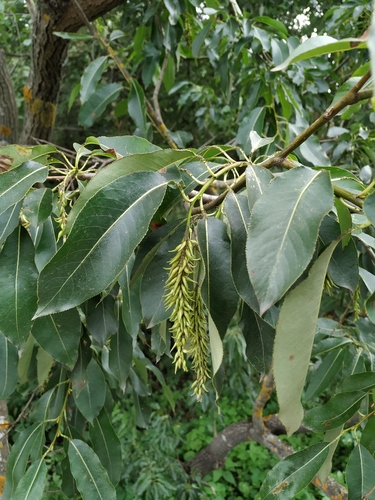
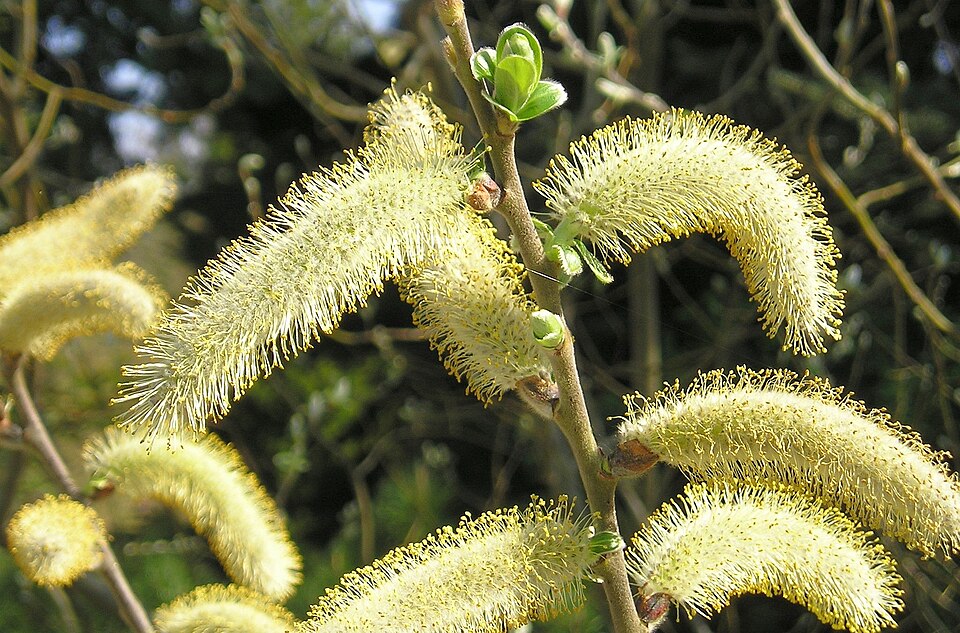
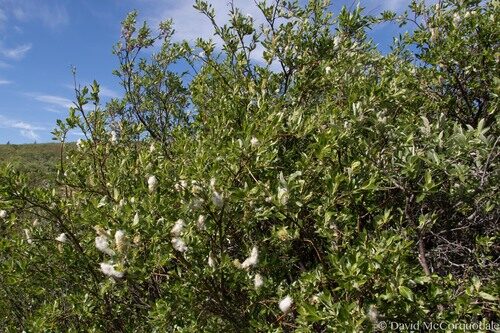
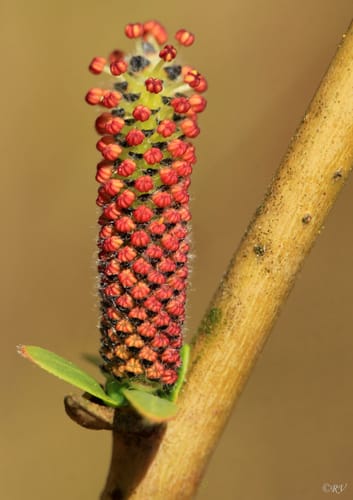
Salix exigua var. hindsiana
(Benth.) Dorn
Hind's willow
iNaturalist· cc-by-nc
(c) wyatthersey, some rights reserved (CC BY-NC)
iNaturalist· cc-by-nc-sa
(c) 1998 California Academy of Sciences, some rights reserved (CC BY-NC-SA)
iNaturalist· cc-by-sa
(c) Stan Shebs, some rights reserved (CC BY-SA)
Summary
Source: WikipediaSalix exigua (sandbar willow, narrowleaf willow, or coyote willow; syn. S. argophylla, S. hindsiana, S. interior, S. linearifolia, S. luteosericea, S. malacophylla, S. nevadensis, and S. parishiana) is a species of willow native to most of North America except for the southeast and far north, occurring from Alaska east to New Brunswick, and south to northern Mexico. It is considered a threatened species in Massachusetts while in Connecticut, Maryland, and New Hampshire it is considered endangered.
Description
A tree in the Salicaceae family found in temperate regions. A sweet sticky substance from this plant is traditionally eaten.
This description is brief — help expand it
Edible Uses
The sweet sticky substance is eaten.
Traditional Uses
The sweet sticky substance is eaten.
This uses section is brief — help expand it
Medicinal Uses
This willow has many uses for Native Americans; the branches are used as flexible poles and building materials, the smaller twigs are used to make baskets, the bark is made into cord and string, and the bark and leaves have several medicinal uses. The Zuni people take an infusion of the bark for coughs and sore throats. The foliage is browsed by livestock.
Distribution
It is a temperate plant.
Where It Grows
North America, USA,
Synonyms
References (1)
- Moerman, D. F., 2010, Native American Ethnobotany. Timber Press. p 503 (As Salix hindsiana)