Salicornia europaea
L.
Glasswort, Marsh Samphire, Sea samphire, Saltwort
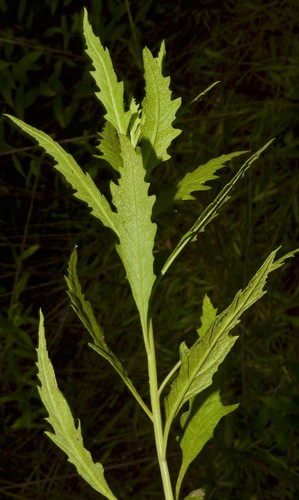
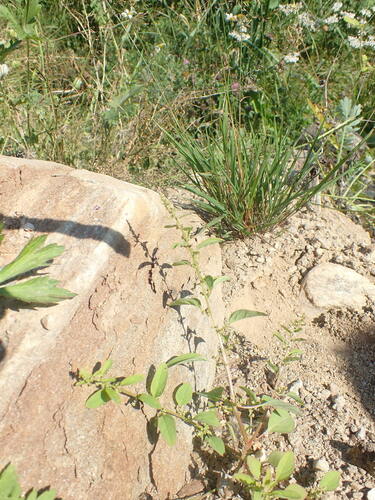
iNaturalist· cc-by-nc
(c) Сергей, some rights reserved (CC BY-NC), uploaded by Сергей
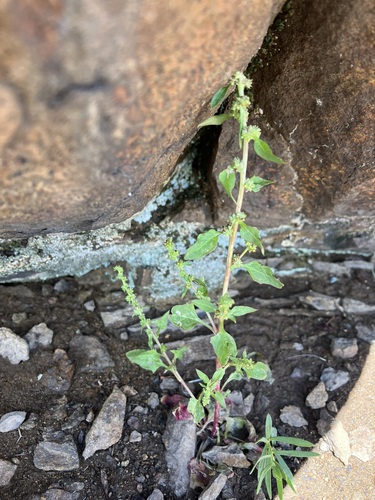
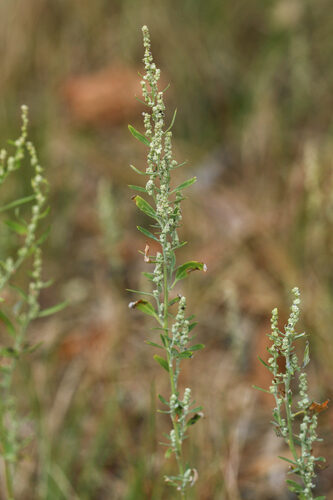
iNaturalist· cc-by-nc
(c) Anton Gjeldum, some rights reserved (CC BY-NC), uploaded by Anton Gjeldum
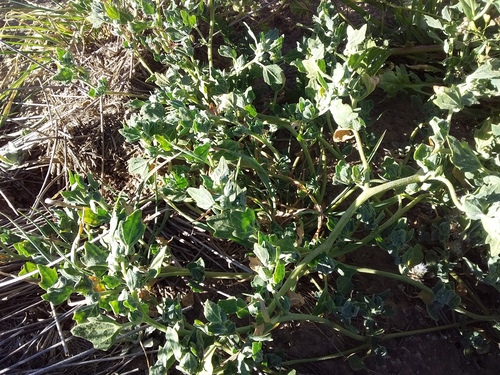
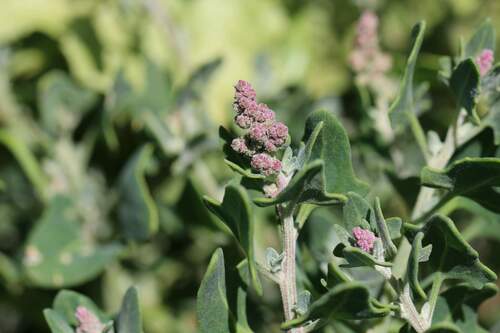
iNaturalist· cc-by-nc
(c) Дмитрий Епихин, some rights reserved (CC BY-NC), uploaded by Дмитрий Епихин
Summary
Source: WikipediaSalicornia europaea, known as marsh samphire, common glasswort or just glasswort, is a halophytic annual dicot flowering plant. Other common names include pickle weed, saltwort, and chicken toe (due to the shape). It is a succulent plant with high water content, accounting for its slightly translucent look (the source of the name 'glasswort'). It is found near saline water in Europe and is edible both raw and cooked.
Description
An annual herb. The stems let light through. It grows 50 cm tall. They are erect but can lie along the ground. The stems are green with a pink colour at flowering time. The leaves are opposite and like scales. The flowers are very small and in groups of three. They are green. They form a spike 10-50 mm long. The fruit are small and like seeds and 1-3 mm across. They are light brown.
Edible Uses
Young stems are eaten raw or cooked as a potherb, added to soups and similar dishes. The plant is at its best for eating in late summer. Stems are very succulent but have a thin woody core that is easily removed. For best results, harvest stems when about 15cm long, using the top 10cm and leaving the bottom 5cm to produce new shoots. They require little cooking — adding them to a soup for the last few minutes is sufficient. The plant has a salty flavour and makes a pleasant raw nibble. Young shoots can be pickled after first boiling them in their own salted water. The seed is rich in protein, though rather small and fiddly to use. An edible oil, high quality and similar to safflower oil (Carthamus tinctorius), is also obtained from the seed.
Traditional Uses
The roots are pickled and also used raw. The young stems can be eaten as a vegetable and taste like asparagus. They are used raw in salads, cooked as a potherb, pickled, added to soups or used as a garnish. For pickles the shoots are boiled in their own salty water then put into spiced oil or vinegar. The protein rich seeds are eaten. They can be refined for a high quality edible oil.
Medicinal Uses
None known.
Distribution
It is a temperate plant. It grows in alkaline and salty soil, salt-lake shores, and beaches. It can grow in arid places.
Where It Grows
Africa, Alaska, Australia, Bahrain, Britain, Canada, Caribbean, Central Asia, China, Egypt, Europe, France, Iran, Iraq, Israel, Japan, Jordan, Korea, Mediterranean, Mexico, Middle East, Netherlands, North Africa, North America, Russia, Saudi Arabia, Slovenia, Spain, Syria, Tajikistan, Turkey, Türkiye, USA,
Cultivation
Prefers a rich organic soil with ample nitrogen and regular watering. This species is little, if at all, cultivated and its exact requirements are not clearly understood. It is not known if the plant will require periodic inundation by salty water to grow well. Glasswort is difficult to grow in cultivation, it can succeed in gardens if sown as soon as the seed is ripe in the autumn in a well-drained soil. A very variable plant both in size and the number of branches produced - a number of subspecies are recognised. The best forms for food production are bushy plants up to 40cm tall with an upright habit that keeps the branches out of the mud. The form sometimes classed as a distinct species (as S. ramosissima Woods.) has this habit and habitat and so is the best form for using in cultivation experiments. When seeking seed for cultivation, try to collect from plants with this habit and also choose plants nearer the high tide mark that therefore receive less inundation. The edible leaves are occasionally sold in local markets.
Propagation
Seed is best sown in situ as soon as it is ripe, in a well-drained outdoor bed.
Other Uses
Burning this plant yields ashes that are rich in potash, used in making soap or glass. The ashes themselves can also be used directly as a soap.
Notes
Also put in the family Chenopodiaceae.
Synonyms
Also Known As
Deniz borulcesi, Perce-pierre, Pickle weed, Salicornia, Sea bean, Tungtungmadi, Zeekral
References (31)
- Alice, L. & O'Quinn, T., Australian Bush Superfoods. Explore Australia p 146
- Blamey, M and Grey-Wilson, C., 2005, Wild flowers of the Mediterranean. A & C Black London. p 39
- Bodkin, F., 1991, Encyclopedia Botanica. Cornstalk publishing, p 901
- Bremness, L., 1994, Herbs. Collins Eyewitness Handbooks. Harper Collins. p 268
- Bowser, M., 2017, Handout on Edible Plants of the Kenai Peninsula. USFWS Kenai National Wildlife Refuge p 9
Show all 31 references Hide references
- Centofanti, T. & Banuelos, G., 2019, Practical uses of Halophytic Plants as Sources of Food and Fodder. CAB International. p 329
- Cerne, M., 1992, Wild Plants from Slovenia used as Vegetables. Acta Horticulturae 318
- Dogan, Y., 2012, Traditionally used wild edible greens in the Aegean Region of Turkey. Acta Societatis Botanicorum Poloniae 81(4): 329-342
- Dogan, Y. et al, 2013, Wild Edible Plants sold in the Local Markets of Izmir, Turkey. Pak. J. Bot. 45(S1): 177-184
- Elias, T.S. & Dykeman P.A., 1990, Edible Wild Plants. A North American Field guide. Sterling, New York p 76
- Ertug, F., 2004, Wild Edible Plants of the Bodrum Area. (Mugla, Turkey). Turk. J. Bot. 28 (2004): 161-174
- Ertug, F, Yenen Bitkiler. Resimli Türkiye Florası -I- Flora of Turkey - Ethnobotany supplement
- Esperanca, M. J., 1988. Surviving in the wild. A glance at the wild plants and their uses. Vol. 1. p 387
- Facciola, S., 1998, Cornucopia 2: a Source Book of Edible Plants. Kampong Publications, p 222
- Hammer, K. & Spahillari, M., 1999, Crops of European origin. in Report of a networking group on minor crops. IPGRI p 46 (As Salicornia stricta)
- Heywood, V.H., Brummitt, R.K., Culham, A., and Seberg, O. 2007, Flowering Plant Families of the World. Royal Botanical Gardens, Kew. p 96
- Kim, H. & Song, M., 2013, Ethnobotanical analysis for traditional knowledge of wild edible plants in North Jeolla Province (Korea). Genetic. Resour. Crop Evol. (2013) 60:1571-1585
- Kiple, K.F. & Ornelas, K.C., (eds), 2000, The Cambridge World History of Food. CUP p 1778
- Mabey, R., 1973, Food for Free. A Guide to the edible wild plants of Britain, Collins. p 108
- Michael, P., 2007, Edible Wild Plants and Herbs. Grub Street. London. p 98
- Plants for a Future database, The Field, Penpol, Lostwithiel, Cornwall, PL22 0NG, UK. http://www.scs.leeds.ac.uk/pfaf/
- Roshandel, P. & Shamsi, F., 2015, Analysis of oilseed of Halophytic species: Atriplex griffithii, Haloxylon ammodendron, Salicornia europaea, Salsola yazdiana. Journal of Advanced Laboratory Research in Biology. Volume 6, Issue 3; pp 83-88
- Royal Botanic Gardens, Kew (1999). Survey of Economic Plants for Arid and Semi-Arid Lands (SEPASAL) database. Published on the Internet; http://www.rbgkew.org.uk/ceb/sepasal/internet [Accessed 8th April 2011]
- Schneider, E., 2001, Vegetables from Amaranth to Zucchini: The essential reference. HarperCollins. p 548
- Sp. pl. 1:3. 1753
- Tanaka,
- Vorstenbosch, T., et al, 2017, Famine food of vegetal origin consumed in the Netherlands during World War II. Journal of Ethnobiology and Ethnomedicine (2017) 13:63
- Wiersema, J. H. & Leon, B., 2013, World Economic Plants. A Standard Reference CRC Press. 2nd Ed. p 605
- World Checklist of Useful Plant Species 2020. Royal Botanic Gardens, Kew
- www.eFloras.org Flora of China
- Zhu Gelin (Chu Ge-ling); Steven E. Clemants, CHENOPODIACEAE [Draft], Flora of China