Salacca zalacca
(Gaertn.) Voss
Salak palm, Snake fruit palm
iNaturalist· cc-by-nc
(c) Rafael Ferro, some rights reserved (CC BY-NC), uploaded by Rafael Ferro
iNaturalist· cc-by
(c) Kristof Zyskowski, some rights reserved (CC BY)
iNaturalist· cc-by-nc
(c) Yantza Farm, Zamora-Chinchipe, Ecuador, some rights reserved (CC BY-NC)
Summary
Source: WikipediaAn evergreen shrub reaching 4 m in height and spread, growing at a fast rate and hardy to UK zone 10. Flowers are insect-pollinated. The plant suits light sandy and medium loamy well-drained soils in mildly acidic to neutral conditions, tolerating very acidic soils. It grows in semi-shade or full sun and prefers moist soil.
Description
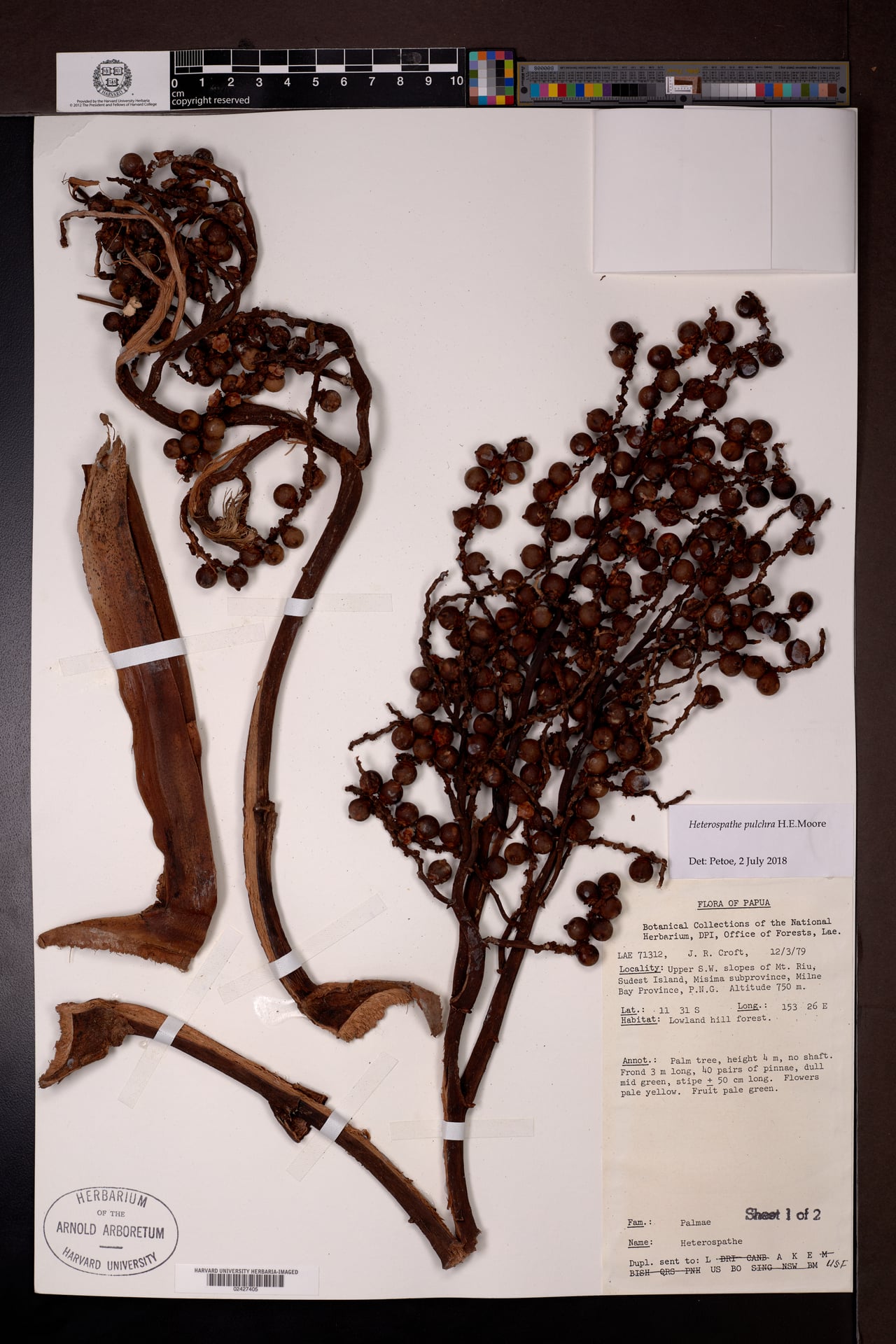
A clumping palm. The trunk is underground. It branches. The plant is covered with long, black, sharp spines. The fronds are erect and 4-6 m long. The leaf stalk is about 2 m long and has large flattened spines. The fronds have leaflets along the stalk. These are in rings. The leaflets are 60 cm long by 5 cm wide. They taper to the tip. They are shiny green above and greyish underneath. Male and female flowers occur on different plants. One cultivar from Bali has male and female flowers on the one plant. The flowering stalks are branched and without spines. The male flower stalks are drooping and 50-100 cm long. The female flowers are in crowded spikes and are 20-30 cm long. The fruit are carried in small clusters between the bases of the leaves. The fruit are 4-8 cm long and pear shaped. They are covered with overlapping brown scales which give it an appearance like a snake skin. The pulp is firm and tart. There is one seed inside.
Edible Uses
The fruit is eaten raw and is considered one of the finest palm fruits for this purpose. It has an exceptionally firm, crisp texture with a delicious blend of acids and sugars reminiscent of apple. Fully ripe fruit is quite sweet, while unripe fruit is sour and astringent due to traces of tannic acid. The reddish-brown, ovoid fruit measures 6–8cm in diameter. In Indonesia, fruits are also candied ('manisan salak'), pickled ('asinan salak'), or used fresh and unripe in 'rujak', a spicy salad of unripe fruits. The seed is also edible, and the seed kernels of young fruits from the Javanese 'Pondoh' form are particularly noted as edible.
Traditional Uses
The ripe fruit are eaten fresh or used in preserves. The unripe fruit can be made into pickles. They are pickled as the ripe fruit only last a few days. The growing tip or cabbage can be cooked and eaten.
Medicinal Uses
None known.
Distribution
A tropical plant. It does best in lowland tropical areas. It usually grows in marshy ground. Plants can tolerate full sun from an early age. It needs a temperature about 30°C. In Cairns Botanical gardens (As Salacca edulis).
Where It Grows
Asia, Australia, Brazil, Colombia, Fiji, FSM, India, Indochina, Indonesia*, Malaysia, Myanmar, Pacific, Papua New Guinea, PNG, Philippines, Pohnpei, SE Asia, South America, Thailand, Timor-Leste,
Cultivation
Plants are grown from seeds. They are planted into moist or wet soil. Suckers can also be planted.
Propagation
Pre-soak seeds for 24 hours in warm water before sowing in containers. Seed must be fresh and takes 2–3 months to germinate. Seeds can be sown directly in the field, placing 2–5 seeds together in holes 5cm deep, or started in nursery beds. Seedlings are transplanted to the field during the rainy season when a few months old. Germination is visible when the cylindrical embryo-containing plug is pushed out through the germpore at the top of the kernel. A radicle emerges from the tip of this plug, followed by the shoot, a main root, and several secondary roots from the plug's sides. About 60–90 days after sowing, the first complete leaf — bifid and roughly 20–30cm long — is fully expanded, with the seedling still attached to the kernel. The plant can also be propagated by division of suckers.
Other Uses
Closely planted rows of these palms form an impregnable hedge, and the very spiny leaves are also cut and used to construct fences. The bark of the petioles can be used for matting, and the leaflets are used for thatching.
Production
Male and female plants are normally needed to get fertile seed and fruit. Insects pollinate the plants. Sometimes single plants can fruit. Plants respond to regular applications of fertiliser. Flower production is improved in old fronds and debris is removed.
Other Information
It is cultivated.
Notes
Fruit are high in folates 27μg/100.
Nutrition
| Part | Moisture | kJ | kcal | Protein | Vit A | Vit C | Iron | Zinc |
|---|---|---|---|---|---|---|---|---|
| Fruit | 80 | — | 77 | 0.7 | — | 4 | 0.3 | — |
Synonyms
Also Known As
Fruta cobra, Ke shi sa la zong, Palmier a peau de serpent, Ragum, Rakam, Sala, Salaca, Salak jawa, Salak pasir, Salakpalme, Sarakka yashi, Yingan, Yingaw, Yin-ngan
References (47)
- AAK, 1980, Bertanam Pohon Buah-buahan. Penerbitan Yayasan Kanisius, Jogyakarta. p 70 (As Salacca edulis)
- Arora, R. K., 2014, Diversity in Underutilized Plant Species - An Asia-Pacific Perspective. Bioversity International. p 85 (Also as Salaca edulis)
- Balick, M.J. and Beck, H.T., (Ed.), 1990, Useful palms of the World. A Synoptic Bibliography. Colombia p 412 (As Salacca edulis), 458,
- Blench, R., 2004, Fruits and Arboriculture in the Indo-Pacific Region. Indo-Pacific Prehistory Association Bulletin 24. (Taipei Papers Volume 2) p 40
- Blomberry, A. & Rodd, T., 1982, Palms. An informative practical guide. Angus & Robertson. p 166 (As Salacca edulis), 122,
Show all 47 references Hide references
- Burkill, I.H., 1966, A Dictionary of the Economic Products of the Malay Peninsula. Ministry of Agriculture and Cooperatives, Kuala Lumpur, Malaysia. Vol 2 (I-Z) p 2324 (As Zalacca edulis)
- Coronel, R.E., 1982, Fruit Collections in the Philippines. IBPGR Newsletter p 8 (As Salacca edulis)
- Darley, J.J., 1993, Know and Enjoy Tropical Fruit. P & S Publishers. p 83 (As Salacca edulis)
- Facciola, S., 1998, Cornucopia 2: a Source Book of Edible Plants. Kampong Publications, p 31 (As Salacca edulis)
- Haynes, J., & McLaughlin, J., 2000, Edible palms and Their Uses. University of Florida Fact sheet MCDE-00-50-1 p 13
- Hedrick, U.P., 1919, (Ed.), Sturtevant's edible plants of the world. p 691 (As Zalacca edulis)
- Hibbert, M., 2002, The Aussie Plant Finder 2002, Florilegium. p 283
- Jacquat, C., 1990, Plants from the Markets of Thailand. D.K. Book House p 110
- Janick, J. & Paul, R. E. (Eds.), 2008, The Encyclopedia of Fruit & Nuts. CABI p 153
- Jiwajinda, S., et al, 2002, Suppressive Effects of Edible Thai Plants on Superoxide and Nitric Oxide Generation. Asian Pacific Journal of Cancer Prevention, Vol 3, 2002 (As Salacca rumphii)
- Johnson, D.V., 1998, Tropical palms. Non-wood Forest products 10. FAO Rome. p 48, 123, 134
- Jones, D.L., 1994, Palms throughout the World. Smithtonian Institution, Washington. p 54, 56, 354
- Kiple, K.F. & Ornelas, K.C., (eds), 2000, The Cambridge World History of Food. CUP p 1847 (As Salacca edulis)
- Lembaga Biologi Nasional, 1977, Buah-Buahan, Balai Pustaka, Jakarta. p 112(As Salacca edulis)
- Macmillan, H.F. (Revised Barlow, H.S., et al) 1991, Tropical Planting and Gardening. Sixth edition. Malayan Nature Society. Kuala Lumpur. p 307
- Martin, F. W., et al, 1987, Perennial Edible Fruits of the Tropics. USDA Handbook 642 p 49 (As Salacca edulis)
- Martin, F.W. & Ruberte, R.M., 1979, Edible Leaves of the Tropics. Antillian College Press, Mayaguez, Puerto Rico. p 211 (As Salacca edulis)
- Menninger, E.A., 1977, Edible Nuts of the World. Horticultural Books. Florida p 141 (As Salacca edulis)
- Milow, P., et al, 2013, Malaysian species of plants with edible fruits or seeds and their evaluation. International Journal of Fruit Science. 14:1, 1-27
- Ochse, J. J. et al, 1931, Vegetables of the Dutch East Indies. Asher reprint. p 574 (As Salacca edulis)
- Owen, S., 1993, Indonesian Food and Cookery, INDIRA reprints. p 81(As Salacca edulis)
- Priyadi, H., et al, Five hundred plant species in Gunung Halimun Salak National Park West Java. A checklist including Sundanese names, distribution and use. CIFOR, FFPRI, SLU p 149
- PROSEA No. 2
- Purseglove, J.W., 1972, Tropical Crops. Monocotyledons. Longmans p 433(As Salacca edulis)
- Riffle, R.L. & Craft, P., 2003, An Encyclopedia of Cultivated Palms. Timber Press. p 450
- Roa, J. A. G. & Boada, D. S. G., 2018, Fundación para el Fortalecimiento de la Fruticultura y Plantas Alimenticias no Convencionales en Colombia.
- Romanowski, N., 2007, Edible Water Gardens. Hyland House. p 114
- Solomon, C., 2001, Encyclopedia of Asian Food. New Holland. p 326 (As Salacca edulis)
- Striegel, L., et al, 2019, Promising Tropical Fruits High in Folates. Foods 2019, 8, 363; doi:10.3390/foods8090363. www.mdpi.com/journal/foods
- Sukarya, D. G., (Ed.) 2013, 3,500 Plant Species of the Botanic Gardens of Indonesia. LIPI p 817 (Also as Salacca edulis)
- Tankard, G., 1990, Tropical fruit. An Australian Guide to Growing and using exotic fruit. Viking p 96 (As Salacca edulis)
- Tate, D., 1999, Tropical Fruit. Archipelago Press. Singapore. p 86
- Terra, G.J.A., 1973, Tropical Vegetables. Communication 54e Royal Tropical Institute, Amsterdam, p 71 (As Salacca edulis)
- TodaFruta.com.br (As Salacca edulis)
- USDA, ARS, National Genetic Resources Program. Germplasm Resources Information Network - (GRIN). [Online Database] National Germplasm Resources Laboratory, Beltsville, Maryland. Available: www.ars-grin.gov/cgi-bin/npgs/html/econ.pl (10 April 2000)
- van Wyk, B., 2005, Food Plants of the World. An illustrated guide. Timber press. p 334
- Vilm. Blumengaurtn. ed. 3, 1:1152. 1895 "Zalacca zalacca"
- Wickens, G.E., 1995, Edible Nuts. FAO Non-wood forest products. FAO, Rome. p170
- Wiersema, J. H. & Leon, B., 2013, World Economic Plants. A Standard Reference CRC Press. 2nd Ed. p 604
- World Checklist of Useful Plant Species 2020. Royal Botanic Gardens, Kew
- Zawiah, N. & Othaman, H., 2012, 99 Spesies Buah di FRIM. Institut Penyelidikan Perhutanan Malaysia. p 202
- Zeven, A. C. & de West, J. M. J., 1982, Dictionary of cultivated plants and their regions of diversity. Wageningen. p 61 (As Salacca edulis)