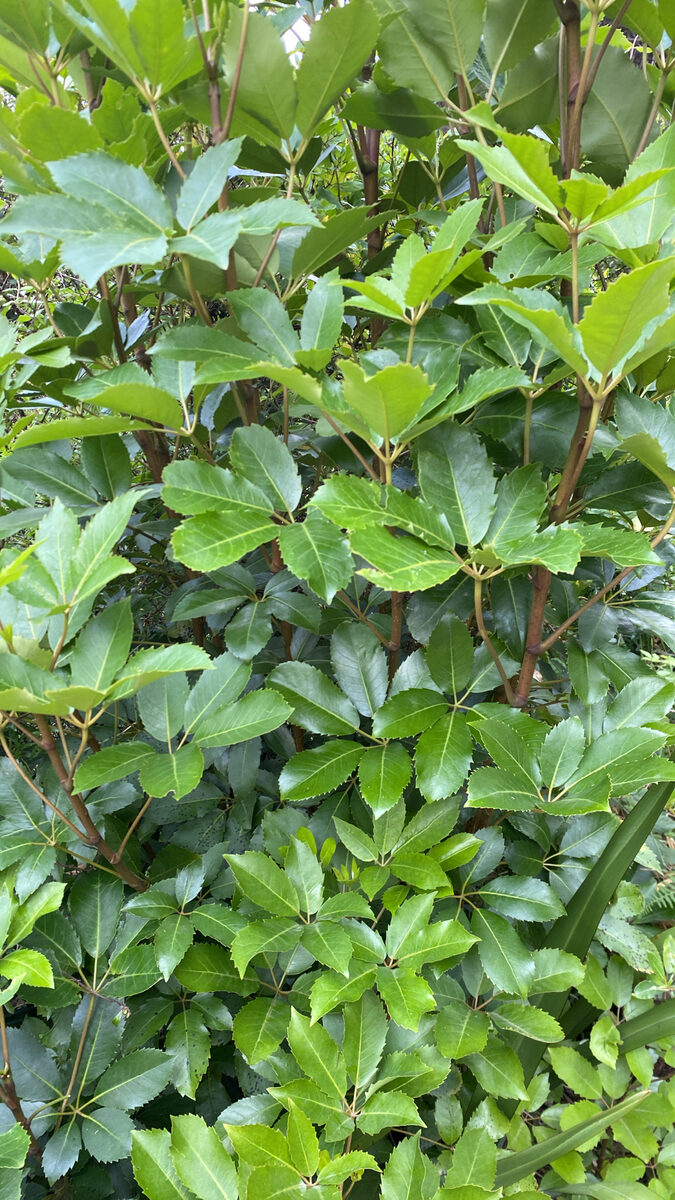
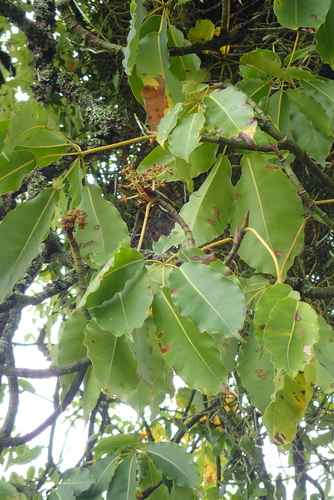
Aralia chinensis
L.
Chinese angelica tree
iNaturalist· cc-by-nc
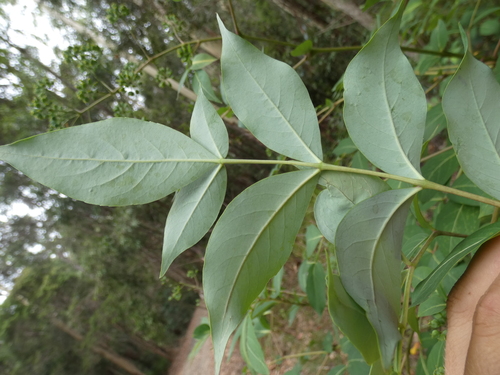
(c) miaochunyu, some rights reserved (CC BY-NC), uploaded by miaochunyu
iNaturalist· cc-by-nc
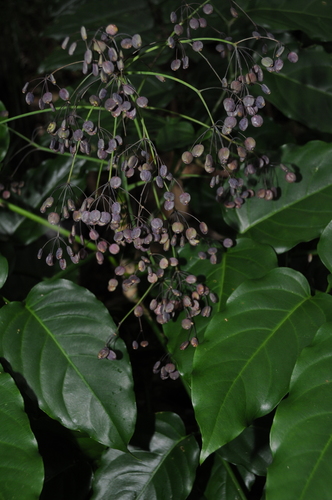
(c) MP Zhou, some rights reserved (CC BY-NC), uploaded by MP Zhou
iNaturalist· cc-by-nc
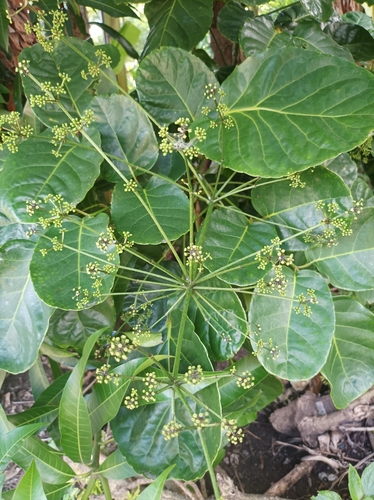
(c) MP Zhou, some rights reserved (CC BY-NC), uploaded by MP Zhou
Summary
Source: WikipediaAralia chinensis (known as Chinese angelica-tree, syn. Aralia sinensis hort.) is a species of the family Araliaceae native to China, Vietnam, and Borneo.
Description
A tall shrub or small tree. It grows 9 m tall. It spreads about 9 m wide. It develops suckers freely. The leaves are up to 1 m long and are twice divided into leaflets along the stalk. The leaves are 0.6 m wide. The flowers are off-white. They are small but occur in large panicles. Some consider it a deciduous form of Aralia elata.
Edible Uses
Edible Parts: Leaves Shoots Edible Uses: Young shoots - cooked. Used as a vegetable. Blanched and used in salads. Although no records of edibility have been seen for the seed, it is said to contain 5.8 - 17.5% protein, 4.2 - 46.3% fat and 3.7 - 5.7% ash.
Traditional Uses
The young unfolding leaves are used as a potherb. They are used in stir fry dishes or eaten fresh.
This uses section is brief — help expand it
Medicinal Uses
Anodyne Carminative Diuretic Sialagogue The stem and root are anodyne and carminative. It is used as a warming painkilling herb in the treatment of rheumatoid arthritis. The root is also considered to be useful in the treatment of diabetes and dysmenorrhoea. Some caution is advised since the bark is considered to be slightly poisonous. The stembark is diuretic and sialagogue.
Known Hazards
The bark is considered to be slightly poisonous.
Distribution
A temperate plant. It grows in warmer areas of China. It grows in wetlands. It suits hardiness zones 7-10. It grows in Yunnan and Sichuan.
Where It Grows
Asia, Australia, Britain, China, Europe, Himalayas, Indochina, Laos, SE Asia, Tibet,
Cultivation
Prefers a good deep loam and a semi-shady position. Requires a sheltered position. Plants are hardier when grown in poorer soils. The young growth in spring, even on mature plants, is frost-tender and so it is best to grow the plants in a position sheltered from the early morning sun. This species is closely allied to A. elata. A very ornamental plant.
Propagation
Seed - best sown as soon as ripe in a cold frame. Stored seed requires 3 - 5 months of cold stratification. Germination usually takes place within 1 - 4 months at 20°c. When large enough to handle, prick the seedlings out into individual pots and grow them on in light shade in a greenhouse for at least their first winter. Once the plants are 25cm or more tall, they can be planted out into their permanent positions, late spring or early summer being the best time to do this. Root cuttings 8cm long, December in a cold frame. Store the roots upside down in sand and pot up in March/April. High percentage. Division of suckers in late winter. Very easy, the suckers can be planted out direct into their permanent positions if required.
Other Uses
None known Special Uses
Production
In Yunnan they are picked in April and May.
Other Information
The leaves are commonly eaten.
Notes
There are about 40-55 Aralia species.
Synonyms
Also Known As
Ci long pao, Gege, Liamu, MumIan Tou
References (17)
- Altschul, S.V.R., 1973, Drugs and Foods from Little-known Plants. Notes in Harvard University Herbaria. Harvard Univ. Press. Massachusetts. no. 3121
- Anderson, E. F., 1993, Plants and people of the Golden Triangle. Dioscorides Press. p 202
- Bircher, A. G. & Bircher, W. H., 2000, Encyclopedia of Fruit Trees and Edible Flowering Plants in Egypt and the Subtropics. AUC Press. p 37
- Cundall, P., (ed.), 2004, Gardening Australia: flora: the gardener's bible. ABC Books. p 170
- Etherington, K., & Imwold, D., (Eds), 2001, Botanica's Trees & Shrubs. The illustrated A-Z of over 8500 trees and shrubs. Random House, Australia. p 97
Show all 17 references Hide references
- Hu, Shiu-ying, 2005, Food Plants of China. The Chinese University Press. p 585
- Ju, Y., et al, 2013, Eating from the wild: diversity of wild edible plants used by Tibetans in Shangri-la region, Yunnan, China, Journal of Ethnobiology and Ethno medicine 9:28
- Kang, Y., et al, 2012, Wild food plants and wild edible fungi in two valleys on the Qinling Mountains (Shaanxi, central China) Journal of Ethnobiology and Ethnomedicine; 9:26
- Kang, Y., et al, 2012, Wild food plants and wild edible fungi of Heihe valley (Qinling Mountains, Shaanxi, central China): Herbophilia and indifference to fruits and mushrooms. Acta Societas Botanicorum Poloniae 81(4):4-5-413
- Kang, J. et al, 2016, Wild food plants and fungi used in the mycophilous Tibetan community of Zhagana (Tewo Country, Gansu, China) Journal of Ethnobiology and Ethnomedicine. 12:21
- Kang, Y., et al, 2014, Wild food plants used by the Tibetans of Gongba Valley (Zouqu country, Gansu, China) Journal of Ethnobiology and Ethnomedicine 10:20
- Plants for a Future database, The Field, Penpol, Lostwithiel, Cornwall, PL22 0NG, UK. http://www.scs.leeds.ac.uk/pfaf/
- Sp. pl. 1:273. 1753
- Wang, J. et al, 2013, A Study on the Utilization of Wild Plants for Food in Liangshan Yi Autonomous Prefecture. Plant Diversity and Resources. 35(4): 416-471
- Wang, J., et al, 2020, An ethnobotanical survey of wild edible plants used by the Yi people of Liangshan Prefecture, Sichuan Province, China. Journal of Ethnobiology and Ethnomedicine 16:10
- Zhang, L. et al, 2013, An Ethnobotanical Study of Traditional Edible Plants Used by Naxi People in Northwestern Yunnan, China. - A Case Study in Wenhai Village. Plant Diversity and Resources. p 5
- Zhang, L., et al, 2016, Ethnobotanical study of traditional edible plants used by the Naxi people during droughts. Journal of Ethnobiology and Ethnomedicine. 12:39