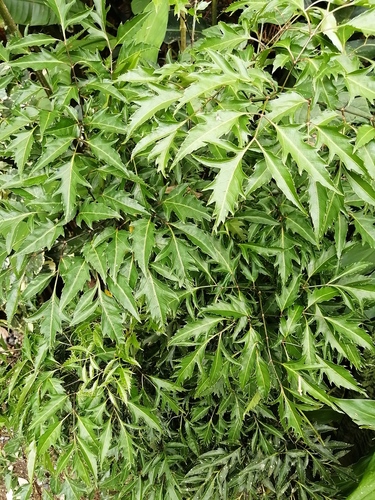
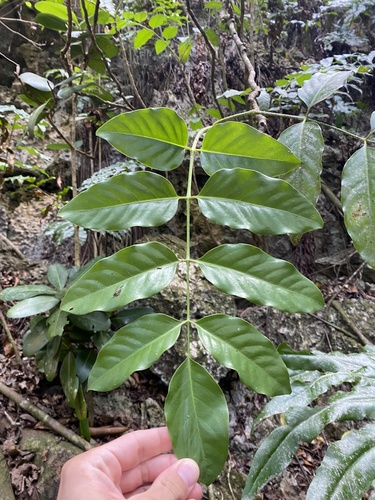
Eleutherococcus divaricatus
(Siebold & Zucc.) S.Y.Hu
O-ukogi
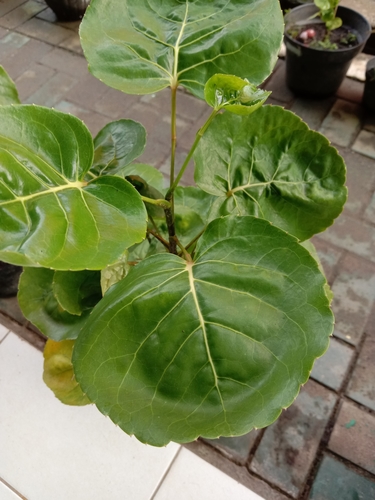
iNaturalist· cc-by-nc
(c) Keita Watanabe, some rights reserved (CC BY-NC)
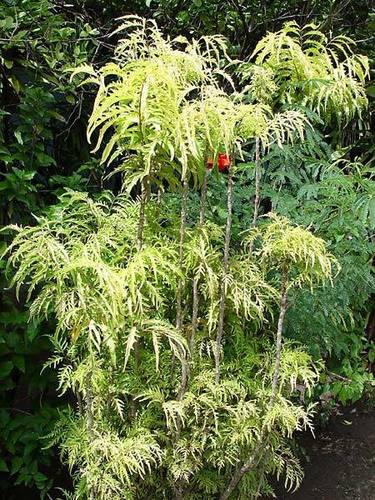
wikimedia· cc-by-sa
Wikimedia Commons - Krzysztof Ziarnek, Kenraiz
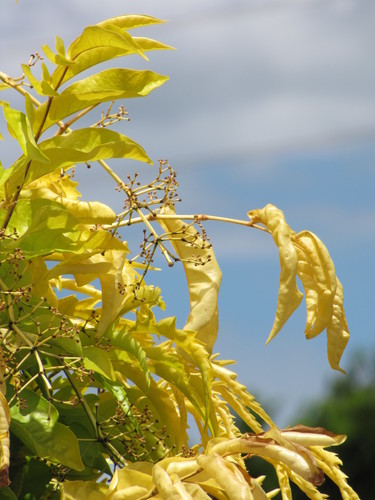
wikimedia· cc-by-sa
Wikimedia Commons - Krzysztof Ziarnek, Kenraiz
Summary
A deciduous shrub reaching 11.5 feet tall with both male and female organs per flower. Blooms August to September. Hardy to UK zone 6. Tolerates light, medium, or heavy soils and poor soil conditions. Grows in acidic to alkaline pH ranges. Can grow in semi-shade or full sun. Prefers moist soil and tolerates air pollution.
Description
A deciduous shrub reaching 11.5 feet tall with both male and female organs per flower. Blooms August to September. Hardy to UK zone 6. Tolerates light, medium, or heavy soils and poor soil conditions. Grows in acidic to alkaline pH ranges. Can grow in semi-shade or full sun. Prefers moist soil and tolerates air pollution.
Edible Uses
The leaves are cooked — parboiled, then dried and used as a winter vegetable. They are also used as a condiment. Dried leaves make a tea substitute.
Traditional Uses
The leaves are partly boiled and then dried for use as a winter vegetable. It is also used for seasoning sake wine. The dried leaves are used as a tea substitute.
Medicinal Uses
None known.
Distribution
It is a temperate plant.
Where It Grows
Asia, China, Japan, Korea,
Propagation
Seed is best sown as soon as it is ripe in autumn in a cold frame, though it can be slow to germinate. Stored seed requires 6 months of warm stratification followed by 3 months of cold stratification and may be very slow to germinate. Prick seedlings out into individual pots when large enough to handle and grow on in light shade in a cold frame or greenhouse for at least the first winter. Plant out in late spring or early summer. Cuttings of half-ripe wood can be taken in July/August in a frame. Cuttings of ripe wood from the current season's growth, 15–30cm long, can be rooted in a cold frame. Root cuttings can be taken in late winter. Suckers can be divided during the dormant season.
Other Uses
None known.
Synonyms
References (4)
- Facciola, S., 1998, Cornucopia 2: a Source Book of Edible Plants. Kampong Publications, p 25 (As Acanthopanax divaricatus)
- J. Arnold Arbor. 61:109. 1980
- Plants for a Future database, The Field, Penpol, Lostwithiel, Cornwall, PL22 0NG, UK. http://www.scs.leeds.ac.uk/pfaf/
- Tanaka,