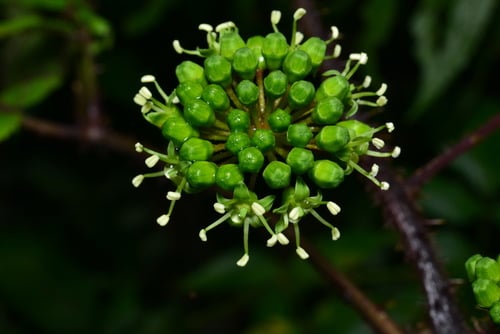
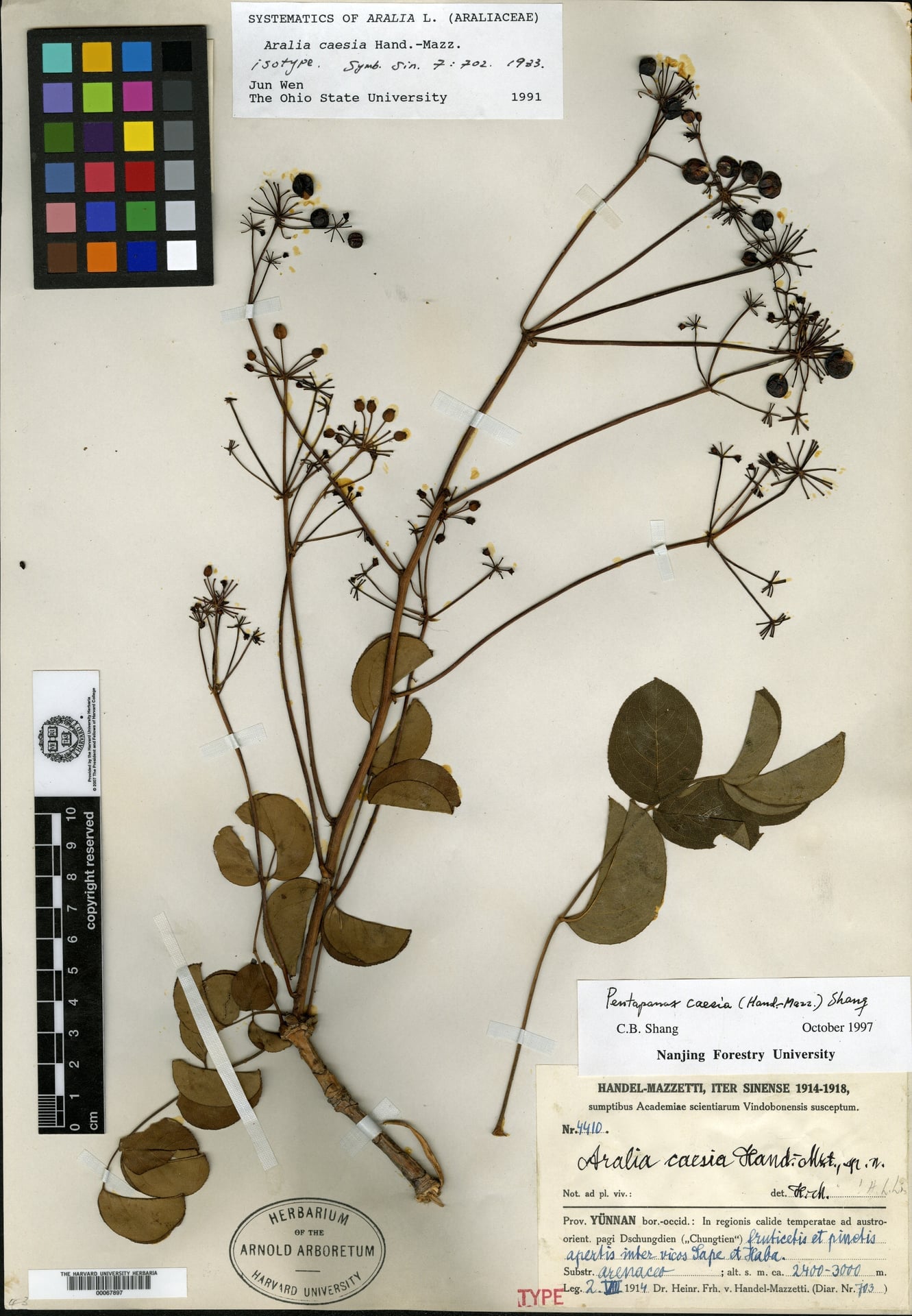
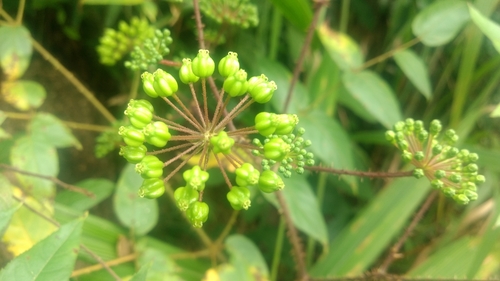
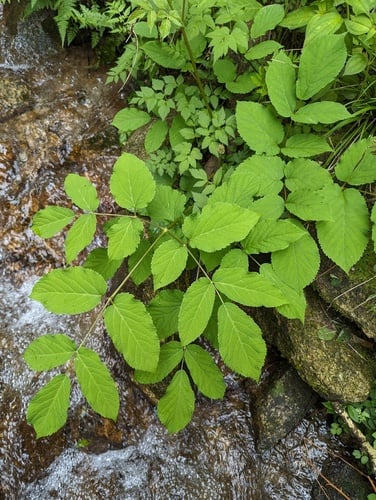
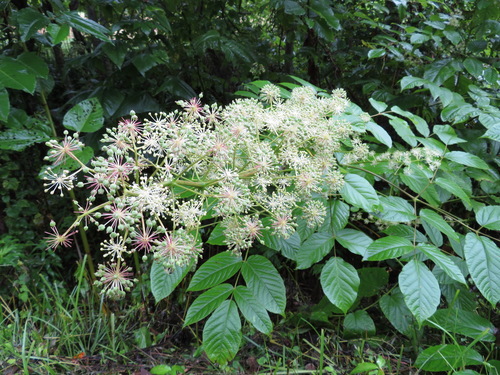
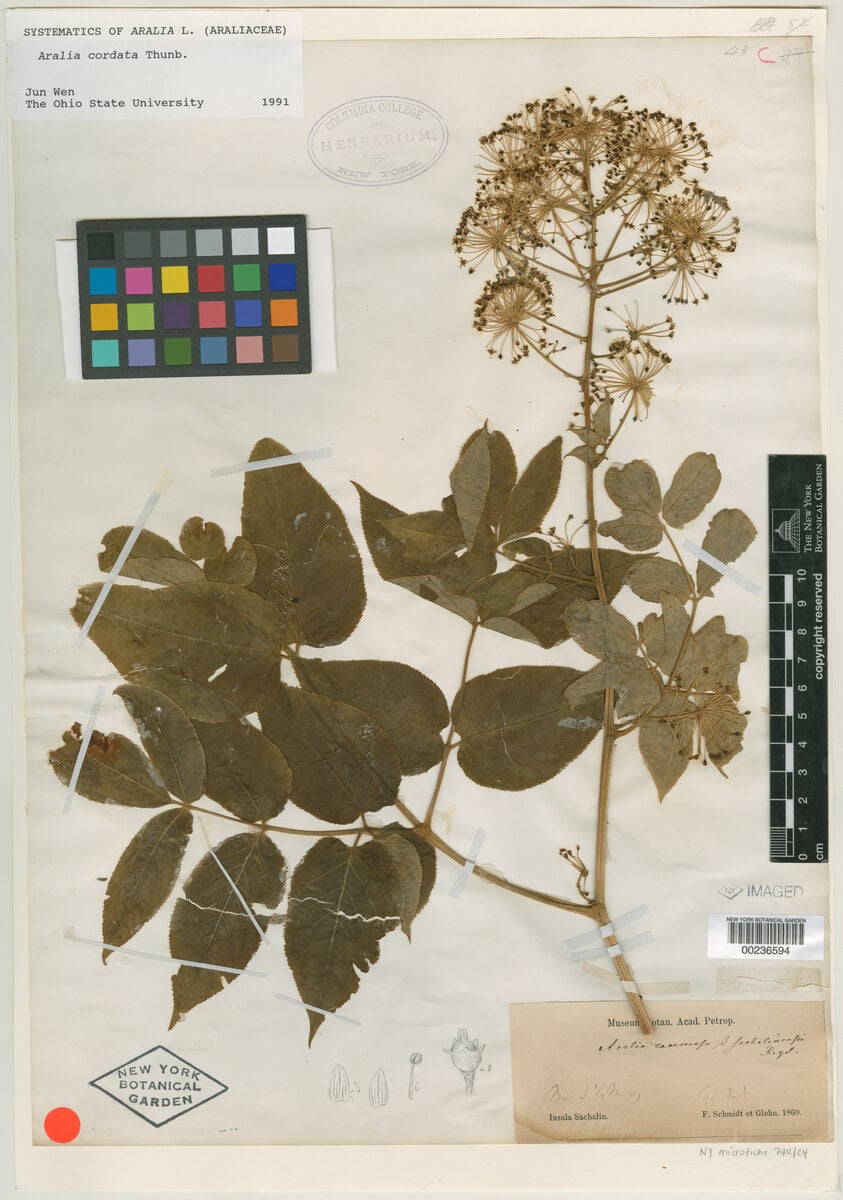
Eleutherococcus gracylistylus - (W.W.Sm.)S.Y.Hu.
(W.W.Sm.)S.Y.Hu.
Wu Jia Pi
gbif· cc0
Conveyor Belt
gbif· cc0
Conveyor Belt
gbif· cc0
Conveyor Belt
Description
Eleutherococcus gracylistylus is a deciduous Shrub growing to 3 m (9ft 10in). See above for USDA hardiness. It is hardy to UK zone 6. It is in flower in August. The species is hermaphrodite (has both male and female organs). Suitable for: light (sandy), medium (loamy) and heavy (clay) soils and can grow in nutritionally poor soil. Suitable pH: mildly acid, neutral and basic (mildly alkaline) soils. It can grow in semi-shade (light woodland) or no shade. It prefers moist soil. It can tolerate atmospheric pollution.
Edible Uses
Flowers. No more details are given.
Medicinal Uses
Antibacterial Antirheumatic Diuretic Miscellany. The leafy shoots are tonic and are also believed to alleviate internal injuries by dispelling blood. The root bark is antibacterial, antirheumatic and diuretic. It is used in the treatment of arthritis, backache and a host of other ailments. A medicinal wine made from it is commonly on sale in China. A decoction of the stem bark or the roots is used in the treatment of rheumatoid arthritis, aches and pains in the back and legs, open sores on the scrotum, beriberi and traumatic injuries. The plant is aphrodisiac, nutritive and tonic.
Distribution
E. Asia - China.
Where It Grows
Coming Soon
Cultivation
Succeeds in an open loamy soil, preferring a well-drained humus-rich soil in full sun. Tolerates poor soils and atmospheric pollution. Plants are hardy to at least -10 to -15°c if they are sheltered from cold winds. This species is closely related to E. sieboldianus.
Propagation
Seed - best sown as soon as it is ripe in the autumn in a cold frame. It can be slow to germinate. Stored seed requires 6 months warm followed by 3 months cold stratification and can be very slow to germinate. Prick out the seedlings into individual pots when they are large enough to handle and grow them on in light shade in a cold frame or greenhouse for at least the first winter. Plant out in late spring or early summer. Cuttings of half-ripe wood, July/August in a frame. Cuttings of ripe wood of the current season's growth, 15 - 30cm long in a cold frame. Root cuttings in late winter. Division of suckers in the dormant season.
Other Uses
Miscellany. None known