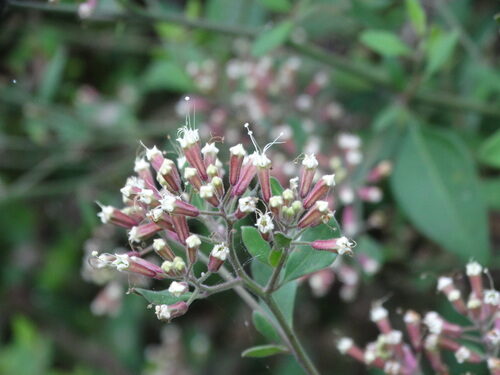
Abronia fragrans
Nutt. ex Hook.
Snowball sand verbena, Sweet sand-verbena
iNaturalist· cc-by-nc-sa
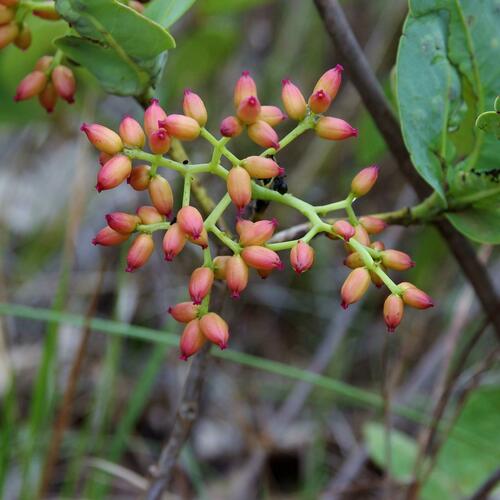
(c) Jerry Oldenettel, some rights reserved (CC BY-NC-SA)
iNaturalist· cc-by
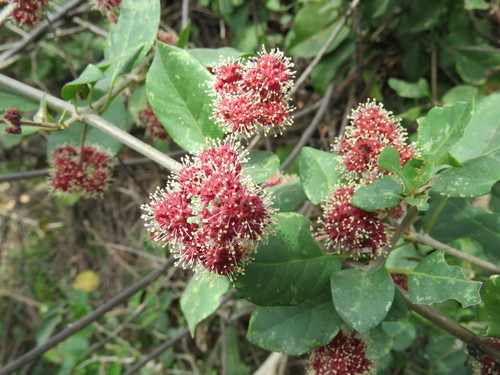
(c) Arches National Park, some rights reserved (CC BY)
iNaturalist· cc-by
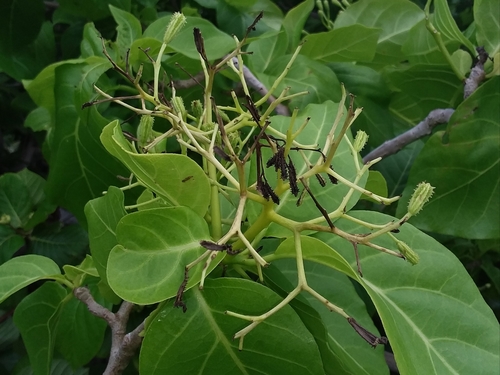
(c) Alex Abair, some rights reserved (CC BY), uploaded by Alex Abair
Summary
Source: WikipediaAbronia fragrans, the sweet sand-verbena, snowball sand-verbena, prairie snowball or fragrant verbena, is a species of sand verbena.
Description
A shrub or small tree. It grows 5 m tall. There are prickles along the stem. The leaves are twice divided and there are 8-18 pairs of pinnae. There are up to 50 pairs of pinnules on each pinnae. The flowers are yellow. They are in large clusters at the ends of branches. The pods are flattened.
Edible Uses
The root is edible when cooked — dried, ground into a powder, and mixed with corn. Some North American Indian tribes, including Navajo, Acoma, and Laguna peoples, occasionally used the roots this way, and its use was said to give one a good appetite and make them fat. When fresh, the roots are crisp and carrot-like with a mildly sweet, peppery undertone that can sting rather than pleasantly spice. Boiling softens the texture but does little to reduce the acrid flavor. More recent reports describe the roots as bitter, fibrous, and irritating with a sharp aftertaste. Leaves, stems, flowers, and seeds are not edible. Within the Four o'clock family (Nyctaginaceae), very few species are edible at all, which raises additional concerns. Eating the roots can cause digestive upset including nausea, vomiting, or diarrhea. Because the plant is poorly studied, safety cannot be guaranteed. If used at all, roots should be eaten only in small quantities and ideally combined with other staple foods.
Traditional Uses
The roots are cooked, dried and ground into a powder then mixed with corn.
This uses section is brief — help expand it
Medicinal Uses
The plant is cathartic, diaphoretic, and emetic. North American Indians used the roots and flowers to treat stomach cramps and as a general panacea or 'life' medicine. A cold infusion was used as a lotion for sores or sore mouths, and also to bathe perspiring feet.
Known Hazards
Consumption can cause digestive upset including nausea, vomiting, or diarrhea. Safety cannot be guaranteed due to limited research.
Distribution
It is a tropical plant. It grows on dry sandy soils. It needs full sunlight. It needs a warm sheltered position.
Where It Grows
Central America, Mexico, North America, USA,
Cultivation
Plants are grown from seed. Seed should be pre-soaked for 24 hours in warm water before sowing. Seedlings need good ventilation to avoid damping off. Cuttings can be used.
Propagation
Sow seed in autumn or early spring very shallowly in pots of sandy soil in a greenhouse. Germination can be very slow unless the outer skin is peeled off and the seed pre-soaked for 24 hours in warm water. Seed usually germinates in 1–2 months at 15°C. When large enough to handle, prick seedlings out into individual pots and grow on in the greenhouse through their first winter. Seedlings are prone to damping off and should be kept well-ventilated. Plant out in late spring after the last expected frosts. Cuttings can also be taken in spring and rooted in sand.
Other Uses
The plant is noted for its scent.
Notes
There are 33 Abronia species.
Synonyms
Also Known As
Fragrant verbena, Fragrant white abronia
References (7)
- Beckstrom-Sternberg, Stephen M., and James A. Duke. "The Foodplant Database." http://probe.nalusda.gov:8300/cgi-bin/browse/foodplantdb.(ACEDB version 4.0 - data version July 1994)
- Bircher, A. G. & Bircher, W. H., 2000, Encyclopedia of Fruit Trees and Edible Flowering Plants in Egypt and the Subtropics. AUC Press. p 3
- Heywood, V.H., Brummitt, R.K., Culham, A., and Seberg, O. 2007, Flowering Plant Families of the World. Royal Botanical Gardens, Kew. p 230
- Hooker's J. Bot. Kew Gard. Misc. 5:261. 1853
- Loughmiller, C & L., 1985, Texas Wildflowers. A Field Guide. University of Texas, Austin. p 167
Show all 7 references Hide references
- Plants for a Future database, The Field, Penpol, Lostwithiel, Cornwall, PL22 0NG, UK. http://www.scs.leeds.ac.uk/pfaf/
- Uphof, 1968,