Pisonia grandis
R. Br.
Pisonia tree, Giant Pisonia, Lettuce tree
iNaturalist· cc-by-nc
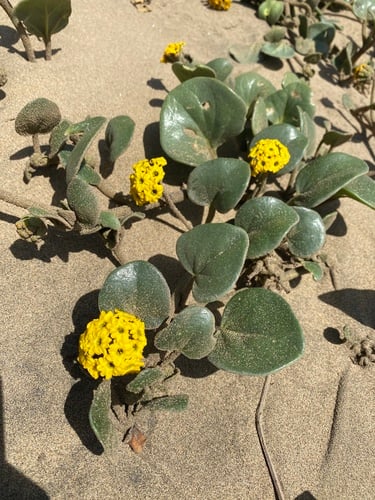
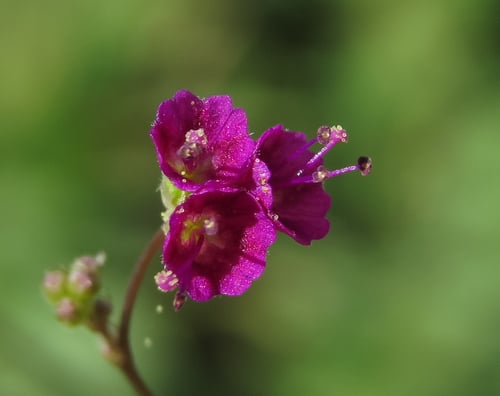
(c) Raphael Forns, some rights reserved (CC BY-NC), uploaded by Raphael Forns
iNaturalist· cc-by-nc
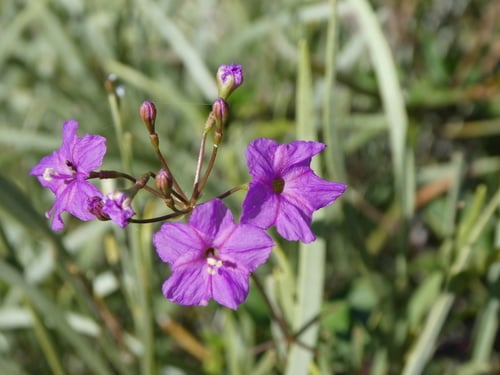
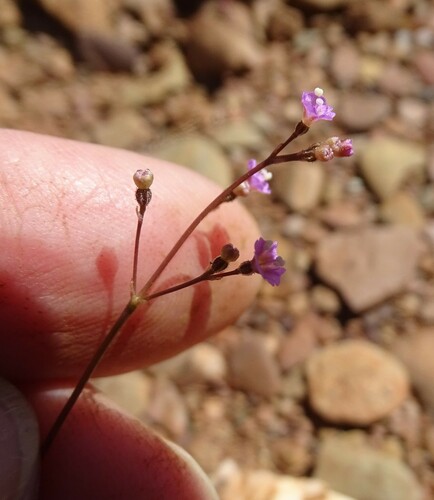
(c) Gavin, some rights reserved (CC BY-NC), uploaded by Gavin
iNaturalist· cc-by-nc
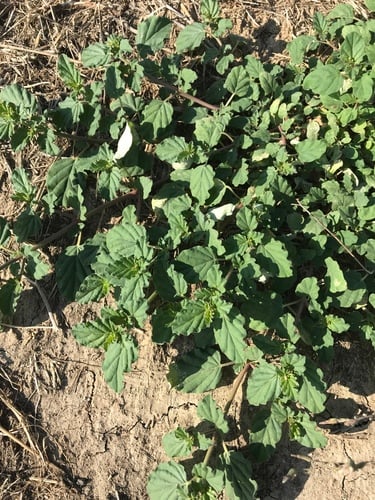
(c) Pete Woodall, some rights reserved (CC BY-NC), uploaded by Pete Woodall
Summary
Source: WikipediaPisonia grandis, the grand devil's-claws, is a species of flowering tree in the Bougainvillea family, Nyctaginaceae.
Description
A medium to large soft wooded tree. It grows up to 10-24 m tall and with a spread of 4-6 m. The stem is erect and stout. It is 30-50 cm across. The trunk is pale grey. It has furrows along it. It has large leaf scars. The branches are brittle. The young growth is finely hairy. The leaves are opposite and rather thin. They are oval and tapering to the base. They are up to 20-30 cm long and 10-18 cm wide. The leaf stalk is up to 5-8 cm long. The leaves are light green. There are 8-10 side veins each side of the midrib. The flowers are small and on the ends of branches. The flowers are greenish and very sticky. Birds can be trapped and die due to the sticky flowers. The flowers can have either one sex or two sexes. The fruit have glands. The fruit are about 1 cm long by 0.2 cm wide. The fruit have 5 ribs and there are prickles along the ribs. They are hairy between the ribs. The seeds are 9-10 mm by 1.5-2 mm. At least in the Solomon Islands trees rarely flower.
Edible Uses
The leaves are traditionally used as a leaf vegetable in some countries. They were part of the traditional Maldivian cuisine in dishes such as mas huni.
Traditional Uses
The young leaves are eaten cooked.
This uses section is brief — help expand it
Medicinal Uses
The leaves are used in the treatment of dysentery. Leaves of the cultivar 'Alba' are crushed or heated and applied to swellings or open ulcers, corns, calluses, or applied for oedema of the legs.
Distribution
A tropical plant. They occur from Malaysia to Polynesia. It grows in coastal areas. It prefers moist well drained soils and open sunny positions. It is drought and frost tender. It often grows on coral islands and atolls. It suits hardiness zones 11-12.
Where It Grows
American Samoa, Andamans, Asia, Australia, Andamans, (Nicobar and Lacadives), British Indian Ocean Terr., BIOT, China, Christmas Island, Chuuk, East Africa, Fiji, Hawaii, India, Indochina, Indonesia, Kenya, Kiribati, Madagascar, Malaysia, Maldives, Marquesas, Marshall Islands, Nauru, New Caledonia, Niue, Madagascar, Malaysia, Maldives, Mariana Islands, Marshall Islands, Micronesia, Nauru, Niue, Pacific, Pakistan, Palau, Papua New Guinea, PNG, Philippines, Phoenix Islands, Rotuma, Samoa, SE Asia, Solomon Islands, Sri Lanka, Tahiti, Taiwan, Tanzania, Thailand, Tokelau, Tonga, Tuvalu, USA, Vanuatu, Vietnam, Yap,
Cultivation
Trees can be grown from cuttings. Seeds can also be used. (Fruit ripen about July to October.) Fresh seed should be used. Birds also help scatter seed. These large sea birds mean the trees are often spread to very remote islands due to the sticky seeds.
Propagation
Seed - Cuttings of mature wood. Layering.
Other Uses
The wood is soft. It is occasionally used for light construction, fence posts, outhouse flooring, canoes, canoe outriggers, floats and bailers. The wood is occasionally used for firewood and to make fire by friction. The plant is cultivated as a hedge and windbreak in parts of Asia. The leaves are used as mulching and green manure.
Production
Many of the leaves are succulent and edible.
Notes
There are about 50 Pisonia species. They grow in the tropics and subtropics. There are about 25 Ceodes species.
Synonyms
Also Known As
Adaburrunigak'iy, Amumo, Bird catcher tree, Bird-killer Tree, Bo son, Chandu, Chemoi, Chinai salit, Grand devil's claw, Kanal, Kang feng tong, Kemudu, Kolis, Kottai, Kul banda, Lanchamundaku, Lechai, Lechchai kottai, Lhos gas, Mokh, Maluko, Mesbesibech, Moek, Moonlight tree, Mwaak, Mweek, Mwog, Niuli, Nyia nyime bu, Pani marawa, Pohon kol, Puak vai, Puatea, Pu'a vai, Puka, Pukakakai, Rafarafa, Saeng-chan, Sulesoppu, Te buka, Thathava, Vatha banga, Velati salet, Wata banga
References (50)
- Ambasta, S.P. (Ed.), 2000, The Useful Plants of India. CSIR India. p 462 (As Pisonia grandis)
- Arora, R. K., 2014, Diversity in Underutilized Plant Species - An Asia-Pacific Perspective. Bioversity International. p 44 (As Pisonia grandis) (Also p 108 as Pisonia alba)
- Ashton, M. S., et al 1997, A Field Guide to the Common Trees and Shrubs of Sri Lanka. WHT Publications Ltd. pdf p 305 (As Pisonia grandis)
- Barwick, M., 2004, Tropical and Subtropical Trees. A Worldwide Encyclopedic Guide. Thames and Hudson p 324 (As Pisonia grandis)
- Bodkin, F., 1991, Encyclopedia Botanica. Cornstalk publishing, p 804 (As Pisonia grandis)
Show all 50 references Hide references
- Burkill, I.H., 1966, A Dictionary of the Economic Products of the Malay Peninsula. Ministry of Agriculture and Cooperatives, Kuala Lumpur, Malaysia. Vol 2 (I-Z) p 1785 (As Pisonia alba)
- Clarke, W.C. & Thaman, R.R., 1993, Agroforestry in the Pacific Islands: Systems for sustainability. United Nations University Press. New York. p 254 (As Pisonia grandis)
- Cooper, W. and Cooper, W., 2004, Fruits of the Australian Tropical Rainforest. Nokomis Editions, Victoria, Australia. p 375 (As Pisonia grandis)
- Cribb, A.B. & J.W., 1976, Wild Food in Australia, Fontana. p 111 (As Pisonia grandis)
- Cundall, P., (ed.), 2004, Gardening Australia: flora: the gardener's bible. ABC Books. p 1053 (As Pisonia grandis)
- Elliot, W.R., & Jones, D.L., 1997, Encyclopedia of Australian Plants suitable for cultivation. Vol 7. Lothian. p 333 (As Pisonia grandis)
- Engel, D.H., & Phummai, S., 2000, A Field Guide to Tropical Plants of Asia. Timber Press. p 88 (As Pisonia alba)
- Flora of Australia, Volume 4, Phytolaccaceae to Chenopodiaceae, Australian Government Publishing Service, Canberra (1984) p 18 (As Pisonia grandis)
- Flora of China @ efloras.org Volume 5 as Ceodes grandis
- Flora of Pakistan. www.eFloras.org (As Pisonia grandis)
- Franklin, J., Keppel, G., & Whistler, W., 2008, The vegetation and flora of Lakeba, Nayau and Aiwa Islands, Central Lau Group, Fiji. Micronesica 40(1/2): 169–225, 2008 (As Pisonia grandis)
- French, B.R., 2010, Food Plants of Solomon Islands. A Compendium. Food Plants International Inc. p 369 (As Pisonia grandis)
- Hedrick, U.P., 1919, (Ed.), Sturtevant's edible plants of the world. p 501 (As Pisonia alba)
- Henderson, C.P. and I.R.Hancock, 1988, A Guide to the Useful Plants of the Solomon Islands. Res. Dept. Min of Ag. & Lands. Honiara, Solomon Islands. p 118 (As Pisonia grandis)
- Heywood, V.H., Brummitt, R.K., Culham, A., and Seberg, O. 2007, Flowering Plant Families of the World. Royal Botanical Gardens, Kew. p 231 (As Pisonia grandis)
- Karthi, Sathya, & Salome, 2014, Uncultivated Edible Greens from Small Millet Farms Tamil Nadu India. IDRC (As Pisonia alba)
- Low, T., 1992, Bush Tucker. Australia’s Wild Food Harvest. Angus & Robertson. p 130 (As Pisonia grandis)
- Lugod, G.C. and de Padua L.S., 1979, Wild Food Plants in the Philippines. Vol. 1. Univ. of Philippines Los Banos. p 58 (As Pisonia alba)
- Lu De-quan, Nyctaginaceae. Flora of China (As Ceodes grandis)
- Lyons, G., et al, 2020, Macro- and Micronutrients from Traditional Food Plants Could Improve Nutrition and Reduce Non-Communicable Diseases of Islanders on Atolls in the South Pacific. Plants 2020, 9, 942
- Martin, F.W. & Ruberte, R.M., 1979, Edible Leaves of the Tropics. Antillian College Press, Mayaguez, Puerto Rico. p 208 (As Pisonia alba)
- Martin, F.W. & Ruberte, R.M., 1979, Edible Leaves of the Tropics. Antillian College Press, Mayaguez, Puerto Rico. p 92 (As Pisonia grandis)
- Martin, F.W. & Ruberte, R.M., 1979, Edible Leaves of the Tropics. Antillian College Press, Mayaguez, Puerto Rico. p 208 (As Pisonia sylvestris)
- McClatchey, W. C., 2012, Wild food plants of Remote Oceania. Acta Societatis Botanicorum Poloniae 81(4) 371-380 (As Pisonia grandis)
- Ochse, J. J. et al, 1931, Vegetables of the Dutch East Indies. Asher reprint. p 540 (As Pisonia sylvestris)
- Parham, B. E. V., 1971, The Vegetation of the Tokelau Islands with special reference to the Plants of Nukunonu Atoll. New Zealand Journal of Botany. 9:4, 576-609 (As Pisonia grandis)
- Parham, B. E. V., 1972, Plants of Samoa. New Zealand Department of Scientific and Industrial Research. Information Series. No. 85 p 105 (As Pisonia grandis)
- Prodr. 422. 1810 (As Pisonia grandis)
- Selvam, V., 2007, Trees and shrubs of the Maldives. RAP Publication No. 2007/12 p 132 (As Pisonia grandis)
- Singh, H.B., Arora R.K.,1978, Wild edible Plants of India. Indian Council of Agricultural Research, New Delhi. p 32 (As Pisonia grandis)
- Smith, A.C., 1981, Flora Vitiensis Nova, Lawaii, Kuai, Hawaii, Volume 2 p 267 (As Pisonia grandis)
- Staples, G.W. and Herbst, D.R., 2005, A tropical Garden Flora. Bishop Museum Press, Honolulu, Hawaii. p 434 (As Pisonia grandis)
- Stemmerik, 1964, Nyctaginaceae, Flora Malesiana, Ser. 1 Vol. 6 (3) p 466 (As Pisonia grandis)
- Sujanapal, P., & Sankaran, K. V., 2016, Common Plants of Maldives. FAO & Kerala FRI, p 209 (As Pisonia grandis)
- Sukarya, D. G., (Ed.) 2013, 3,500 Plant Species of the Botanic Gardens of Indonesia. LIPI p 454 (As Pisonia grandis)
- Terra, G.J.A., 1973, Tropical Vegetables. Communication 54e Royal Tropical Institute, Amsterdam, p 67 (As Pisonia alba)
- Thaman, R. R., 1987, Plants of Kiribati: A listing and analysis of vernacular names. Atoll Research Bulletin No. 296 (As Pisonia grandis)
- Thaman, R. R, 2016, The flora of Tuvalu. Atoll Research Bulletin No. 611. Smithsonian Institute p 103 (As Pisonia grandis)
- The Pacific Islands Food Composition Tables http://www.fao.org/docrep No C101 (As Pisonia grandis)
- Whistler, A. S., Edible vascular plants of the Line Islands. Pacific Health Dialog. Vol. 3 No. 2 (As Pisonia grandis)
- Whistler, W. A., 1988, Ethnobotany of Tokelau: The Plants, Their Tokelau Names, and Their Uses. Economic Botany 42(2): 155-176 (As Pisonia grandis)
- World Checklist of Useful Plant Species 2020. Royal Botanic Gardens, Kew
- www.efloras.org Flora of China (As Pisonia grandis)
- www.manoa.hawaii.edu/botany/plants of micronesia (As Pisonia grandis)
- Yuncker, T.G., 1959, Plants of Tonga, Bernice P. Bishop Museum, Hawaii, Bulletin 220. p 110 (As Pisonia grandis)