Rumex sagittatus
Thunb.
Rambling Dock, Climbing dock, Scrambling dock
iNaturalist· cc-by-nc
(c) papillon79, some rights reserved (CC BY-NC)
iNaturalist· cc-by
(c) Jacqui Geux, some rights reserved (CC BY)
iNaturalist· cc-by
(c) Jacqui Geux, some rights reserved (CC BY)
Summary
Source: WikipediaRumex sagittatus, synonym Acetosa sagittata, commonly known as turkey rhubarb or rambling dock or potato vine, is a herbaceous perennial plant native to southern Africa, which has become a weed in Australia and New Zealand.
Description
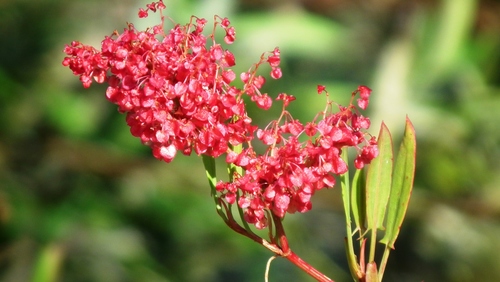
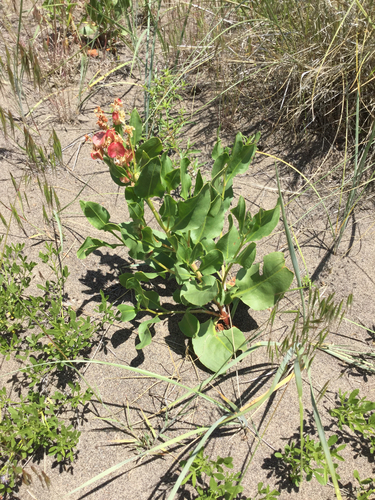
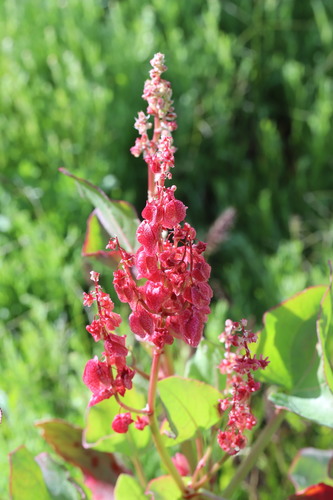
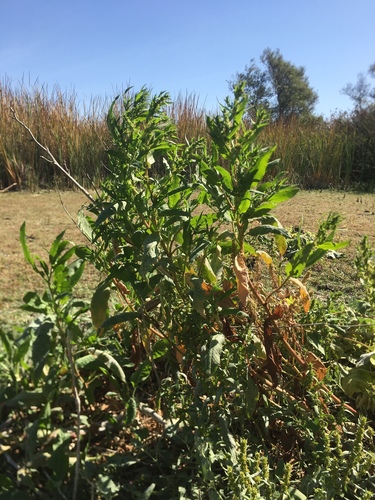
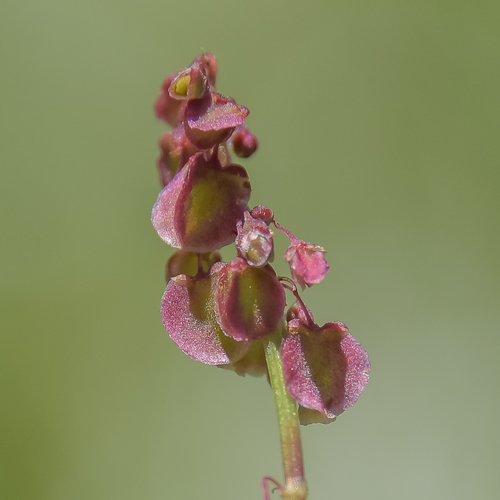
A creeper. It keeps growing from year to year. It grows 2 m high. The leaves are smooth and arrow-shaped. They are 3-7 cm long. They are pale green and soft. The flowers develop clusters of papery capsules. These are about 1 cm wide. They change from pale green to reddish-brown.
Edible Uses
The leaves and young stems can be cooked and eaten and are sometimes cultivated as a vegetable in Java.
Traditional Uses
The cooked leaves have a sweet-sour flavour. They are used in place of tamarind in stews.
This uses section is brief — help expand it
Distribution
It is a temperate plant. It grows in coastal districts. It will grow in most soils and positions. It is resistant to drought but sensitive to frost. In Zimbabwe it grows between 1,160-1,900 m above sea level.
Where It Grows
Africa, Australia, Botswana, East Africa, Eswatini, Indonesia, Lesotho, Malawi, Mozambique, Namibia, New Zealand, SE Asia, South Africa*, Southern Africa, Swaziland, Tasmania, Zambia, Zimbabwe,
Cultivation
Plants can be grown from seed.
Notes
There are about 200 Rumex species.
Synonyms
Also Known As
Potato vine, Simunyane, Soorengan, Surengan, Turkey Rhubarb
References (20)
- Bodkin, F., 1991, Encyclopedia Botanica. Cornstalk publishing, p 895
- Facciola, S., 1998, Cornucopia 2: a Source Book of Edible Plants. Kampong Publications, p 187
- Fox, F. W. & Young, M. E. N., 1982, Food from the Veld. Delta Books. p 308
- Guillarmod, J., 1966, 1971,
- Lazarides, M. & Hince, B., 1993, Handbook of Economic Plants of Australia, CSIRO. p 208
Show all 20 references Hide references
- Long, C., 2005, Swaziland's Flora - siSwati names and Uses http://www.sntc.org.sz/flora/
- Low, T., 1991, Wild Herbs of Australia and New Zealand. Angus & Robertson. p 107 (Drawing)
- Low, T., 1992, Bush Tucker. Australia’s Wild Food Harvest. Angus & Robertson. p 154
- Ochse, J. J. et al, 1931, Vegetables of the Dutch East Indies. Asher reprint. p 595
- Ogle & Grivetti, 1985,
- Peters, C. R., O'Brien, E. M., and Drummond, R.B., 1992, Edible Wild plants of Sub-saharan Africa. Kew. p 163
- Prodr. pl. cap. 67. 1794
- Romanowski, N., 2007, Edible Water Gardens. Hyland House. p 114
- Ruiters-Welcome, A. K., 2019, Food plants of southern Africa. Ph.D. thesis. Univ. of Johannesburg p 91
- Swaziland's Flora Database http://www.sntc.org.sz/flora
- Terra, G.J.A., 1973, Tropical Vegetables. Communication 54e Royal Tropical Institute, Amsterdam, p 70
- Tasmanian Herbarium Vascular Plants list p 45 (As Acetosa sagittata)
- van Wyk, Be., & Gericke, N., 2007, People's plants. A Guide to Useful Plants of Southern Africa. Briza. p 74
- Welcome, A. K. & Van Wyk, B.-E., 2019, An inventory and analysis of the food plants of southern Africa. South African Journal of Botany 122 (2019) 136–179
- World Checklist of Useful Plant Species 2020. Royal Botanic Gardens, Kew