Rumex usambarensis
(Dammer) Dammer
iNaturalist· cc-by
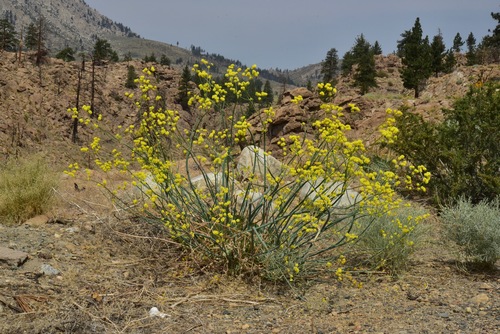
(c) Shaun Swanepoel, some rights reserved (CC BY), uploaded by Shaun Swanepoel
iNaturalist· cc-by
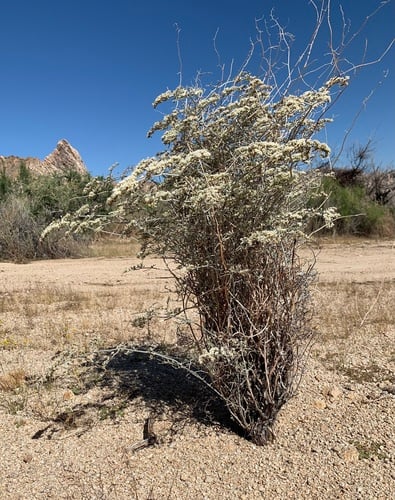
(c) Jeremy Gilmore, some rights reserved (CC BY)
Description
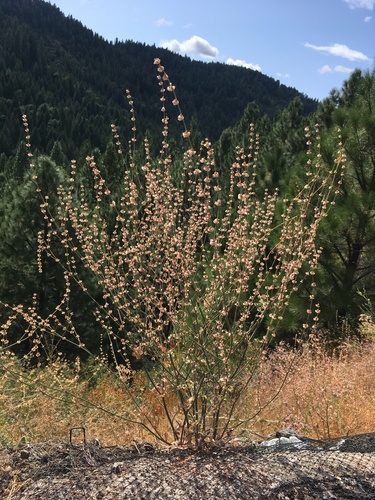
A straggling shrub. It has soft stems. It grows 1-2 m high. The stems are tinged brown and are soft and juicy. The leaves are oblong. The leaves have 2 short lobes near the base. There are 3 distinct veins. The flowers are in a branched, red flowering arrangement. The fruit are oval and 3 sided.
Edible Uses
The stems are chewed raw after being cleaned and peeled, or roasted and eaten with sugar or salt. The leaves can be eaten raw or cooked as a vegetable.
Traditional Uses
Caution: The leaves contain oxalates. The stems are chewed raw. They are cleaned and peeled before chewing. They are also roasted and eaten with sugar or salt. The leaves can be eaten raw or cooked as a vegetable.
Medicinal Uses
The leaves are pounded and soaked in cold water. The infusion is used to treat coughs, rheumatism, stomach-ache and to reduce gas in the stomach. A decoction of the roots was at one time used as a treatment for smallpox, being both drunk and used as a cold bath.
Known Hazards
Although no specific mention has been seen for this species, plants in this genus can contain quite high levels of oxalic acid, which is what can give their leaves an acid-lemon flavour. Perfectly alright in small quantities, leaves containing oxalic acid should not be eaten in large amounts since it can lock-up other nutrients in the food, especially calcium, thus causing mineral deficiencies. The oxalic acid content will be reduced if the plant is cooked. People with a tendency to rheumatism, arthritis, gout, kidney stones or hyperacidity should take especial caution if including this plant in their diet since it can aggravate their condition.
Distribution
It is a tropical plant. In Kenya it grows between 900-2,500 m altitude. It grows in areas with rainfall between 1,100-2,200 mm. It grows in mountain grassland, woodland and exposed rocky slopes. It is best in soils rich in humus.
Where It Grows
Africa, Central Africa, Congo DR, East Africa, Eswatini, Kenya, Malawi, Rwanda, Southern Africa, Swaziland, Tanzania, Uganda,
Cultivation
Plants can be grown from seeds.
Other Uses
The crushed leaves are used for removing grease and for cleaning brass.
Production
Leaves are collected during the rainy season.
Other Information
The young leaves and stems are often chewed by children.
Also Known As
Enkaisujoi, Enkaiswishoi, Gentamana, Kiweriweri, Linyimbili, Mchachu, Mdoda, Mintoonik, Munyugunyugu, Nywanywa, Omufumbwa, Oseille chinoise, Umufuumbageshi
References (15)
- East African Herbarium records, 1981,
- Goode, P., 1989, Edible Plants of Uganda. FAO p 57
- Grubben, G. J. H. and Denton, O. A. (eds), 2004, Plant Resources of Tropical Africa 2. Vegetables. PROTA, Wageningen, Netherlands. p 564
- Kakeya, 1976,
- Karhagomba, I. B., et al, 2013, The cultivation of wild food and medicinal plants for improving community livelihood: The case of the Buhozi site, DR Congo. Nutrition Research and Practice (Nutr Res Pract) 2013;7(6):510-518
Show all 15 references Hide references
- Latham, P., 2004, Useful Plants of Bas-Congo province. Salvation Army & DFID p 240
- Long, C., 2005, Swaziland's Flora - siSwati names and Uses http://www.sntc.org.sz/flora/ (As Rumex nervosus var. usamarensis)
- Marshall, F., Agriculture and Use of Wild and Weedy Greens by the Piik ap Oom Okiek of Kenya. Economic Botany, Vo. 55, No. 1, pp. 32-47
- Maundu, P. et al, 1999, Traditional Food Plants of Kenya. National Museum of Kenya. 288p
- Mbuvi, M. T. E., et al, 2019, Annonated checklist of plant species of Loita Forest Narok County, Kenya. Int. J. Adv. Res. Biol. Sci. (2019). 6(3): 54-110
- Msola, D. K., 2007, The role of Wild Foods in Household Income and Food Security in Mufundi District, Tanzania. Morogoro, Tanzania. p 46
- Musinguzi, E., et al, 2006, Utilization of Indigenous Food Plants in Uganda: A Case Study of South-Western Uganda. AJFAND Vol. 6(2):
- Mutie, F. M., et al, 2023, Important Medicinal and Food Taxa (Orders and Families) in Kenya, Based on Three Quantitative Approaches. Plants 2023, 12, 1145
- Peters, C. R., O'Brien, E. M., and Drummond, R.B., 1992, Edible Wild plants of Sub-saharan Africa. Kew. p 163
- Ruffo, C. K., Birnie, A. & Tengnas, B., 2002, Edible Wild Plants of Tanzania. RELMA p 580