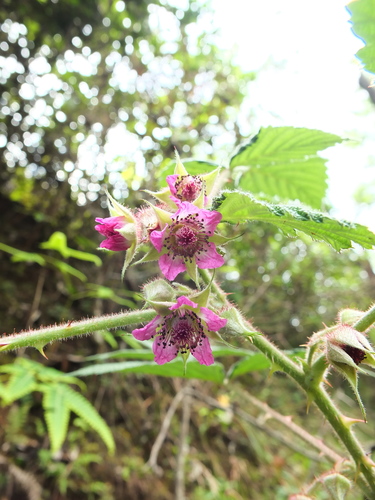
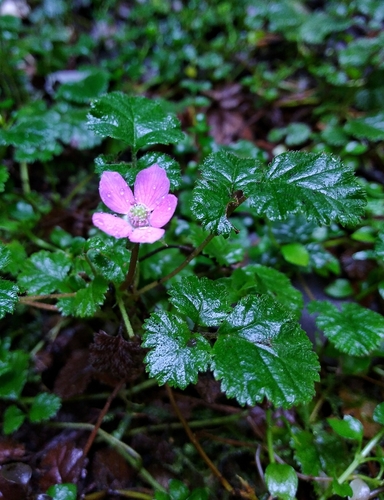
Rubus thibetanus
Franch.
Xi zang xuan gou zi
wikimedia· cc0
Wikimedia Commons - Daderot
wikimedia· cc-by-sa
Wikimedia Commons - Muséum national d’Histoire naturelle, Paris (France) Collection : Plantes vasculaires (P) Spécimen P04183665
Summary
Source: WikipediaRubus thibetanus, sometimes known as ghost bramble, is a species of deciduous shrub in the genus Rubus, native to western China, where the local Chinese name may be translated into English as Tibetan dewberry. It is called xu zang xuan gou zi in transcribed Chinese. Rubus thibetanus is found in Gansu, Shaanxi, Sichuan, and Xizang (Tibet) provinces, to an altitude of 900–2100 meters, usually in dry areas in ravines, thickets, ditches, and on the edges of forests. Rubus thibetanus grows 2–3 m tall, with reddish-brown, cylindric branchlets, and sparse prickles. Leaves are pinnately compound, triangular over all, appearing rather fern-like. Flowers are white, emerging in June. In August it bears its fruit, which are globular, purplish-black or dark red aggregate fruits ("berries"), 8–10 mm in diameter. Reports of the edibility of said fruits is inconsistent; some regard these as inedible without clarification, and only some sources consider the fruit edible. In cultivation in the UK, Rubus thibetanus has won the Royal Horticultural Society's Award of Garden Merit.
Description
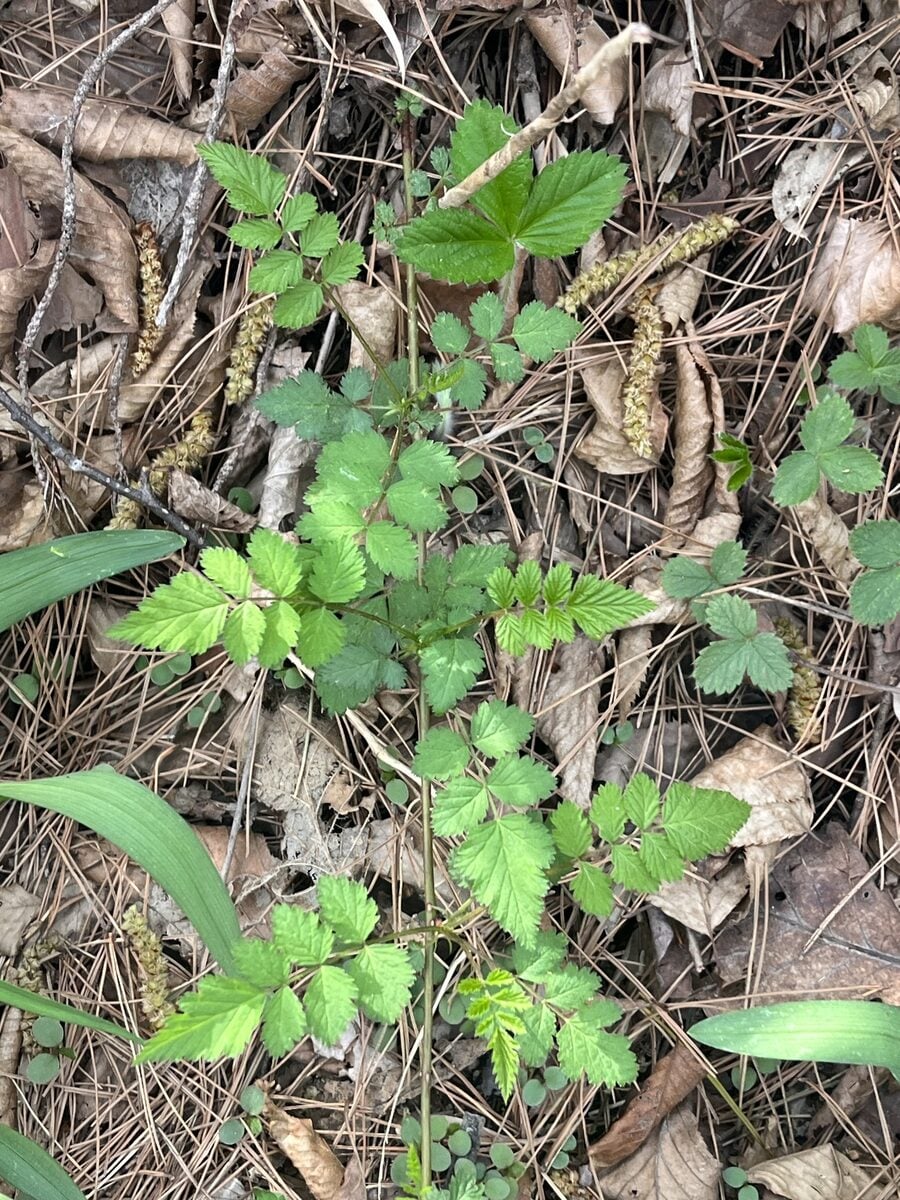
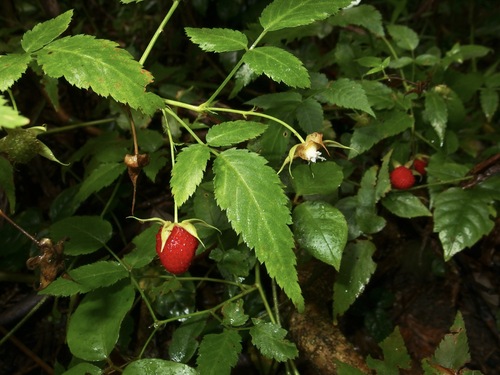
A shrub. It grows 2-3 m high. It spread 2-3 m wide. The branches are reddish brown. The have soft hairs when young. There are a few prickles. The leaves are divided 7-11 times. The fruit are black or dark red. They are 8-10 mm across. They have dense grey hairs.
Edible Uses
The purplish-black or dark red fruit, about 16mm in diameter, can be eaten raw or cooked.
Medicinal Uses
None known
Distribution
It is a temperate plant. It grows in thickets and on the edge of forests in dry places between 900-2100 m in China. It suits hardiness zones 6-10.
Where It Grows
Asia, Australia, China, Slovenia, Tibet,
Cultivation
Easily grown in a good well-drained loamy soil in sun or semi-shade. Spreads by means of suckers. Plants in this genus are notably susceptible to honey fungus.
Propagation
Seed requires stratification and is best sown in early autumn in a cold frame. Stored seed should be sown as early as possible in the year; if sowing later than February, stratify for one month at 3°c. Prick out seedlings when large enough to handle and grow on in a cold frame, then plant out into permanent positions in late spring of the following year. Tip layer in July and plant out in autumn. Division can be done in early spring.
Other Uses
A purple to dull blue dye can be obtained from the fruit.
Notes
There are about 250 Rubus species.
Dangerous Lookalikes
This plant can be confused with the following toxic species. Always verify identification carefully before consuming any wild plant.
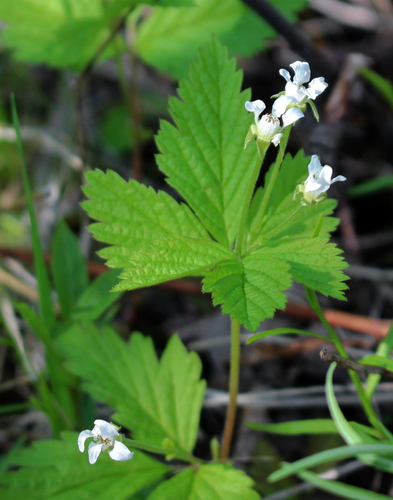
Red Baneberry
Actaea rubra
Walter Siegmund (talk)
Xi zang xuan gou zi
Rubus thibetanus
Wikimedia Commons - Daderot
Red Baneberry: Short herbaceous plant (no thorns), berries on thick red stems, each berry has a single seed, compound sharply-toothed leaves.
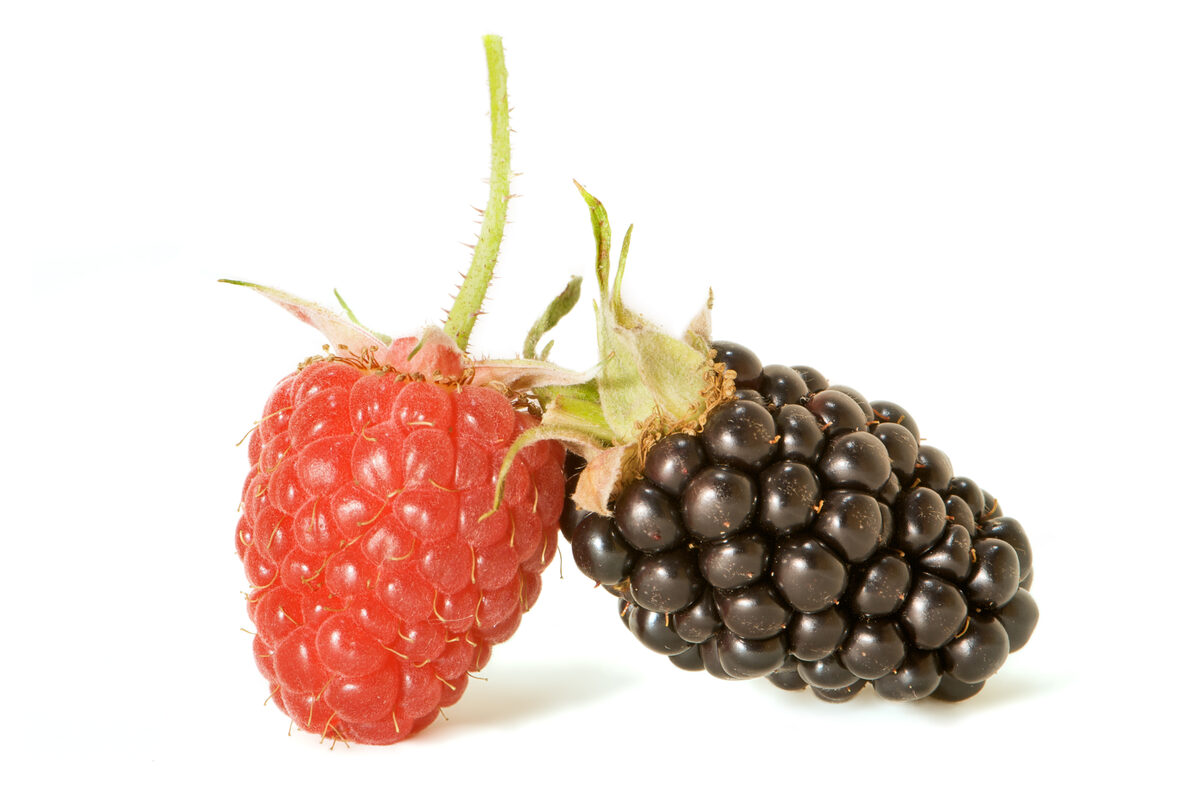
Xi zang xuan gou zi: Thorny woody canes (brambles), aggregate berry made of many drupelets, berries pull easily from receptacle.
Synonyms
Also Known As
Tibetanska robida
References (7)
- Cundall, P., (ed.), 2004, Gardening Australia: flora: the gardener's bible. ABC Books. p 1285
- Flora of China @ efloras.org Volume 9
- http://www.botanic-gardens-ljubljana.com/en/plants
- Kang, Y., et al, 2014, Wild food plants used by the Tibetans of Gongba Valley (Zouqu country, Gansu, China) Journal of Ethnobiology and Ethnomedicine 10:20
- Lu Lingdi, Boufford, D.E., Rubus. Flora of China.
Show all 7 references Hide references
- Nouv. Arch. Mus. Hist. Nat. ser. 2, 8:221. 1886
- Plants for a Future database, The Field, Penpol, Lostwithiel, Cornwall, PL22 0NG, UK. http://www.scs.leeds.ac.uk/pfaf/