Crataegus pinnatifida
Bunge
Chinese haw, Mountain Hawthorn
iNaturalist· cc-by-nc
(c) עומר וינר, some rights reserved (CC BY-NC), uploaded by עומר וינר
iNaturalist· cc-by-nc
(c) עומר וינר, some rights reserved (CC BY-NC), uploaded by עומר וינר
iNaturalist· cc-by
(c) Tatyana Petrenko, some rights reserved (CC BY)
Summary
Source: WikipediaCrataegus pinnatifida, also known as mountain hawthorn, Chinese haw, Chinese hawthorn or Chinese hawberry, refers to a small to medium-sized tree, as well as the fruit of the tree. The fruit is bright red, 1.5 in (38 mm) in diameter.
Description
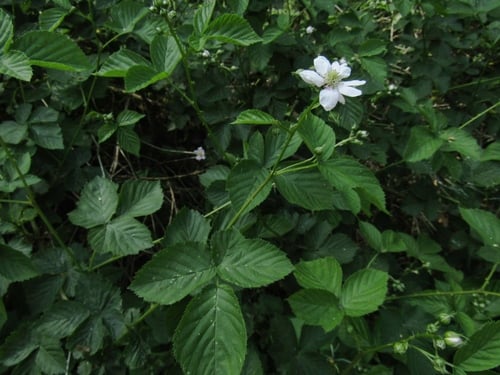
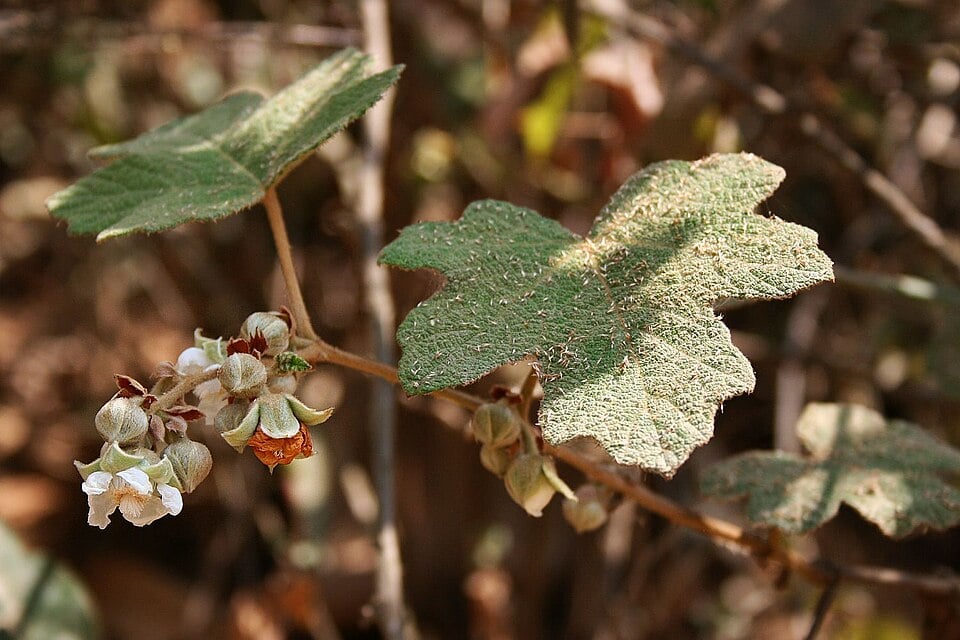
A small tree. It grows 6 m high and spreads 6 m wide. The leaves are bright green and have lobes. There can be 9 lobes and they have teeth. The leaves are pale green underneath and they turn yellow in autumn. The flowers are white. The fruit occur in clusters and are bright red. There are several named cultivated varieties.
Edible Uses
The orange fruit can be eaten raw or cooked and has a pleasant flavour overall — mealy in texture with an acid taste and a slight bitterness, but reasonably enjoyable fresh. It ripens fairly late in the season; fruits observed at the end of October 1998 were not yet fully ripe. The fruit is suitable for pies, preserves, and similar preparations, and can be dried for later use. Most fruits are around 15mm in diameter, though some forms produce fruit up to 25mm across. Up to five fairly large seeds sit in the centre, often fusing together so the fruit is eaten like a cherry with a single stone. Nutritional data per 100g dry weight: 352 calories; water 0%; protein 1.5g; fat 3.8g; carbohydrate 91.6g; fibre 6.9g; ash 3.1g; calcium 326mg; phosphorus 96mg; iron 8mg; potassium 1253mg.
Traditional Uses
The fruit are cooked and made into jellies, drinks and candied. They are also eaten raw. The fruit are toffee coated and sold threaded in slivers of bamboo. Fruit are used for wine. The young leaves are steamed with flour and eaten in soups.
Medicinal Uses
The fruit contains flavonoids and organic acids and has demonstrated antibacterial, anticholesterolemic, cardiotonic, hypotensive, stomachic, and vasodilator activity. It has been shown to lower blood cholesterol levels and improve blood circulation. In Korea it is used to treat abdominal distension, pain, and diarrhoea, and to induce menstruation. The dried fruit is alterative, antiscorbutic, deobstruent, laxative, stimulant, and stomachic. As with other hawthorns, the fruits and flowers are well established in herbal folk medicine as a heart tonic — a use confirmed by modern research. They exert a hypotensive effect and act as a mild, direct cardiac tonic, especially indicated for weak heart combined with high blood pressure. Prolonged use is necessary for efficacy, and it is typically taken as a tea or tincture. The seed is recommended for difficult labour, hernia, and swollen genitals. The leaves and twigs are used as an antidote to varnish poisoning from certain Rhus species. The root is used to treat nausea and vomiting.
Distribution
Temperate. It will grow in most soils. It needs an open sunny position. It is resistant to drought and frost. In northern China it grows between 100-2,000 m above sea level. It suits hardiness zones 6-9.
Where It Grows
Asia, Australia, China*, Korea, Mongolia, North America, USA,
Cultivation
A very easily grown plant, it prefers a well-drained moisture retentive loamy soil but is not at all fussy. Once established, it succeeds in excessively moist soils and also tolerates drought. It grows well on a chalk soil and also in heavy clay soils. A position in full sun is best when plants are being grown for their fruit, they also succeed in semi-shade though fruit yields and quality will be lower in such a position. Most members of this genus succeed in exposed positions, they also tolerate atmospheric pollution. Hybridizes freely with other members of this genus. Seedling trees take from 5 - 8 years before they start bearing fruit, though grafted trees will often flower heavily in their third year. The flowers have a foetid smell somewhat like decaying fish. This attracts midges which are the main means of fertilization. When freshly open, the flowers have more pleasant scent with balsamic undertones. Most trees have very few thorns, some forms are thorn-free. A very ornamental plant. The sub-species C. pinnatifida major has larger fruit than the type species, it is cultivated for this fruit in China Seedlings should not be left in a seedbed for more than 2 years without being transplanted.
Propagation
Seed is best sown as soon as it is ripe in autumn in a cold frame. Some seed will germinate the following spring, though most will likely take a further year. Stored seed can be very slow and erratic; it should be warm stratified for 3 months at 15°c, then cold stratified for 3 months at 4°c, and may still take another 18 months to germinate. Scarifying before stratification may help, as may fermenting the seed in its own pulp for a few days. Alternatively, harvest seed green — once the embryo is fully developed but before the seedcoat hardens — and sow immediately in a cold frame for possible spring germination. For small quantities, pot seedlings individually as soon as they are large enough to handle and grow on for their first year before planting out in late spring. For larger quantities, sow directly in an outdoor seedbed with protection from mice and seed-eating animals, undercutting roots if plants will remain in the bed for more than two years.
Other Uses
The wood is heavy, hard, tough, and close-grained, making it well suited for tool handles, mallets, and other small wooden items. The plant is noted for its scent and has applications in carbon farming and food forest systems.
Other Information
It is grown commercially for its fruit. They are sold in local markets.
Notes
There are 200 or more Crataegus species.
Nutrition
| Part | Moisture | kJ | kcal | Protein | Vit A | Vit C | Iron | Zinc |
|---|---|---|---|---|---|---|---|---|
| Fruit | 73.9 | — | 92 | 0.4 | — | — | 2.1 | — |
Also Known As
Chohor dolon, Dolugun-a, Hung-kuo, Shan-cha, Shan li hong, Shanzha, Si pu a si
References (19)
- Bodkin, F., 1991, Encyclopedia Botanica. Cornstalk publishing, p 296
- Brown, D., 2002, The Royal Horticultural Society encyclopedia of Herbs and their uses. DK Books. p 182
- Enum. pl. China bor. 26. 1833 (Mem. Acad. Imp. Sci. St.-Petersbourg Divers Savans 2:100. 1835)
- Etherington, K., & Imwold, D., (Eds), 2001, Botanica's Trees & Shrubs. The illustrated A-Z of over 8500 trees and shrubs. Random House, Australia. p 240
- Fan, L., et al, The Use of Edible Wild Plants and Fungi in Korean-Chinese Villages. Journal of Environmental Information Science 44-5 p 71-79
Show all 19 references Hide references
- Flora of China. www.eFloras.org Volume 9
- Food Composition Tables for use in East Asia FAO http://www.fao.org/infoods/directory No. 878
- Glowinski, L., 1999, The Complete Book of Fruit Growing in Australia. Lothian. p 43, 44
- https://en.wikipedia.org/wiki/List of wild edible plants in Mongolian cuisine
- Hu, Shiu-ying, 2005, Food Plants of China. The Chinese University Press. p 431
- Khasbagan, Hu-Yin Huai, and Sheng-Ji pei, 2000, Wild Plants in the Diet of Athorchin Mongol Herdsmen in Inner Mongolia. Economic Botany 54(4): 528-536
- Luo, B., et al, 2019, Wild edible plants collected by Hani from terraced rice paddy agroecosystem in Honghe Prefecture, Yunnan, China. Journal of Ethnobiology and Ethnomedicine 15:56
- Pemberton, R. W. & Lee, N. S., 1996, Wild Food Plants in South Korea: Market Presence, New Crops, and Exports to the United States. Economic Botany, Vol. 50, No. 1, pp. 57-70
- Plants for a Future database, The Field, Penpol, Lostwithiel, Cornwall, PL22 0NG, UK. http://www.scs.leeds.ac.uk/pfaf/
- Sachula, et al, 2020, Wild edible plants collected and consumed by the locals in Daqinggou, Inner Mongolia, China. Journal of Ethnobiology and Ethnomedicine (2020) 16:60
- Tanaka,
- Uphof,
- Valder, P., 1999, The Garden Plants of China. Florilegium. p 153
- World Checklist of Useful Plant Species 2020. Royal Botanic Gardens, Kew