Rubus pectinellus
Maxim.
Atibulnak
iNaturalist· cc0
no rights reserved, uploaded by 葉子
iNaturalist· cc-by
(c) Cheng-Tao Lin, some rights reserved (CC BY), uploaded by Cheng-Tao Lin
iNaturalist· cc-by
(c) Cheng-Tao Lin, some rights reserved (CC BY), uploaded by Cheng-Tao Lin
Summary
Source: WikipediaRubus pectinellus, commonly known as atibulnak, is a species of brambles in the rose family. It is native to Japan, southern China, Taiwan, and the Philippines. It usually grows in forests and valleys at elevations of 700 to 3,000 m (2,300 to 9,800 ft). Atibulnak fruits are edible, either raw or cooked, and have a pleasant subacid flavor. The leaves are also eaten as a vegetable in the Philippines.
Description
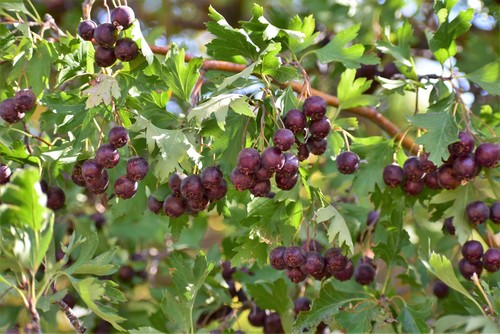
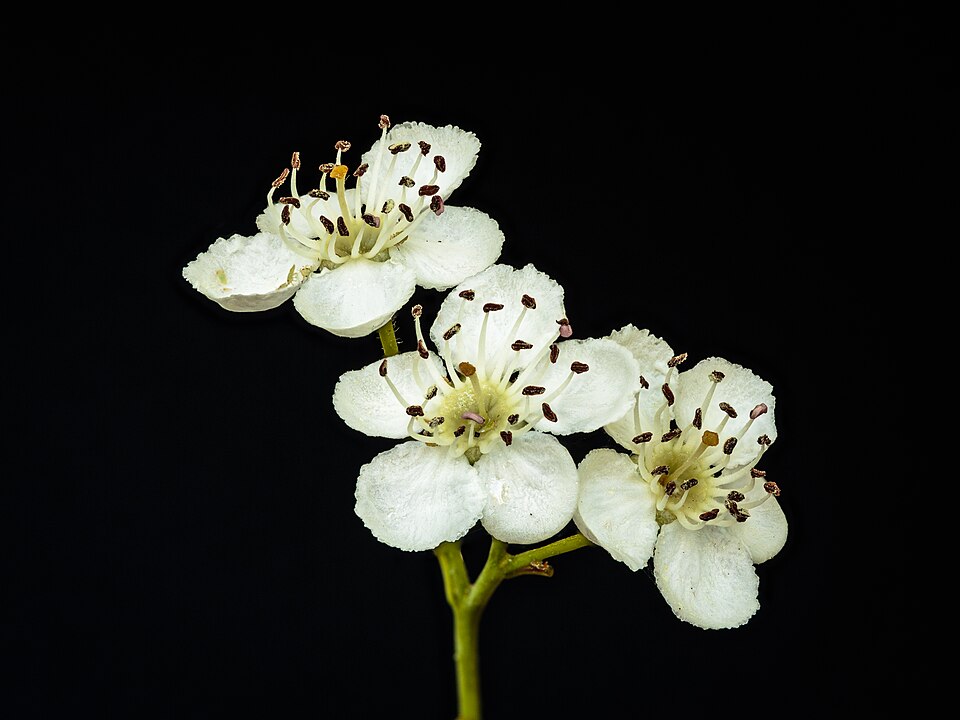
A trailing plant with heart shaped leaves. It grows about 1 m long. The stems, leaves and outer layer of sepals are armed with small spines. The leaves are rough, hairy, heart shaped and toothed. They are 3-6 cm across. The flowers are white and the fruit 1.5 cm across. They are bright red and juicy.
Edible Uses
The red fruit is 10–15mm in diameter, fine-flavoured and of good quality, and can be eaten raw or cooked.
Traditional Uses
The fleshy fruit is eaten raw. The leaves are eaten as a vegetable.
This uses section is brief — help expand it
Medicinal Uses
None known
Distribution
It is a tropical plant. Common and widely distributed in the mossy forests of the Philippines. In China it grows between 700-3,000 m above sea level. In Sichuan and Yunnan.
Where It Grows
Asia, China, India, Japan, Northeastern India, Pacific, Philippines, SE Asia, Taiwan, Tibet,
Cultivation
Easily grown in a good well-drained loamy soil in sun or semi-shade. Closely related to R. calycinus. Plants in this genus are notably susceptible to honey fungus.
Propagation
Seed requires stratification and is best sown in early autumn in a cold frame. Stored seed needs one month of stratification at about 3°C and should be sown as early as possible in the year. Prick out seedlings when large enough to handle, grow on in a cold frame, and plant out into permanent positions in late spring of the following year. Cuttings of half-ripe wood can be taken in July/August in a frame. Tip layer in July and plant out in autumn. Division can be done in early spring or just before leaf-fall in autumn.
Other Uses
A purple to dull blue dye is obtained from the fruit.
Production
In China plants flower in May and June and fruit in July to August.
Notes
There are about 250 Rubus species.
Dangerous Lookalikes
This plant can be confused with the following toxic species. Always verify identification carefully before consuming any wild plant.
Red Baneberry
Actaea rubra
Walter Siegmund (talk)
Atibulnak
Rubus pectinellus
no rights reserved, uploaded by 葉子
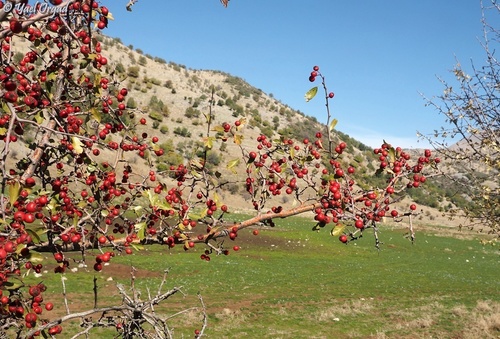
Red Baneberry: Short herbaceous plant (no thorns), berries on thick red stems, each berry has a single seed, compound sharply-toothed leaves.
Atibulnak: Thorny woody canes (brambles), aggregate berry made of many drupelets, berries pull easily from receptacle.
Also Known As
Jiaoxumu, Mvuyha
References (9)
- Brown, W.H., 1920, Wild Food Plants of the Philippines. Bureau of Forestry Bulletin No. 21 Manila. p 64
- Bull. Acad. Imp. Sci. Saint-Petersbourg 17:147; Melanges Biol. Bull. Phys.-Math. Acad. Imp. Sci. Saint-Petersbourg 8:374. 1871 (Diagn. pl. nov. jap.)
- Chase, P. & Singh, O. P., 2016, Bioresources of Nagaland: A Case of Wild 4 Edible Fruits in Khonoma Village Forest. in J. Purkayastha (ed.), Bioprospecting of Indigenous Bioresources of North-East India. p 51
- Flora of China @ efloras.org Volume 9
- Ju, Y., et al, 2013, Eating from the wild: diversity of wild edible plants used by Tibetans in Shangri-la region, Yunnan, China, Journal of Ethnobiology and Ethno medicine 9:28
Show all 9 references Hide references
- Monsalud, M.R., Tongacan, A.L., Lopez, F.R., & Lagrimas, M.Q., 1966, Edible Wild Plants in Philippine Forests. Philippine Journal of Science. p 533
- Plants for a Future database, The Field, Penpol, Lostwithiel, Cornwall, PL22 0NG, UK. http://www.scs.leeds.ac.uk/pfaf/
- Polinag, M. A., 2003, Food from the Wilderness. Department of Environment and Natural Resources. Laguna.
- World Checklist of Useful Plant Species 2020. Royal Botanic Gardens, Kew